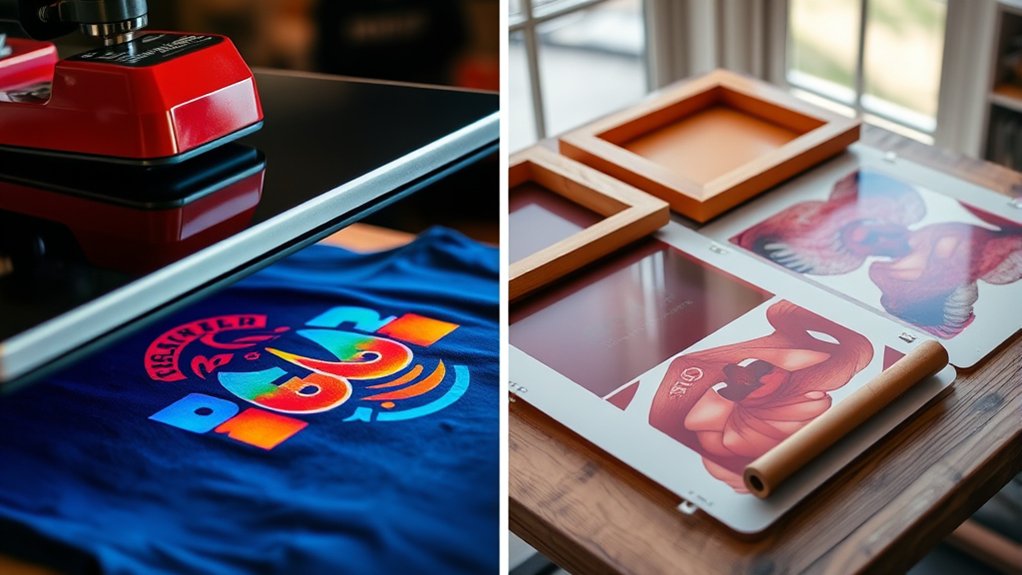

When choosing between heat press shirts vs screen print for your project, consider the size and style of your design.
Heat press offers vivid, detailed prints that are perfect for small runs or photo-quality images on synthetic fabrics.
Screen printing, on the other hand, excels with bold, durable images that work best for large batches and cotton blends.
Heat press is quick and versatile, making it a great choice for custom or one-off pieces.
However, screen printing tends to last longer through multiple washes.
If you want to find out which method fits your unique needs best, keep exploring how each process impacts your final look.
Key Takeaways
- Heat press printing is ideal for small batches and intricate, full-color designs with quick setup and lower initial costs.
- Screen printing is cost-effective for large volume orders, producing durable, vibrant prints with bold colors and longer wear resistance.
- Heat press excels on synthetic fabrics, capturing fine details, while screen printing performs best on cotton and fabric blends.
- Screen printed shirts offer superior longevity and washability, resisting cracking and fading better than heat press transfers.
- Project goals and fabric type dictate the choice: heat press suits limited-use or promotional items, screen printing fits frequent-use apparel.
How Heat Press Printing Works
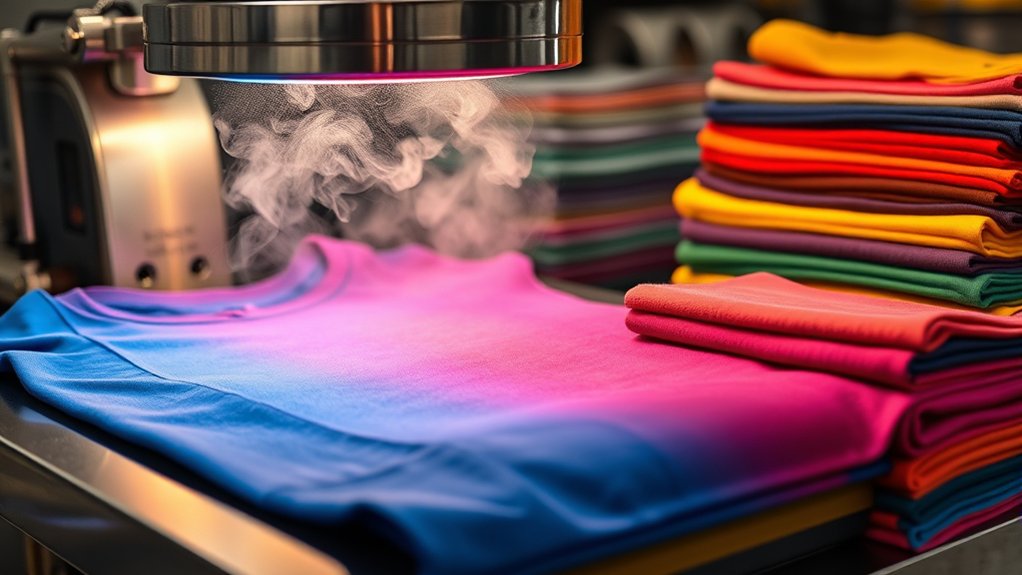
Although it might seem like magic, heat press printing works by applying intense heat and pressure to transfer a design from a special vinyl or transfer paper onto fabric. You’ll start by positioning your vibrant vinyl design on the shirt, ensuring it’s perfectly aligned.
Heat press printing uses intense heat and pressure to perfectly transfer vibrant vinyl designs onto fabric.
The heat press machine then clamps down, delivering precise heat that activates the adhesive on the vinyl. This heat transfer process fuses the design seamlessly to the fabric’s fibers.
As you lift the press, the vinyl application reveals crisp, vivid colors that won’t fade or crack easily. You’ll appreciate how this method captures intricate details and sharp edges, making your shirt a wearable piece of art.
Heat press printing is your go-to for quick, high-quality custom apparel with a smooth, durable finish.
How Screen Printing Works
You start by preparing a fine mesh screen, carefully coating it to create your design’s stencil.
Then, you press vibrant ink through the mesh, letting it imprint layer by layer onto the fabric beneath. Watching the colors come alive with each pass, you’ll see how precise ink application transforms a blank shirt into wearable art.
Basic Screen Printing Process
The screen printing process involves several precise steps that transform a plain shirt into a vibrant work of art. First, you prepare the design and transfer it onto a fine mesh screen using a light-sensitive emulsion.
This basic equipment includes the screen frame, squeegee, and stencil. Once the stencil hardens, you position the shirt beneath the screen.
You then pull the squeegee across the screen, pressing ink through the open areas of the stencil onto the fabric below. This vital step uses traditional printing techniques that guarantee bold, sharp images.
After each color layer is applied and dried, the final print emerges with vivid clarity. By mastering this process, you control every detail, from sharp edges to rich hues, creating durable, professional-quality shirts.
Ink Application Techniques
When ink meets the screen, magic happens through carefully controlled movements and pressure. You use specific application methods to push ink through the mesh, creating vibrant designs on the fabric beneath. Different ink types, plastisol, water-based, or discharge, each behave uniquely under your squeegee’s stroke, affecting texture and durability.
Here’s a quick look at popular ink application methods:
| Ink Type | Application Method | Visual Effect |
|---|---|---|
| Plastisol | Squeegee | Bold, opaque colors |
| Water-Based | Flood Stroke | Soft, breathable feel |
| Discharge | Pull Stroke | Vintage, blended look |
| Specialty | Dual-layer Technique | Glossy or textured |
Mesh Screen Preparation
Before ink can transform fabric into wearable art, preparing the mesh screen sets the stage for flawless prints. You start by selecting the right mesh types. Higher mesh counts capture finer details, while lower counts allow thicker ink layers.
Once chosen, you stretch the mesh tightly over the frame, ensuring ideal screen tension. This tension is essential; too loose, and your print blurs, too tight, and the frame risks warping.
Next, you coat the screen with a light-sensitive emulsion, carefully spreading it for an even layer. After drying, you expose the screen to light through your design stencil, hardening the emulsion everywhere except where your image will appear.
Finally, you wash away the unhardened emulsion, revealing a precise stencil ready to bring your design vividly to life.
Comparing Costs of Heat Press and Screen Printing
You’ll notice heat press machines often come with a smaller upfront price tag, perfect if you’re just starting out. But as your orders grow, the cost of ink, transfers, and maintenance can add up quickly.
On the flip side, screen printing demands a heftier initial investment, yet its efficiency shines when you’re churning out bulk orders over time.
Initial Investment Comparison
Investing in the right equipment can make or break your t-shirt business, and understanding the upfront costs of heat press versus screen printing is essential. When comparing initial costs, you’ll notice distinct equipment expenses shaping your budget.
- Heat Press Machine: Compact and user-friendly, with prices ranging from $200 to $1,000, ideal for startups.
- Screen Printing Setup: Requires multiple tools, including screens, squeegees, and a press, costing $500 to $2,000 initially.
- Ink and Consumables: Screen printing inks and emulsions add to upfront costs, whereas heat press needs transfer paper.
- Workspace Needs: Screen printing demands more space and ventilation, impacting your setup budget.
Knowing these detailed expenses helps you pick equipment that aligns precisely with your creative vision and financial plan.
Long-Term Expense Analysis
Two main factors shape the long-term costs of heat press and screen printing: material expenses and maintenance requirements. When you immerse yourself in heat press, you’ll notice the vinyl sheets and transfer paper add up, but the machine’s simple mechanics keep maintenance costs low.
Screen printing, on the other hand, demands ongoing purchases of inks and screens, plus regular cleaning that can rack up service bills. Over time, heat press offers long term savings through minimal upkeep and fewer consumables.
Screen printing’s vibrant, durable prints come at a price: higher maintenance costs and replacing worn parts. Visualize your budget as a balance scale; heat press tilts toward steady, predictable spending, while screen printing swings with fluctuating supply and repair needs.
Understanding these nuances helps you plan wisely for your shirt-printing venture’s future.
Which Method Handles Complex and Colorful Designs Better?
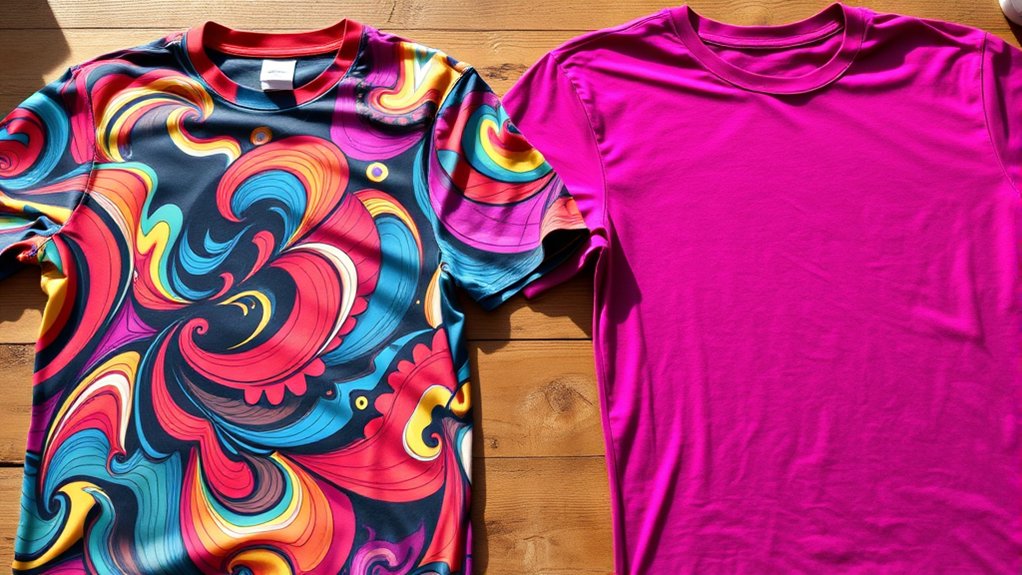
How do heat press and screen printing tackle the challenge of complex, colorful designs? When your design demands intricate detail and vivid hues, each method plays a distinct role.
- Color Vibrancy: Heat press uses vibrant, full-color transfers that pop, perfect for photos and gradients.
- Design Complexity: Screen printing excels with bold, fewer colors but struggles with fine gradients.
- Layering: Screen printing requires separate screens per color, making multi-color designs labor-intensive.
- Precision: Heat press captures tiny details effortlessly, ideal for intricate patterns.
If your artwork is bursting with colors and subtle shades, heat press handles that complexity better, delivering sharp, vibrant prints. However, for simpler bold designs, screen printing offers a classic, rich finish. Understanding these strengths helps you choose the perfect method for your colorful creations.
Durability and Washability: Which Lasts Longer on Shirts
Though both heat press and screen printing can produce stunning designs, their durability and washability tell very different stories. When you weigh the durability comparison, screen printing often takes the lead. Its ink penetrates fabric fibers, creating vibrant images that resist cracking and fading even after countless washes.
Heat press designs, while crisp and vivid initially, tend to peel or crack over time, especially if you don’t follow strict washability factors like cold water and gentle cycles. Visualize a screen-printed shirt enduring tumble drying and rough wear, colors still popping; contrast that with a heat-pressed shirt’s design slowly lifting like a fragile decal.
Knowing these differences helps you anticipate how your shirt’s artwork will age, keeping your style fresh longer.
How to Choose Between Heat Press and Screen Printing for Your Project
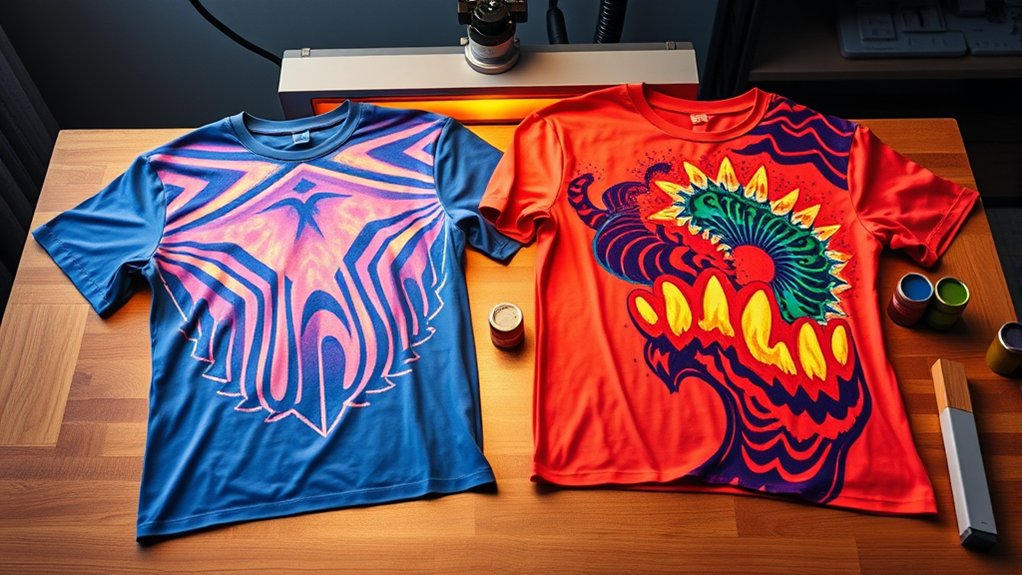
When deciding on the best printing method for your project, consider the type of design, fabric, and usage you have in mind. Your project goals and design considerations play an essential role in choosing between heat press and screen printing. Ask yourself:
Choosing the right printing method depends on your design, fabric, and how the item will be used.
- Complexity of Design: Heat press works great for detailed, multi-color images; screen printing shines with bold, simple graphics.
- Quantity: Screen printing is cost-effective for large runs; heat press suits small batches or one-offs.
- Fabric Type: Heat press handles synthetic fabrics well; screen printing excels on cotton and blends.
- Durability Needs: Screen printing offers longer-lasting prints for heavy use; heat press is ideal for occasional wear.
Frequently Asked Questions
Can Heat Press and Screen Printing Be Combined on One Shirt?
Yes, you can combine heat press and screen printing on one shirt. This combination technique boosts design flexibility, letting you layer vivid screen prints with intricate heat-pressed details.
The result is a visually dynamic, textured masterpiece you’ll love wearing.
Are There Environmental Concerns With Either Printing Method?
You’d think printing shirts sends rainbows to the landfill! Both methods need eco friendly practices and waste management; heat press uses less water, while screen printing demands careful ink disposal to keep your planet colorful, not polluted.
What Types of Fabrics Work Best With Each Printing Method?
You’ll find fabric compatibility varies: heat press works best on polyester and blends, while screen printing shines on cotton and natural fibers. Each printing technique brings vibrant designs to life, matching fabric textures with vivid, lasting color.
How Long Does the Setup Process Take for Each Method?
Setting up feels like preparing for a rocket launch! Heat press boasts swift setup efficiency, needing minutes. Screen print demands longer preparation time, mixing inks and creating screens—perfect for detailed, vivid designs that last through countless washes.
Can Both Methods Be Used for Custom One-Off Shirts?
You can absolutely create custom designs for one-off shirts with both methods. Heat press shines with vibrant printing quality on small runs, while screen printing offers bold, textured visuals but suits larger batches better.
Conclusion
So, which printing method suits your vision best? If you want vibrant, multi-colored designs with lasting durability, screen printing might be your go-to. But if flexibility and quick turnaround thrill you, heat press offers a sleek, cost-effective alternative.
Picture your perfect shirt—bold colors or intricate details—and choose the method that brings it to life with the quality and style you deserve. After all, your design deserves nothing less than brilliance.
When deciding between heat press shirts vs screen print, consider what matters most to you: durability and vividness or speed and versatility. This way, you ensure your shirt looks exactly how you imagined.