
Giclee vs screen print are two popular printing methods, each with distinct advantages depending on your needs.
If you need precise color fidelity and fine detail, giclee printing uses archival pigment inks on acid-free media to deliver high-resolution, fade-resistant art reproductions with smooth gradients.
In contrast, screen printing pushes vibrant, thick ink layers through stencils, excelling at bold, durable designs on varied substrates like textiles.
Giclee suits limited runs with color nuance, while screen printing offers cost efficiency for large quantities.
Understanding their materials and processes will help you pick the ideal method for your project.
Key Takeaways
- Giclee printing offers superior color accuracy and fine detail with archival pigment-based inks on acid-free paper or canvas.
- Screen printing produces vibrant, opaque colors with thick ink layers, ideal for bold graphic designs on varied substrates.
- Giclee excels at smooth color gradients and subtle shading, while screen printing is better for durability and special effects like metallic finishes.
- Screen printing is more cost-effective for large runs, whereas giclee is suited for limited editions and high-quality art reproductions.
- Choose giclee for precision and longevity; select screen printing for mass production and robust, durable prints.
What Is Giclee Printing and How Does It Work?
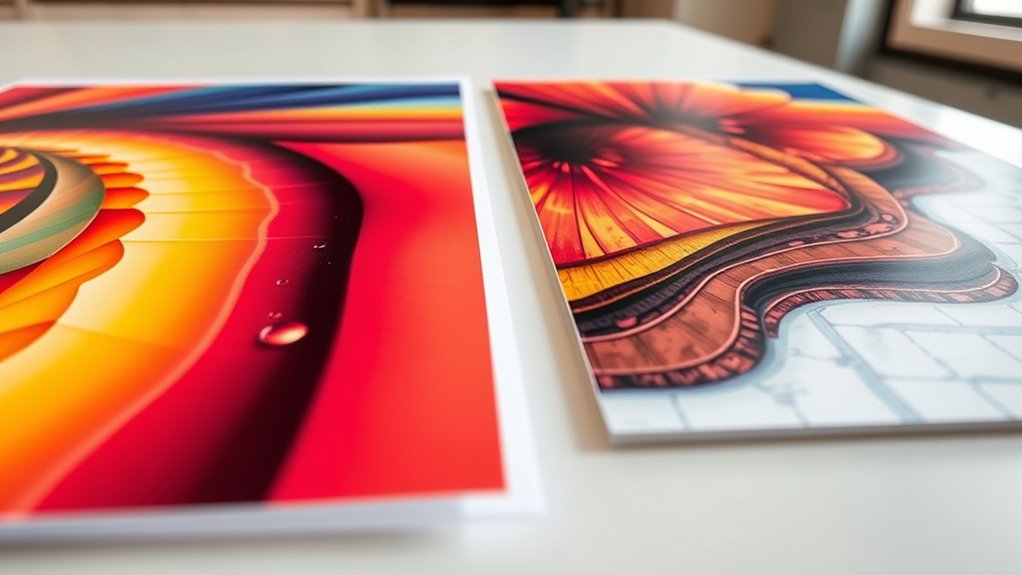
Giclee printing is a high-resolution inkjet printing process that produces fine art prints with exceptional detail and color accuracy. When you use giclee, you create a digital reproduction of the original artwork, capturing every nuance and color gradient.
The process involves spraying microscopic droplets of archival quality pigment-based inks onto high-grade, acid-free paper or canvas. This guarantees longevity and resistance to fading, meeting archival standards.
Spraying microscopic pigment-based ink droplets onto acid-free paper or canvas ensures lasting color and archival quality.
You’ll benefit from a wide color gamut and precise tonal range, thanks to advanced printers with multiple ink cartridges. Giclee’s technology lets you reproduce complex images with subtle shading and fine textures that traditional printing can’t match.
This method is ideal when you need a faithful, durable reproduction that preserves the integrity of the original piece.
How Screen Printing Works and Its Design Benefits
Although screen printing relies on a different technology than inkjet processes, it offers unique advantages in design reproduction. You work by pushing ink through a mesh stencil onto the substrate, layer by layer, which results in excellent color vibrancy and durability. This technique gives you notable design flexibility, especially for bold, graphic elements.
Key benefits include:
- Precise ink layering allows you to achieve intense color saturation.
- The method supports various substrates, including textiles, plastics, and paper.
- You can create special effects such as metallic or textured finishes.
Comparing Print Quality and Durability of Giclee and Screen Printing
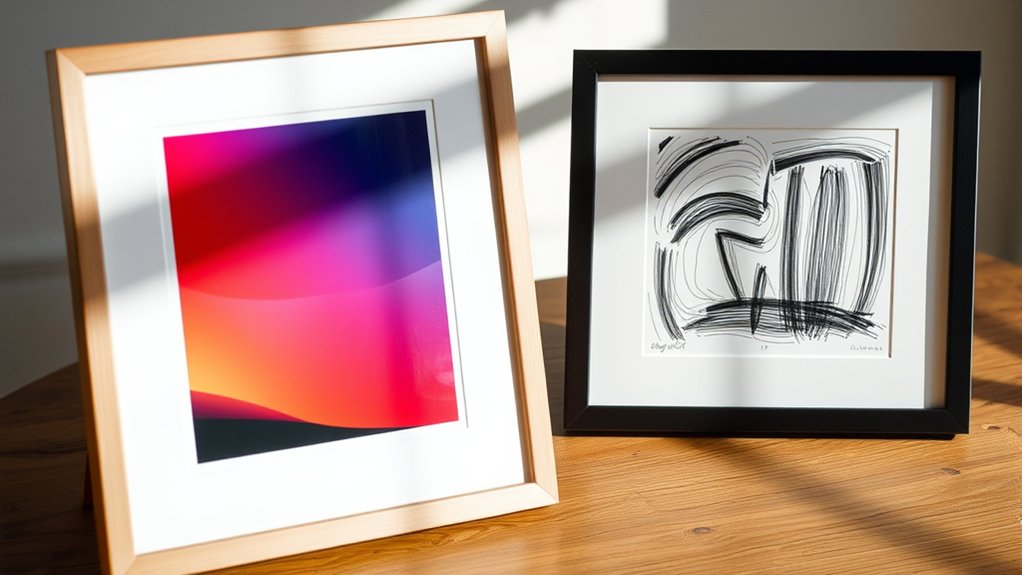
When evaluating print quality and durability, you’ll find that each method, giclee and screen printing, excels under different conditions due to their distinct technologies. Giclee printing uses high-resolution inkjet technology, delivering superior color accuracy through precise ink droplet placement. This results in smooth gradients and fine detail reproduction, ideal for photographic and complex artwork.
Its print longevity is enhanced by archival pigment inks, resisting fading for decades under proper conditions. Conversely, screen printing applies thick layers of ink, producing vibrant, opaque colors with excellent durability against abrasion and UV exposure. However, color accuracy can be limited by the number of screens used and the ink layering process.
While giclee excels in detailed color fidelity and longevity, screen printing offers robust durability suited for high-traffic environments, making your choice dependent on intended use and desired visual effect.
Materials Used in Giclee and Screen Printing
The choice of materials plays an essential role in determining the final quality and application of both giclee and screen printing techniques. You need to understand how ink types and paper choices differ in each method to optimize your results.
Material selection is key to achieving optimal quality and application in both giclee and screen printing.
- Ink Types: Giclee uses pigment-based inks that offer a wide color gamut and longevity, while screen printing employs plastisol or water-based inks suited for bold, opaque layers.
- Paper Choices: Giclee typically prints on archival, acid-free fine art papers or canvas to guarantee durability and color fidelity. Screen printing favors thicker substrates like cardstock, textiles, or specialty papers that can withstand stencil application.
- Surface Preparation: Screen printing requires a pre-treated surface for ink adhesion, whereas giclee relies on the printer’s calibration to manage ink absorption on various papers.
Selecting appropriate materials directly influences print quality and lifespan.
Choosing the Right Printing Method for Your Project and Budget
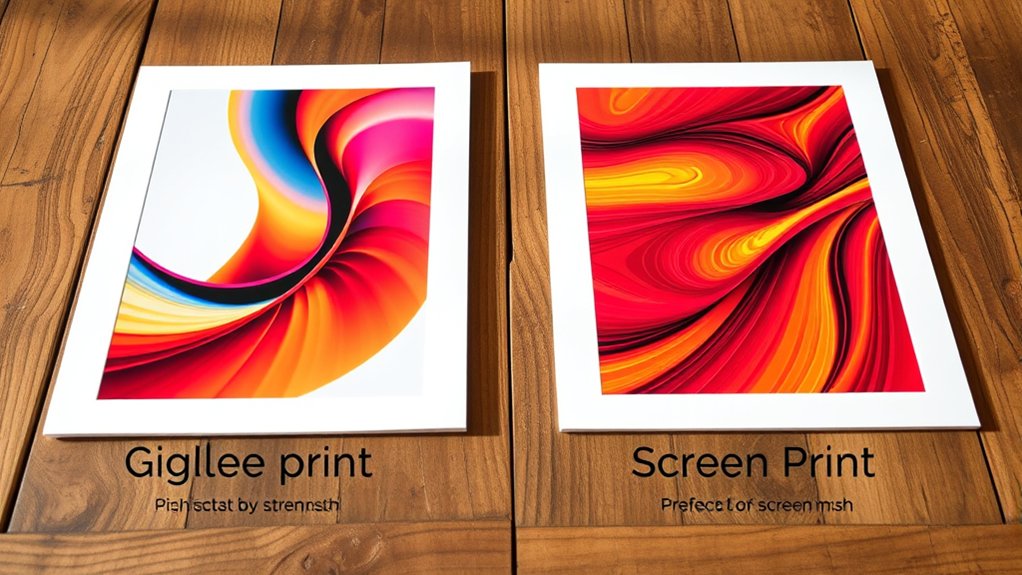
Understanding the materials used in giclee and screen printing sets the foundation for selecting the most suitable method based on your project’s specifications and budget constraints. When choosing between these techniques, evaluate your project requirements carefully.
Giclee excels in high-resolution color gradients and fine detail, ideal for limited runs or art reproductions, but entails higher per-unit costs due to ink and paper quality. Screen printing, by contrast, offers cost efficiency for large quantities with bold, flat colors but struggles with intricate designs and limited color palettes.
Budget considerations must factor in setup expenses, print volume, and desired durability. If precision and color fidelity are paramount and your budget allows, giclee is preferable. For mass production with simpler graphics, screen printing optimizes cost and turnaround time without compromising basic quality.
Frequently Asked Questions
Can Giclee Prints Be Made on Fabrics?
Yes, you can create giclee prints on fabric, but you’ll need specific fabric compatibility for ideal ink absorption. Keep in mind, print durability varies; treated textiles handle giclee inks better, ensuring long-lasting, vivid images without fading or cracking.
Is Screen Printing Eco-Friendly?
Screen printing can be eco-friendly if you use sustainable practices and select water-based or biodegradable ink choices. You’ll reduce chemical waste and energy consumption, making the process more environmentally responsible without sacrificing print quality or durability.
How Long Does Each Printing Process Take?
You’ll find screen printing offers a faster printing speed, completing prints within minutes per batch, while giclee’s production timeline is slower, often taking hours due to high-resolution inkjet layering and drying processes for each piece.
Can Giclee Printing Replicate Metallic Inks?
You can’t achieve true metallic effects with giclee printing due to giclee limitations; its inkjet process lacks specialized metallic inks. It simulates shimmer via color blending rather than replicating genuine metallic ink’s reflective qualities.
What Is the Typical Cost Difference Between Both Methods?
You’ll find giclee prints usually cost more upfront due to advanced ink and high-resolution output. Screen printing’s cost varies with volume and setup complexity.
Pricing factors include materials, labor, and print run size, affecting cost comparison considerably.
Conclusion
When deciding between giclee and screen printing, don’t just rely on myths like “screen prints last forever” or “giclee is only for fine art.” In reality, giclee offers exceptional color accuracy and longevity with high-quality inks on archival materials.
Screen printing, on the other hand, excels in durability and cost-effectiveness for bold, repetitive designs. Understanding your project’s needs and budget is essential.
This knowledge guarantees you pick the precise method that delivers both performance and value when choosing between giclee vs screen print.