
When deciding between embroidery and screen printing, consider your design, fabric, and durability needs.
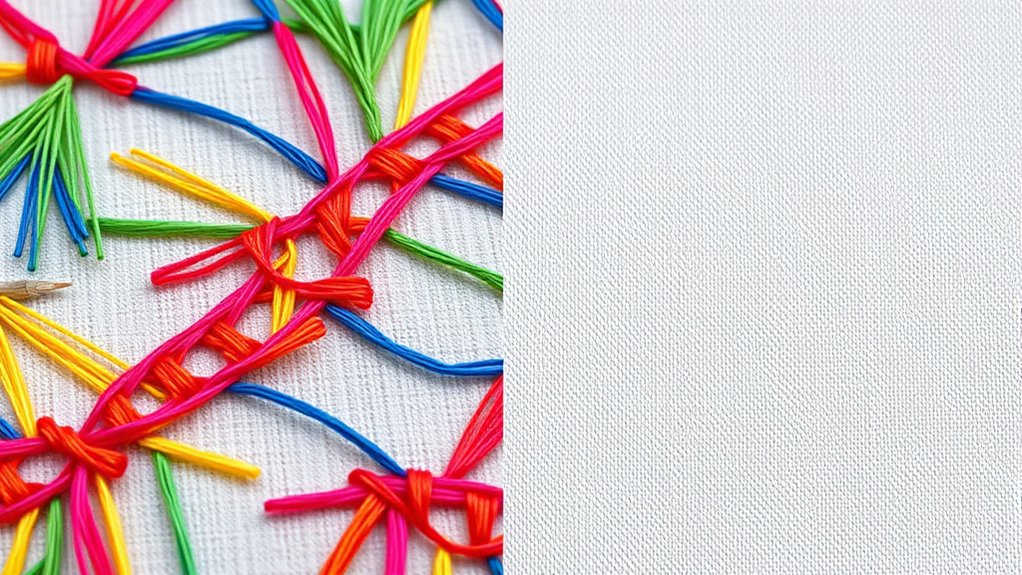
Embroidery stitches colorful threads for a textured, long-lasting look that suits thicker fabrics and simple logos.
Screen printing pushes ink through stencils to create smooth, vibrant designs perfect for detailed, multi-color artwork on lighter fabrics.
Embroidery tends to cost more upfront but lasts longer, while screen printing is cost-effective for large runs.
Keep going to uncover which method best fits your project goals.
Key Takeaways
- Embroidery offers a durable, textured, and premium look ideal for simpler logos on thicker fabrics.
- Screen printing excels with vibrant, detailed designs and smooth surfaces, especially for complex color gradients.
- Embroidery costs more upfront due to digitizing and thread, while screen printing is cost-effective for large runs.
- Embroidery resists fading and wear better, lasting the garment’s lifetime, unlike inks that may peel or crack.
- Fabric choice impacts results: embroidery suits fabrics with good thread compatibility; screen printing requires smooth, flat surfaces.
Understanding Embroidery Basics
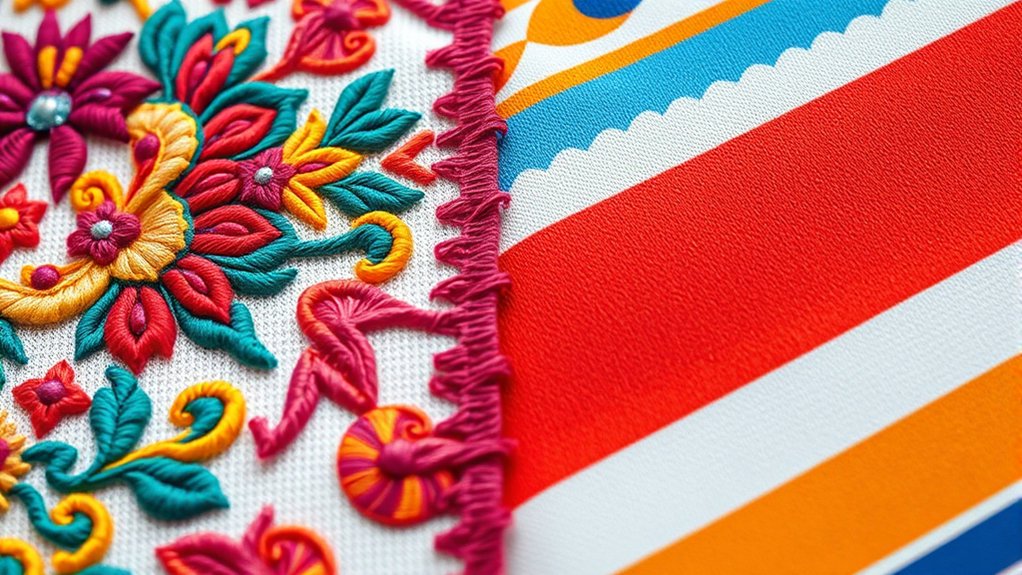
Embroidery transforms fabric into a textured canvas by stitching threads in precise patterns. When you explore embroidery basics, you’ll quickly notice the variety of embroidery techniques available, from satin stitches creating smooth surfaces to intricate fill stitches adding depth.
Each technique manipulates thread tension and direction to craft distinct textures and visual effects. Choosing the right thread types is essential. Rayon offers a glossy finish, polyester provides durability, and cotton lends a matte look.
The thread’s thickness and sheen directly impact the design’s clarity and feel. As you master these fundamentals, you’ll understand how thread type and stitching method combine to elevate your fabric’s visual and tactile quality, giving your designs a professional, lasting impression that screen printing often can’t replicate.
How Screen Printing Works
You’ll start by preparing a mesh screen that blocks ink in unwanted areas, creating a stencil of your design. Then, you’ll apply ink over the screen, pushing it through the open sections with a squeegee to transfer the image onto fabric.
This precise ink application technique guarantees sharp, vibrant prints with each press.
Screen Printing Process
The screen printing process starts by creating a stencil, or screen, that blocks out areas where ink shouldn’t pass through. This step draws from centuries of screen printing history, evolving from hand-cut stencils to precise photo-emulsion techniques.
You prepare the screen by coating it with a light-sensitive emulsion, then expose it to UV light through your design. The exposed areas harden, while unexposed parts wash away, leaving open mesh for ink to flow through.
Next, you place the screen on your substrate, usually fabric, and use a squeegee to push ink across the screen, forcing it through the open mesh onto the surface below. This method allows sharp, vibrant prints with excellent durability. Mastering these screen printing techniques guarantees consistent, high-quality results every time.
Ink Application Techniques
Ink application forms the heart of screen printing, where precision and technique determine the quality of the final image. You start by selecting the right ink types: plastisol, water-based, or discharge, each offering unique finishes and durability.
Using a squeegee, you push ink through the mesh screen onto the fabric, controlling pressure and speed for sharp, consistent prints. The mesh’s tension and stencil detail guide the ink’s flow, guaranteeing crisp edges.
Application methods vary: manual for small runs or automatic presses for high-volume jobs, both requiring exact alignment. Proper curing follows, solidifying the ink for wash resistance.
Mastering these ink application techniques guarantees vibrant, long-lasting prints that stand out compared to embroidery’s textured, stitched look.
Which Lasts Longer and Looks Better?
You want your design to stay sharp and vibrant through countless washes, so understanding durability is key.
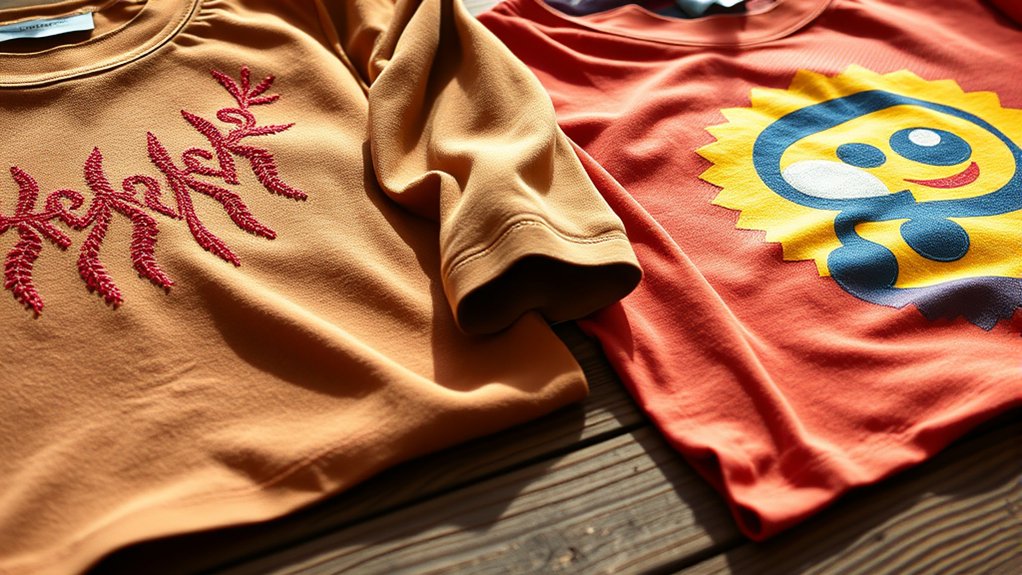
Embroidery offers textured, long-lasting visuals, while screen printing delivers smooth, detailed images that can fade over time.
Let’s compare how each method holds up and what care they require to keep your gear looking fresh.
Durability Comparison
Although both embroidery and screen printing offer unique aesthetic qualities, their durability varies considerably under different conditions. When evaluating durability factors, embroidery uses thread stitched into fabric, making it highly resistant to fading and wear.
Longevity expectations for embroidery are excellent, often lasting the garment’s lifetime without significant degradation. Screen printing, by contrast, relies on ink layers applied to fabric surfaces, which can crack, peel, or fade with frequent washing and sun exposure.
However, advances in ink technology have improved screen printing’s durability, especially with plastisol or water-based inks. If you need rugged, long-lasting designs resistant to abrasion, embroidery generally outperforms.
But for complex, colorful designs requiring smooth finishes, screen printing can maintain reasonable durability if properly cared for. Your choice depends on the specific durability factors and longevity expectations of your project.
Visual Appeal Differences
Durability plays a key role in how embroidery and screen printing hold up over time, but how they look and age visually is just as important. When you choose between the two, consider how each method affects visual texture and design depth.
Embroidery’s raised threads create a tactile, three-dimensional effect that remains vibrant as fibers catch light differently. Screen printing, however, offers smooth, flat colors that can reproduce intricate details and gradients instantly but may fade or crack with wear.
Embroidery provides rich design depth and a premium, textured finish
Screen printing excels in color variety and fine detail resolution
Embroidery resists fading, maintaining visual texture over time
Screen printing allows complex imagery but can lose sharpness after frequent washing
Understanding these nuances helps you pick the best visual appeal for your project.
Maintenance And Care
When caring for embroidered garments, you’ll find they withstand frequent washing and retain their texture with minimal effort. The raised threads resist fading and maintain their shape, provided you follow precise cleaning techniques like gentle machine washing or hand washing in cold water.
Avoid bleach and harsh detergents to protect the embroidery’s stitch integrity and the fabric’s fibers. In contrast, screen-printed designs require more delicate fabric care; high heat during washing or drying can cause cracking and fading.
To preserve screen prints, turn garments inside out and use mild cycles with low temperatures. While embroidery lasts longer and keeps its vibrant appearance, it demands slightly more attention during cleaning.
Understanding these differences helps you extend your garment’s lifespan and maintain its professional look.
Cost Comparison: Embroidery Vs Screen Printing
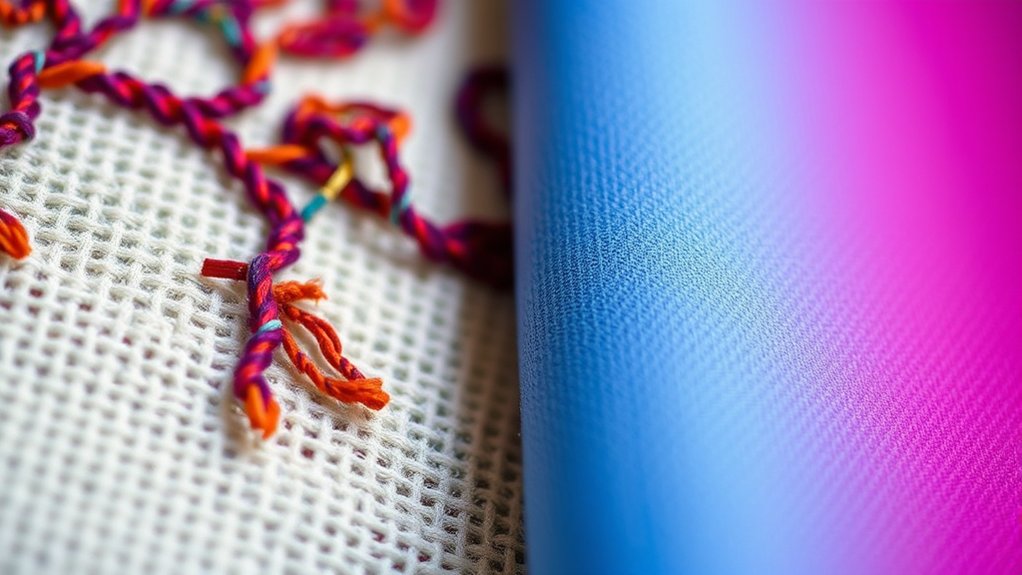
Cost plays an essential role in deciding between embroidery and screen printing for your project. Understanding cost factors and budget considerations helps you choose the most efficient method.
Embroidery involves higher setup costs due to digitizing designs and thread expenses but offers durability. Screen printing requires creating screens, which can be costly upfront but becomes economical with larger runs.
Consider these cost factors:
- Setup fees: digitizing vs. screen preparation
- Quantity: embroidery suits small to medium runs; screen printing excels in large volumes
- Material costs: threads for embroidery, inks for screen printing
- Complexity: highly detailed embroidery increases costs; screen printing charges rise with color count
Design and Color Options for Both Methods
Although both embroidery and screen printing offer vibrant design possibilities, they differ markedly in how they handle colors and details. With embroidery, you get rich texture and depth, but color vibrancy is limited by thread shades and stitching techniques. It’s ideal for logos with solid colors and simple shapes, as complex gradients don’t translate well.
Screen printing excels in design versatility, allowing you to reproduce intricate images with sharp lines and a wide spectrum of vivid inks. You can layer multiple colors with precision, achieving smooth gradients and photorealistic effects. However, very fine details might blur on textured fabrics.
To summarize, choose embroidery for tactile, durable designs with bold colors, and opt for screen printing when you want striking color vibrancy and intricate, multi-hued artwork.
Best Fabrics for Embroidery and Screen Printing
Choosing the right fabric can make or break your embroidery or screen printing project. Different fabric types respond uniquely to each method, influencing durability and aesthetic. For embroidery, you need fabrics with good thread compatibility to hold stitches firmly without puckering. Screen printing demands smooth, flat surfaces for crisp ink application.
Consider these fabric types for ideal results:
Cotton: Versatile, breathable, ideal for both embroidery and screen printing.
Polyester: Durable and smooth, great for vibrant screen printing; embroidery requires stabilizers.
Linen: Strong texture suits embroidery but may challenge screen printing crispness.
Blends (Cotton-Polyester): Balance softness and durability, supporting both techniques effectively.
Selecting fabrics aligned with your method guarantees sharp designs and lasting quality.
Choosing Embroidery or Screen Printing for Your Project
How do you decide between embroidery and screen printing for your project? Start by evaluating project suitability: embroidery excels on thicker fabrics and offers durability with a textured, premium look. Screen printing suits smoother, lighter materials and delivers vibrant, detailed designs ideal for complex color gradients.
Consider branding impact. Embroidery conveys professionalism and longevity, perfect for corporate wear. Screen printing provides bold visuals and cost-efficiency for large runs or promotional items.
Embroidery signals professionalism and durability, ideal for corporate wear; screen printing offers vibrant, cost-effective options for large promotional runs.
Match your design’s complexity and intended use to the technique. For logos with fine details or multiple colors, screen printing captures precision better, while embroidery adds depth and tactile appeal to simpler logos.
Ultimately, weigh fabric type, design detail, quantity, and budget. This strategic approach guarantees your final product resonates visually and aligns with your brand’s identity.
Frequently Asked Questions
Can Embroidery Be Combined With Screen Printing on the Same Garment?
Yes, you can combine embroidery with screen printing on one garment. This expands your design possibilities but consider cost considerations, as adding embroidery increases expenses and production time compared to screen printing alone, impacting your budget.
How Do Washing Instructions Differ for Embroidered vs. Screen Printed Items?
You’ll follow gentler care instructions for embroidered items to protect fabric durability, using cold wash and air drying. Screen printed garments tolerate slightly warmer washes but avoid harsh detergents to prevent cracking or fading of the print.
Are There Environmental Impacts Unique to Each Printing Method?
You’ll find embroidery uses sustainable materials like natural threads, generating minimal waste. Screen printing often involves chemical inks requiring careful waste management to reduce environmental impact, demanding proper disposal and eco-friendly alternatives for sustainability.
Can Screen Printing Achieve the Same Texture as Embroidery?
You can’t match embroidery’s raised texture. Studies show it offers 3D depth screen printing lacks.
Screen printing excels in design versatility but delivers a flat finish, so texture comparison favors embroidery for tactile detail and dimension.
How Long Does the Production Process Take for Each Method?
You’ll find the production timeline for screen printing usually spans a few days, while embroidery takes longer due to stitching complexity.
This method comparison highlights screen printing’s speed versus embroidery’s detailed craftsmanship.
Conclusion
Choosing between embroidery and screen printing is like picking between textured threads and smooth ink. Embroidery offers durable, tactile designs that stand out with depth, while screen printing delivers vibrant, flat colors ideal for intricate patterns. Costs vary—embroidery usually leans higher, but screen printing suits larger runs better.
Think fabric and project goals: sturdy cotton loves stitches; polyester thrives with prints. Weigh longevity against detail, and you’ll stitch or print with confidence. Ultimately, understanding the strengths of embroidery vs screen printing helps you make the best choice for your design needs.