
DTF vs Vinyl vs Screen Printing each has unique advantages depending on your project needs.
DTF excels at detailed, multi-color designs on cotton-poly blends with vibrant, durable prints.
These prints handle washes well but may crack over time.
Vinyl delivers sharp, solid colors best suited for smooth surfaces like leather.
However, it risks cracking if stretched.
Screen printing shines with bold, simple designs on 100% cotton, offering robust durability and cost benefits on large runs.
The setup process is slower but efficient for volume production.
Understanding each method’s strengths helps optimize your print choices and production efficiency.
Key Takeaways
- DTF excels in detailed, multi-color designs with smooth gradients, while vinyl suits solid colors and screen printing favors bold, simple graphics.
- Screen printing offers the best durability and vibrant colors for heavy wear, with thick ink layers bonding well to cotton fabrics.
- Vinyl is ideal for smooth, non-textured surfaces like leather and nylon, whereas DTF works best on cotton/polyester blends and screen printing on tightly woven cotton.
- DTF printing provides moderate scaling benefits and efficient batch runs due to its digital process, whereas screen printing is cost-effective for large runs but has high setup costs.
- Vinyl printing has consistent costs but slower production speed due to manual application, making it less efficient compared to DTF and screen printing for large quantities.
How DTF, Vinyl, and Screen Printing Work
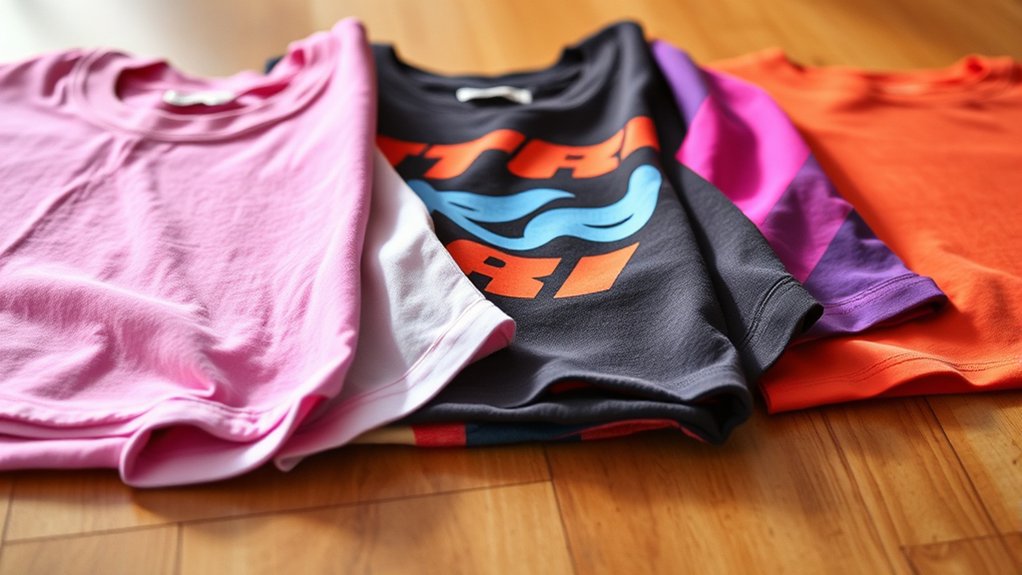
Although each method uses different materials and equipment, understanding how DTF, vinyl, and screen printing work is essential for choosing the right technique. In DTF printing, you start by using specialized printing equipment to print designs with water-based ink onto a PET film.
Next, you apply a powdered adhesive to the film, then cure it before heat pressing the transfer onto fabric. Vinyl printing involves cutting designs from colored vinyl sheets using a plotter, then heat pressing the vinyl onto the substrate for adhesion.
Screen printing requires creating a stencil or screen, pushing ink through the mesh openings onto the fabric, and curing the ink afterward. Each method demands distinct application techniques, from layering ink in screen printing to precise heat and pressure control in vinyl and DTF processes.
Print Quality and Durability Compared
When evaluating print quality and durability, you’ll find that each method, DTF, vinyl, and screen printing, offers distinct advantages based on their material properties and application processes. DTF printing applies a flexible adhesive layer that guarantees excellent print longevity and maintains color vibrancy through multiple washes.
Vinyl printing, using heat-pressed cut designs, provides sharp edges and robust durability but can suffer from cracking if stretched excessively, slightly affecting longevity. Screen printing deposits thick layers of ink directly onto fabric, creating vibrant colors that resist fading and withstand heavy wear, contributing to superior print longevity.
However, screen-printed details may degrade faster on complex designs due to ink layering. Understanding these nuances helps you select the best technique balancing color vibrancy and durability for your specific application.
Color and Design Complexity by Method
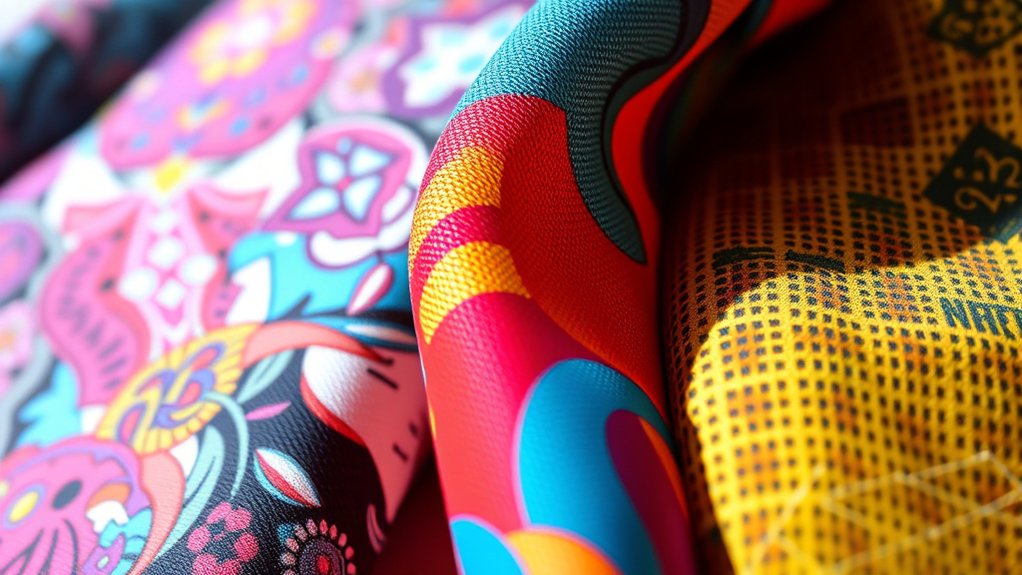
Understanding how each printing method handles color and design complexity builds on their durability and print quality characteristics. When you evaluate DTF, vinyl, and screen printing, consider how they manage color gradients and design intricacies.
- DTF excels at reproducing color gradients smoothly due to its digital inkjet process, allowing for detailed, multi-color designs without layering constraints.
- Vinyl printing handles solid colors well but struggles with gradients and intricate details, as designs are cut from colored sheets, limiting subtle shifts.
- Screen printing uses separate screens per color, making complex color gradients challenging but suitable for bold, simple designs with defined edges.
- For detailed design intricacies, DTF offers the highest fidelity, while vinyl is best for sharp, minimalistic graphics, and screen printing suits moderate complexity with fewer colors.
Best Fabrics and Surfaces for Each Printing Type
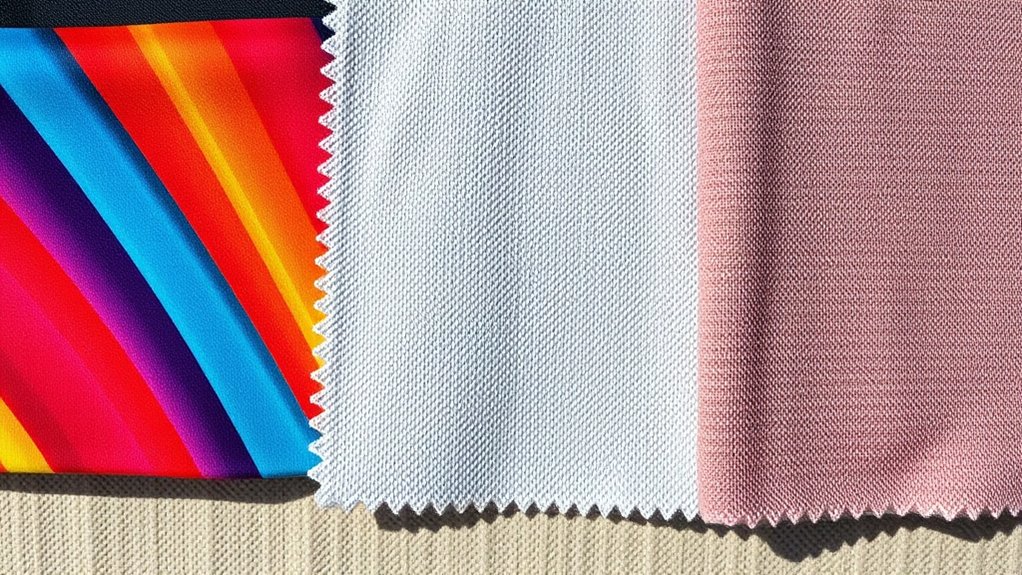
You’ll want to match each printing method with fabrics that enhance adhesion and durability. DTF works best on cotton and polyester blends, while vinyl excels on smooth, non-textured surfaces like nylon and leather.
Screen printing demands tightly woven fabrics, such as 100% cotton, to guarantee crisp, long-lasting images.
Ideal Fabric Choices
Although each printing method offers unique advantages, selecting the right fabric greatly impacts print quality and durability. You need to evaluate fabric suitability by analyzing fiber types, as each printing process interacts differently with natural and synthetic fibers.
- DTF Printing thrives on polyester and polyester blends due to superior ink adhesion and flexibility.
- Vinyl Printing works best on cotton and cotton-rich fabrics, which provide a stable surface for heat transfer vinyl.
- Screen Printing excels on 100% cotton fabrics, offering excellent ink absorption and vibrant colors.
- Blended Fabrics (cotton-polyester) require testing since fiber ratios affect ink penetration and vinyl adhesion.
Surface Compatibility
Choosing the right fabric sets the foundation, but matching printing methods to compatible surfaces guarantees excellent adhesion, durability, and visual quality. When evaluating substrate selection criteria, you must consider fiber content, surface texture, and heat sensitivity.
DTF printing excels on cotton and polyester blends due to its adhesive film bonding, requiring minimal surface preparation techniques beyond cleaning. Vinyl printing demands smooth, non-porous substrates like cotton or polyester with flat surfaces for maximum heat pressing.
Screen printing best suits natural fibers like cotton, where ink absorption ensures vivid, durable results; however, thorough surface preparation techniques such as degreasing and pre-treating are essential to maximize ink adhesion. Understanding these parameters helps you select substrates that align with each printing process’s technical demands, guaranteeing consistent, high-quality output.
Setup Time and Production Speed
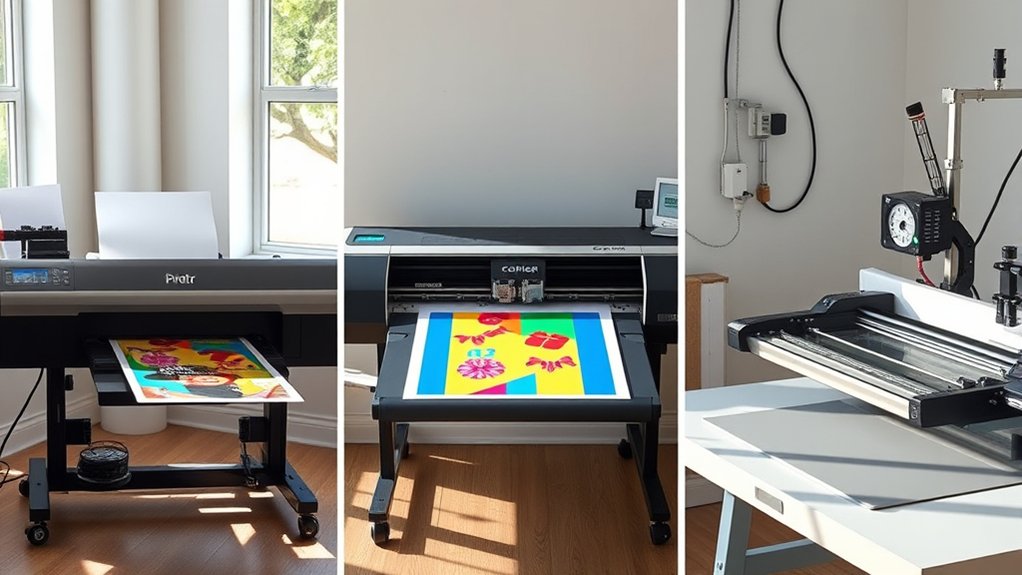
When evaluating setup time and production speed, each printing method demands distinct preparation and operational steps that directly impact turnaround. You’ll notice differences in setup efficiency and overall production timelines depending on the technique you choose.
- DTF requires precise printer calibration and film preparation, making initial setup moderately time-consuming but offering rapid print runs once aligned.
- Vinyl Cutting involves designing, cutting, weeding, and heat pressing, which extends setup time but allows quick reproduction after setup.
- Screen Printing demands extensive screen preparation, including coating, exposing, and washing, considerably increasing setup duration but accelerating mass production afterward.
- All methods benefit from workflow optimization, yet screen printing excels in high-volume speed, while DTF and vinyl offer quicker turnaround for smaller batches.
Understanding these nuances helps you optimize your production timelines effectively.
Costs for Small and Large Runs
Understanding the costs for small and large runs is essential for selecting the most economical printing method for your project. When ordering small quantities, DTF and vinyl printing typically incur higher per-unit costs due to setup and material expenses.
Screen printing, while cost-effective in bulk pricing, involves significant setup fees that make it less ideal for small runs. As your order volume increases, screen printing benefits from economies of scale, reducing the unit cost drastically.
DTF offers moderate scaling advantages, whereas vinyl remains consistent but less competitive for very large runs.
| Printing Method | Small Quantities Cost | Large Runs Cost |
|---|---|---|
| DTF | Moderate | Moderate Low |
| Vinyl | High | Moderate |
| Screen Printing | High (setup cost) | Low |
| Bulk Pricing | N/A | Best for Screen |
| Setup Fees | Significant for Screen | Low for Vinyl/DTF |
How to Choose the Best Printing Method
You’ll want to assess the durability and longevity requirements of your project to determine which printing method holds up best under wear and washing. Next, factor in cost constraints alongside production speed, since some techniques are more efficient for small runs while others excel at large quantities.
Durability And Longevity
In selecting the best printing method, durability and longevity play a crucial role in ensuring your design withstands wear and environmental factors. You need to evaluate how each method responds to fade resistance and wear testing to make an informed choice.
- DTF printing uses a strong adhesive layer and polyester-based inks, offering excellent fade resistance under UV exposure.
- Vinyl printing applies heat-transfer vinyl, which resists cracking and peeling, but its longevity depends on fabric type and washing conditions.
- Screen printing deposits thick ink layers that bond well with fabric fibers, providing robust wear resistance through repeated laundering.
- Conduct standardized wear testing, including abrasion and wash cycles, to quantify each method’s lifespan under intended use conditions.
Cost And Production Speed
Three critical factors, material costs, labor intensity, and equipment efficiency, directly impact the overall expense and turnaround time of each printing method. When evaluating production efficiency, DTF printing often excels due to its digital process, reducing setup time and enabling rapid batch runs.
Vinyl printing, while cost-effective for small runs, demands manual weeding and application, increasing labor intensity and slowing production speed. Screen printing requires significant upfront preparation, including stencil creation and color separation, which drives up initial costs and delays production for short runs.
Conducting a pricing comparison reveals that DTF offers consistent per-unit costs regardless of volume, whereas vinyl and screen printing become more economical with larger quantities. By analyzing these variables, you can select the printing method that balances cost and speed to optimize your workflow.
Frequently Asked Questions
Can DTF Prints Be Washed Without Fading or Cracking?
You can wash DTF prints without fading or cracking by following precise washing instructions. Use cold water, a gentle cycle, and avoid bleach. Their durability comparison shows they maintain quality well if cared for properly during laundering processes.
Are Vinyl Prints Safe for Children’s Clothing?
Vinyl prints on children’s clothing are safe if they meet safety standards and undergo rigorous testing. Their print durability guarantees resistance to cracking or peeling, making them reliable for active kids and repeated wash cycles.
How Environmentally Friendly Is Each Printing Method?
You’ll find screen printing uses eco friendly materials and sustainability practices, making it more environmentally friendly.
Vinyl involves synthetic materials, less sustainable, while DTF uses inks and films with moderate eco impact depending on disposal and recycling processes.
Can Screen Printing Be Done on Non-Fabric Items?
You’ll find over 70% of screen printing techniques suit non-fabric applications. By using specialized inks and mesh screens, you can precisely print on materials like plastics, glass, metal, or wood, ensuring durable, high-quality results.
What Maintenance Is Required for DTF Printing Equipment?
You’ll perform daily equipment care by cleaning print heads and capping stations, flushing ink lines, and checking nozzles.
Regular maintenance tips include replacing filters, lubricating moving parts, and calibrating to guarantee consistent print quality and prevent clogs.
Conclusion
Choosing between DTF, vinyl, and screen printing is like selecting the right tool to carve your vision into fabric’s canvas. Each method etches durability, detail, and color vibrancy differently—DTF offers versatility, vinyl delivers sharp precision, and screen printing guarantees robust longevity.
By understanding their unique processes, costs, and fabric compatibilities, you’ll wield the perfect technique to bring your designs to life with efficiency and clarity. This knowledge ensures you turn ideas into enduring wearable art.
Ultimately, knowing when to use DTF vs vinyl vs screen printing empowers you to select the best method for your creative needs.