
When comparing DTF vs. screen printing durability, it’s important to note the differences in how each method bonds ink to fabric.
Screen printing typically offers a stronger ink-to-fabric bond, making prints more resistant to washing and abrasion over time.
DTF, or Direct to Film printing, uses a transfer film combined with adhesive powder. This process results in softer, more flexible prints with vivid colors but generally less durability under heavy wear.
Screen printing applies thicker layers of ink, which contributes to print longevity. However, these thicker layers can sometimes crack or peel with extensive use.
If you want to understand how factors like fabric type and print thickness influence durability, there’s still more to explore.
Key Takeaways
- Screen printing bonds ink directly to fabric fibers, offering superior durability and longevity compared to DTF’s transfer film and adhesive powder.
- DTF prints maintain vivid colors longer and resist cracking due to flexible, thin ink layers, unlike thicker, more brittle screen prints.
- Screen printing withstands frequent, aggressive washing better, while DTF prints require careful laundering to preserve adhesive integrity.
- DTF is less durable under heavy abrasion, making screen printing preferable for garments needing long-term wear resistance.
- Cost and environmental factors favor DTF for short runs, but screen printing offers more sustainable, durable prints for bulk orders.
Defining Durability in DTF vs. Screen Printing
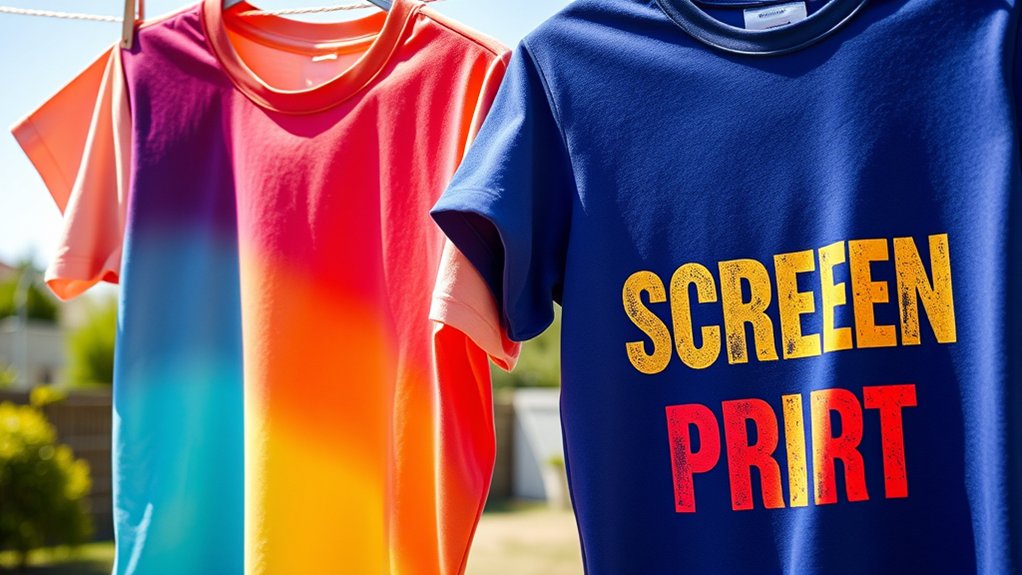
Durability in DTF (Direct to Film) and screen printing hinges on how each method withstands wear, washing, and environmental exposure over time. You’ll notice that ink adhesion plays a critical role in defining durability for both.
In screen printing, inks bond directly with fabric fibers, often resulting in a robust print lifespan that resists cracking and fading. DTF, on the other hand, relies on a transfer film and adhesive powder, which can impact ink adhesion differently depending on application quality.
While DTF offers flexibility on various fabrics, its print lifespan sometimes falls short compared to traditional screen printing, especially under heavy use. Understanding these nuances helps you determine which method suits your durability needs best.
Comparing Wash Resistance in DTF vs. Screen Printing
When evaluating how prints hold up after repeated laundering, wash resistance becomes a key factor distinguishing DTF and screen printing. You’ll notice that screen printing generally provides superior durability against high wash frequency due to its ink’s deeper penetration and stronger adhesion to fabric fibers.
In contrast, DTF prints, while flexible and vibrant, rely on a polyurethane adhesive layer that can degrade faster if not cared for properly. Fabric care instructions are essential for maximizing the lifespan of DTF prints. Washing inside out at lower temperatures and avoiding harsh detergents helps maintain print integrity.
Screen printing tolerates more aggressive washing conditions without significant degradation. Ultimately, if your application demands frequent laundering and less stringent fabric care, screen printing offers more reliable wash resistance than DTF.
How Color Retention Holds Up Over Time
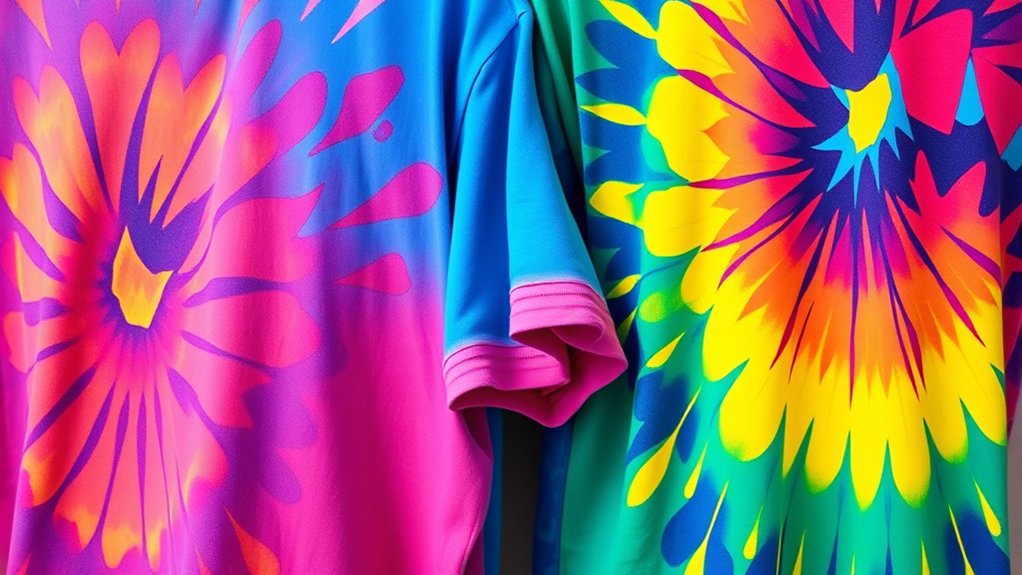
Although both DTF and screen printing deliver vibrant initial results, you’ll find that their color retention over time differs considerably due to the distinct ink formulations and application methods. DTF inks penetrate the fabric with high ink saturation, creating a dense, flexible layer that resists color fading effectively even after multiple washes.
In contrast, screen printing relies on thicker ink layers sitting atop the fabric, which can degrade faster under friction and UV exposure, leading to more noticeable color fading. While DTF’s pigment bonds at a molecular level, maintaining sharp, vivid colors, screen printing inks may crack or peel, accelerating fading.
Consequently, if long-term color retention is your priority, DTF often provides superior resistance to fading by preserving ink saturation and vibrancy better than traditional screen printing techniques.
Flexibility and Crack Resistance in DTF vs. Screen Printing
Since apparel undergoes frequent stretching and movement, understanding the flexibility and crack resistance of DTF versus screen printing is essential for maintaining print integrity.
DTF printing applies a thin, flexible film that bonds well with fabric fibers, offering significant flexibility benefits. This elasticity prevents cracking even after repeated bending or stretching.
In contrast, traditional screen printing deposits thicker ink layers, which can stiffen the garment and reduce flexibility. Over time, this rigidity increases the likelihood of cracks forming along stress points.
While both methods provide decent crack resistance initially, DTF maintains superior durability under dynamic conditions. If your focus is on long-term wear with minimal cracking, DTF’s flexibility benefits make it a more reliable choice compared to screen printing’s more brittle ink layers.
How Fabric Type Influences Durability
Because fabric composition directly affects how prints adhere and wear over time, understanding its role is essential for evaluating DTF and screen printing durability. When you use a cotton-rich fabric blend, screen printing generally achieves superior print adhesion due to the ink’s ability to penetrate fibers deeply.
Conversely, DTF excels on synthetic blends like polyester, where the adhesive layer bonds effectively to smooth surfaces. You’ll notice that natural fibers absorb ink differently, impacting the longevity of screen prints, while DTF’s polymer-based print maintains consistency across various fabric blends.
However, highly elastic or textured fabrics can challenge both methods, potentially reducing durability. By matching fabric blend selection with the printing technique, you guarantee the best print adhesion and durability tailored to your garment’s intended use and wash frequency.
Why Print Thickness Matters for Durability
When you consider print durability, thickness plays an essential role in how well a design withstands wear and washing. Thicker prints generally offer greater resistance to abrasion and fading, directly enhancing print longevity.
Thicker prints significantly improve durability by resisting wear, abrasion, and fading over time.
In screen printing, the ink layers are usually thicker, providing a robust barrier against mechanical stress and repeated laundering. Conversely, DTF prints, while capable of fine detail, often have a thinner adhesive and ink layer, which can reduce durability over time.
The thickness impact isn’t just about quantity but also ink composition and curing methods, affecting flexibility and adhesion to fabric. You must balance thickness with fabric compatibility to avoid cracking or peeling.
Ultimately, understanding thickness impact helps you choose the right method to guarantee your print maintains its integrity longer.
Balancing Cost and Durability in DTF vs. Screen Printing
You’ll notice that DTF offers more cost efficiency for short runs, while screen printing becomes economical at higher volumes due to setup expenses. When evaluating longevity, screen prints typically withstand repeated washes and abrasion better than DTF transfers.
Balancing these factors helps you choose the method that aligns with your budget without compromising the desired durability.
Cost Efficiency Comparison
Comparing the cost efficiency of DTF and screen printing requires analyzing both upfront expenses and long-term durability. In your cost analysis, consider that DTF demands less initial investment since it doesn’t require screens, making it more budget-friendly for short runs or complex designs.
Screen printing, however, involves higher setup costs due to screen preparation but becomes more cost-effective as volume increases, thanks to economies of scale. With budget considerations in mind, DTF suits projects with limited quantities or frequent design changes, while screen printing excels in bulk orders where the initial setup cost is amortized across many units.
Evaluating these factors helps you balance cost and performance, ensuring you choose the method that aligns with your production scale and financial constraints without compromising quality.
Longevity and Wear Analysis
Although both DTF and screen printing offer distinct advantages, understanding their longevity and wear characteristics is essential to selecting the right method for your project. DTF printing provides excellent initial vibrancy but may show signs of cracking or fading faster under repeated washing, slightly lowering durability expectations.
Screen printing, however, excels in long term performance due to its thicker ink layers and superior ink penetration, which resist wear and maintain clarity over time. When balancing cost and durability, consider that screen printing’s robust finish justifies its often higher upfront cost if you need garments to endure heavy use.
Conversely, DTF suits short to medium-term applications where flexibility and detailed designs are priorities. Assess your project’s lifecycle to align durability expectations with the ideal printing technique.
Choosing DTF or Screen Printing Based on Durability Needs
When deciding between DTF and screen printing, you should evaluate wear resistance and how each holds up after multiple washes. Consider that screen printing typically offers superior longevity under repeated laundering, while DTF may degrade faster but uses fewer environmentally harmful chemicals.
Understanding these durability factors helps you match your choice to the garment’s intended use and care conditions.
Wear Resistance Comparison
Because wear resistance directly affects a garment’s lifespan, you need to carefully evaluate whether DTF or screen printing suits your durability requirements. When considering fabric abrasion and print longevity, screen printing generally offers superior resistance due to thicker ink layers bonding well with fabric fibers.
DTF prints, while vibrant, have a thinner adhesive film that may wear faster under friction.
| Feature | DTF Printing |
|---|---|
| Fabric Abrasion | Moderate resistance |
| Print Longevity | Good, but thinner print layer |
| Flexibility | High, softer feel |
| Wear Resistance | Less durable under heavy use |
| Ideal Use | Low to medium abrasion garments |
| Feature | Screen Printing |
| Fabric Abrasion | High resistance |
| Print Longevity | Excellent, thick ink layers |
| Flexibility | Moderate, stiffer print |
| Wear Resistance | Highly durable |
| Ideal Use | High abrasion, long-term wear |
Longevity Under Washes
Evaluating wear resistance provides a foundation for understanding how DTF and screen printing perform over time, but examining longevity under washes reveals their true durability in real-world conditions. When subjected to repeated wash cycles, DTF prints generally maintain color vibrancy longer, resisting fabric fading due to their strong adhesive bonding and flexible ink layers.
Screen printing, while initially vibrant, can experience cracking or peeling as wash cycle effects weaken the ink’s adhesion, especially on lower-quality fabrics. However, high-quality screen prints with proper curing can rival DTF’s wash durability.
Ultimately, if your priority is minimizing fabric fading and preserving print integrity through frequent laundering, DTF offers a slight advantage. But with ideal preparation, screen printing remains a robust choice for long-term durability under wash cycle stresses.
Environmental Impact Factors
Understanding three key environmental impact factors can help you choose between DTF and screen printing based on durability needs. First, assess the sustainability practices of each method: screen printing typically uses water-based inks and reusable screens, reducing waste, while DTF relies on single-use films and powders.
Second, consider the eco friendly materials involved; screen printing inks often contain fewer harmful chemicals compared to the adhesive powders in DTF, which may impact biodegradability. Third, evaluate energy consumption during production; DTF’s heat press curing requires significant electricity, whereas screen printing’s drying processes can be more energy-efficient.
Frequently Asked Questions
How Do Environmental Factors Affect the Longevity of DTF and Screen Prints?
You’ll find temperature fluctuations and humidity levels impact both DTF and screen prints differently; DTF resists moisture better, but screen prints withstand heat variations more. Controlling environment extends each method’s print longevity effectively.
Can DTF or Screen Printing Withstand UV Exposure Better?
Screen printing generally offers better UV resistance, so you’ll experience less print fading under sunlight.
DTF prints are more prone to fading, meaning you’ll need extra care if UV exposure is frequent or prolonged.
Are There Specific Maintenance Tips to Extend Print Durability?
You should wash prints inside out with cold water to preserve print washing quality. Avoid harsh detergents and bleach, and follow fabric care labels closely. These steps extend durability, especially compared to neglecting proper maintenance.
How Do Drying and Curing Processes Impact Durability?
You’ll find curing techniques and drying times essential; improper curing weakens adhesion, reducing durability, while excessive drying can cause cracking.
Optimizing both guarantees stronger prints and longer-lasting garments, especially compared to less controlled methods.
What Are the Eco-Friendly Considerations for Durable Printing Methods?
Think of eco-friendly inks and sustainable materials as the green roots nourishing your print’s longevity. You’ll want to choose water-based inks and biodegradable substrates that reduce environmental impact.
At the same time, maintain durability through efficient curing technologies.
Conclusion
When deciding between DTF and screen printing, consider your durability priorities. For instance, a sports team needing vibrant, crack-resistant prints on polyester might favor screen printing for its proven wash resistance and flexibility.
However, if you want quick, cost-effective prints on various fabrics with decent longevity, DTF could work. Understanding how fabric type, print thickness, and wash cycles impact each method is essential.
In conclusion, evaluating these factors will help you choose the best option for your specific durability needs, ensuring the right balance between DTF vs screen printing durability.