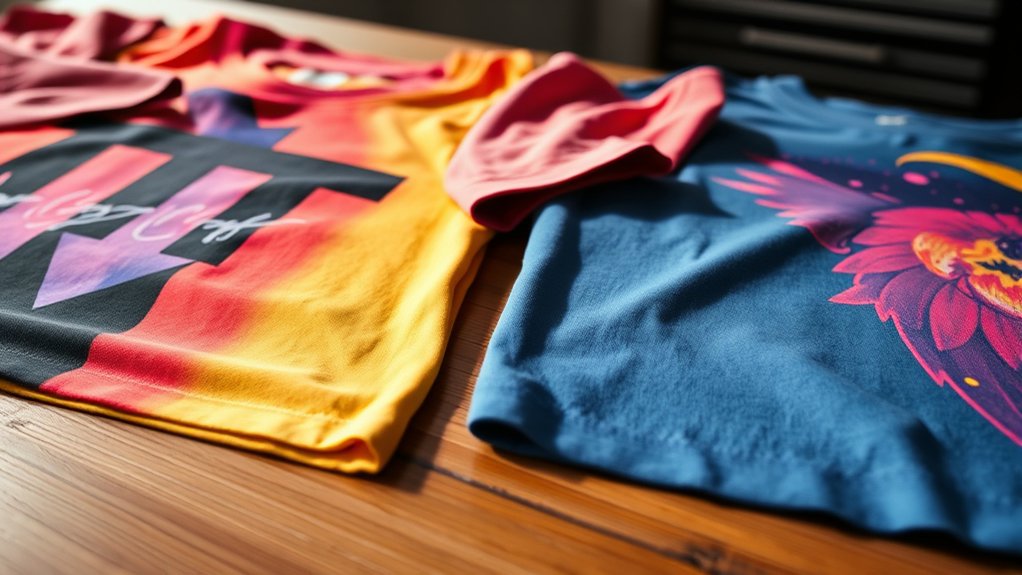

DTF vs screen printing each have their unique advantages depending on your project needs.
If you want vibrant, detailed designs quickly and with minimal setup, DTF printing is your go-to—perfect on cotton blends and synthetics, giving smooth gradients and rich colors.
But if you’re after bold, durable prints with a tactile feel and cost-effective bulk runs, screen printing shines, especially on 100% cotton.
Each method brings its strengths depending on your fabric and order size.
Keep exploring to see which technique truly matches your project’s needs.
Key Takeaways
- DTF printing provides vibrant, detailed designs quickly without setup delays, ideal for small orders and complex artwork.
- Screen printing requires setup but offers faster production and lower costs for large volume runs with bold, durable prints.
- DTF works well on cotton, polyester blends, and synthetics, while screen printing excels on 100% cotton for deep ink bonding.
- Screen printing produces extremely durable prints resistant to fading and cracking, whereas DTF prints may peel over time but maintain color vibrancy.
- DTF supports unlimited color gradients and fine details, while screen printing is best for solid colors and simpler designs with fewer color layers.
DTF Vs Screen Printing: Process Overview
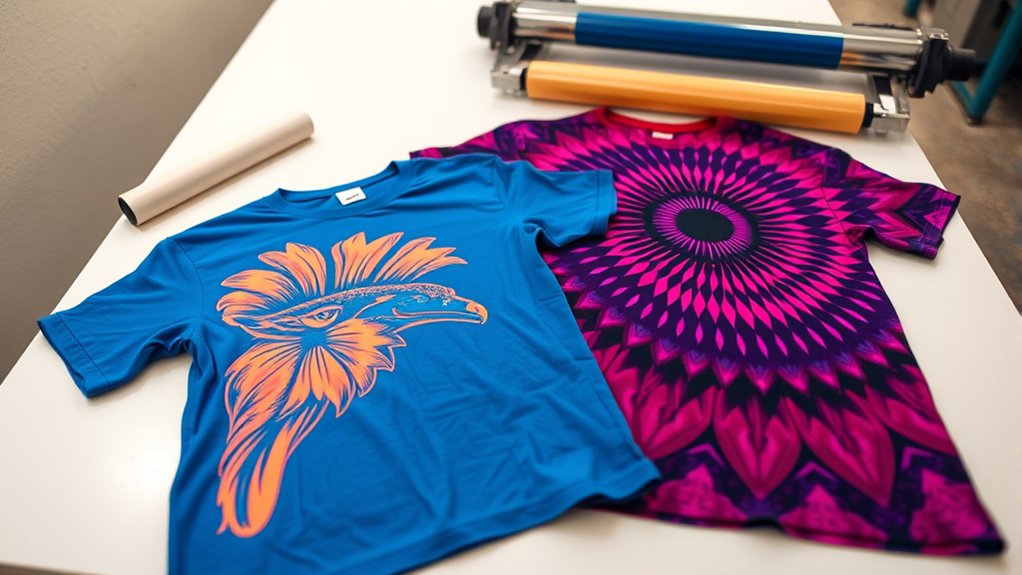
The magic behind DTF and screen printing lies in their unique processes, each painting fabric in its own vivid way. When you use DTF technology, you start by printing your design onto a special film with vibrant inks. Then, you sprinkle a powder adhesive onto the wet print, curing it with heat before pressing it onto fabric. This method captures intricate details and gradient colors flawlessly.
On the other hand, screen printing techniques involve creating stencils, screens for each color, pushing ink through the mesh directly onto the fabric. This layering builds bold, durable designs with a tactile feel. You’ll notice DTF’s smooth, photo-realistic finish contrasts with screen printing’s rich, textured look, showcasing how each technique uniquely transforms your apparel with precision and artistry.
Best Fabrics for DTF and Screen Printing
You’ll notice that certain fabrics play nicer with DTF and screen printing, each bringing out different strengths in color vibrancy and durability. Imagine how crisp designs pop on cotton’s soft weave versus polyester’s slick surface.
Choosing the right material can make your prints last longer and shine brighter, so let’s explore which fabrics suit each method best.
Fabric Compatibility Comparison
Although both DTF and screen printing offer vibrant results, they each shine brightest on specific fabrics that enhance their unique qualities. When you choose DTF, you’ll find it excels on cotton, polyester blends, and even some synthetics, thanks to its superb transfer paper compatibility. This versatility lets you print bold, detailed designs without worrying about fabric texture interfering.
Screen printing, however, truly flourishes on natural fibers, think 100% cotton or cotton-rich blends, where inks bond deeply, creating vivid, durable images. Dye sublimation fabrics, typically polyester, aren’t ideal for screen printing but work beautifully with DTF and sublimation methods.
Durability On Different Fabrics
Picking the right fabric sets the stage, but how your design holds up over time truly defines its success. When you choose DTF printing, polyester and cotton blends shine, resisting print fade even after countless washes, extending fabric lifespan.
The ink bonds well, creating a smooth, flexible layer that moves with the fabric. Screen printing, on the other hand, thrives on 100% cotton, where its thick ink layers embed deeply, offering robust durability. However, rougher fabrics or heavy textures may crack the print sooner, shortening fabric lifespan.
If you want your design to last without dulling, consider your fabric’s texture and weave. Both methods demand thoughtful pairing to prevent early print fade and guarantee your garment maintains its vivid story through wear and time.
Color Vibrancy On Materials
A vibrant design leaps off the fabric when the right printing method meets the perfect material. You’ll notice that DTF’s color intensity shines brightest on polyester blends, thanks to superior material interaction.
Screen printing, however, excels on 100% cotton, where ink absorbs deeply for vivid, lasting hues. Understanding these nuances helps you pick the best fabric for your project.
| Fabric Type | Best Printing Method | Color Vibrancy Notes |
|---|---|---|
| 100% Cotton | Screen Printing | Deep, rich colors with strong saturation |
| Polyester Blend | DTF | Bright, intense colors with smooth gradients |
| Cotton-Poly Blend | Both | Balanced vibrancy, depends on ink and technique |
Choose wisely to make your colors pop exactly as you envision.
Print Quality and Color Options Compared
When you compare DTF and screen printing, you’ll notice striking differences in print quality and color vibrancy. DTF offers exceptional print resolution, capturing intricate details and smooth gradients that bring your designs to life. The color saturation in DTF prints is vivid and consistent, perfect for complex artwork with multiple hues.
On the other hand, screen printing shines with bold, saturated colors, especially when using spot colors, but it may struggle with finer details due to its layering process. Screen printing’s color options are somewhat limited by the number of screens you can manage, while DTF uses digital printing to reveal virtually unlimited color possibilities.
Durability and Washability: Which Lasts Longer?
How long do your prints hold up after countless washes and daily wear? When you choose between DTF and screen printing, wash resistance plays a significant role in longevity factors.
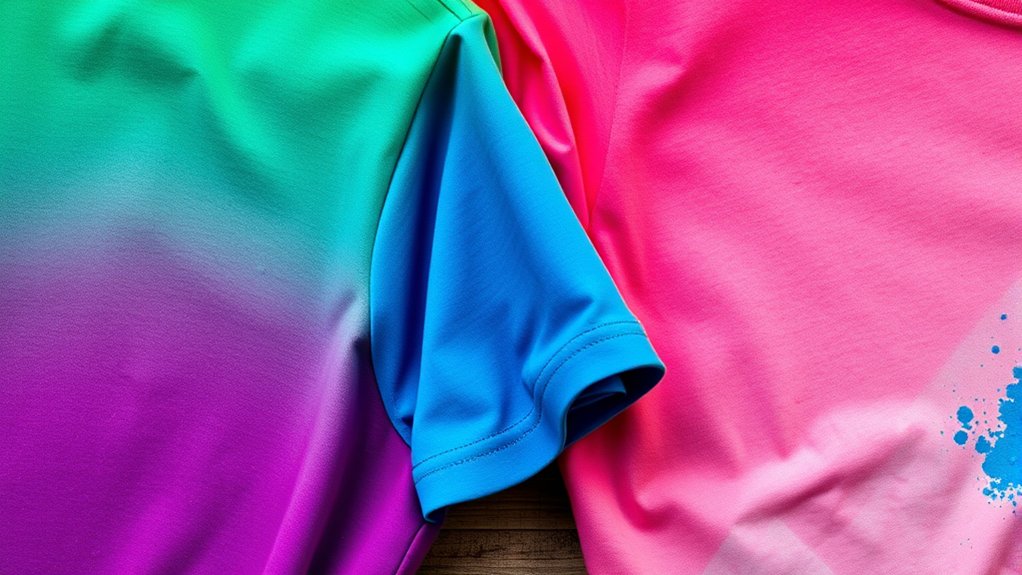
Screen printing uses thick layers of ink that bond deeply with fabric fibers, creating vibrant designs that resist fading and cracking over time. DTF prints, with their smooth, flexible film, offer impressive stretchability and crisp details but can be more vulnerable to peeling with repeated laundering.
Screen printing offers durable, vibrant designs, while DTF provides detailed, flexible prints that may peel over time.
If you want durability that withstands harsh detergents and frequent cycles, screen printing generally lasts longer. However, DTF shines in maintaining soft hand feel and fine details initially.
Ultimately, your decision hinges on how much wear and wash your garment will endure and which longevity factors matter most to you.
DTF Vs Screen Printing: Costs for Small & Large Orders
When you’re tackling small orders, DTF often shines with its quick setup and lower upfront costs, letting your designs pop without breaking the bank.
But for large runs, screen printing spreads out expenses, making each shirt cheaper as the numbers climb. Let’s break down how these cost curves paint a different picture depending on your order size.
Small Order Pricing Comparison
Although both DTF and screen printing deliver vibrant designs, you’ll notice a sharp difference in pricing when ordering small quantities. With DTF, you benefit from exceptional custom design flexibility since each print is crafted digitally, making it cost-effective to produce just a few pieces without setup fees.
Screen printing, however, demands creating physical screens, which inflates costs for small runs and reduces your budget’s efficiency. Additionally, DTF offers quicker order turnaround times, letting you get your unique designs faster.
Imagine crisp, full-color prints on your tee without waiting days for screen preparation. So, when you’re aiming for a handful of personalized garments, DTF’s streamlined process keeps expenses lower and lets your creativity flow freely without breaking the bank.
Large Order Cost Efficiency
Because large orders demand efficiency and scalability, screen printing often shines as the more cost-effective choice. When you place a big order, the magic of bulk discounts quickly adds up, slashing your per-unit cost.
Imagine rows of vibrant shirts lined up, each perfectly printed with crisp, consistent colors. Screen printing thrives in this repetitive rhythm. Plus, its streamlined setup means the order turnaround accelerates, getting your merchandise to you faster without sacrificing quality.
DTF printing, while flexible for smaller runs, can struggle with higher volumes, leading to longer wait times and less favorable pricing. So, if you’re gearing up for a hefty batch and want your budget and timeline aligned, screen printing’s large-order efficiency makes it a clear winner in both savings and speed.
Speed and Setup Time: Which Method Is Faster?
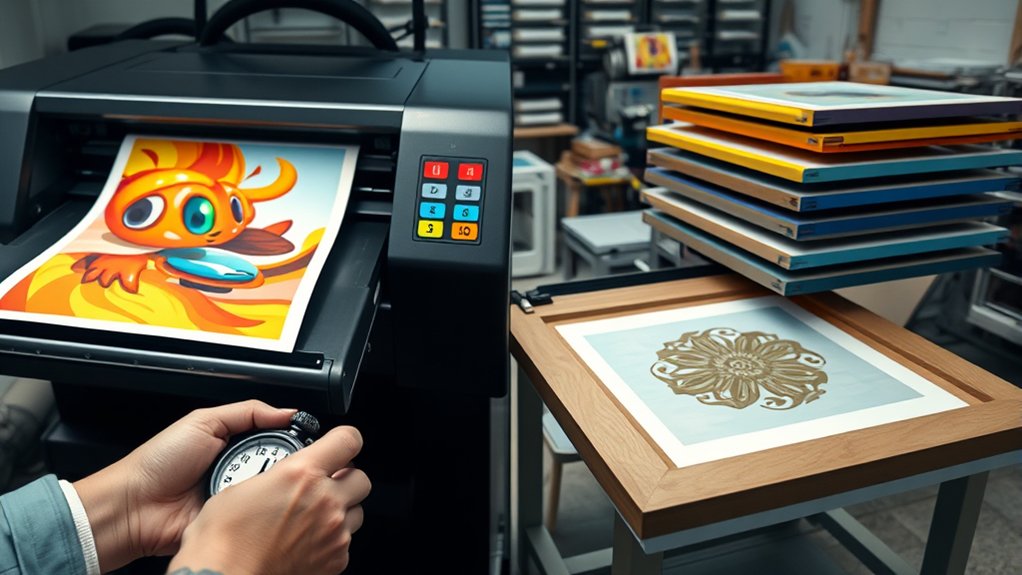
While both DTF and screen printing offer unique advantages, you’ll notice significant differences in their speed and setup times that can impact your project’s timeline. With DTF, you dive straight into printing after a quick digital file prep, maximizing setup efficiency and pushing production speed to new heights.
This method shines when you need vibrant, detailed prints fast, without the delays of physical screen preparation. On the other hand, screen printing demands meticulous setup—coating screens, drying, and aligning colors, which can slow the initial pace but accelerates once the process is underway, especially for bulk runs.
Which Printing Method Is Best for Your Project?
When deciding between DTF and screen printing, consider the unique demands of your project, whether you need sharp, full-color designs on diverse fabrics or bold, durable prints for large batches. If your project requirements lean toward intricate, multi-colored artwork with gradients or photographic elements, DTF offers vibrant detail and flexibility across materials like cotton, polyester, or blends.
Conversely, screen printing shines when you want thick, long-lasting ink for simpler designs with fewer colors, especially on large runs where cost-efficiency matters. Your design considerations should also include texture preferences; screen printing adds a tactile, raised feel, while DTF tends to be smoother and lighter.
Ultimately, matching the printing method to your project requirements guarantees your vision comes alive with the best quality and durability.
Frequently Asked Questions
Can DTF and Screen Printing Be Combined in One Design?
You can combine DTF and screen printing in one design to enhance design compatibility and boost production efficiency. This mix lets you layer vibrant details with bold textures, creating visually stunning, unique apparel that stands out effortlessly.
Are There Environmental Concerns With DTF or Screen Printing?
You’ll find both methods raise environmental concerns; screen printing’s ink toxicity and waste contrast with DTF’s plastic films.
Embracing sustainability practices, like eco-friendly inks and recycling, helps you minimize your design’s ecological footprint creatively.
How Do DTF and Screen Printing Affect Fabric Feel?
You might think prints always change fabric texture, but DTF feels softer, blending smoothly, while screen printing adds a thicker, textured layer. Both boast print durability, but your fabric’s feel varies. Choose based on your comfort priority.
What Equipment Maintenance Is Required for DTF and Screen Printing?
You’ll need regular printer cleaning to prevent clogs and maintain ink quality for vibrant prints. Screen printing demands mesh tension checks and stencil upkeep, ensuring crisp designs. Both require vigilance to keep your art flawless.
Can Both Methods Be Used on Non-Textile Materials?
You can use both methods for non textile applications, but DTF offers more printing versatility on smooth, rigid surfaces. Screen printing works best on flat, sturdy materials, so pick the method that suits your project’s texture and detail needs.
Conclusion
Whether you’re aiming for vibrant, detailed designs with quick turnarounds or bold, classic prints that stand the test of time, choosing between DTF and screen printing shapes your project’s story. You’ll weigh color brilliance against durability, fabric compatibility against cost-efficiency, speed against setup ease.
In the end, you’ll pick the method that brings your vision to life—bright, sharp, and ready to wear—making your creation not just seen, but remembered. Understanding the strengths of DTF vs screen printing ensures your final product perfectly matches your needs and style.