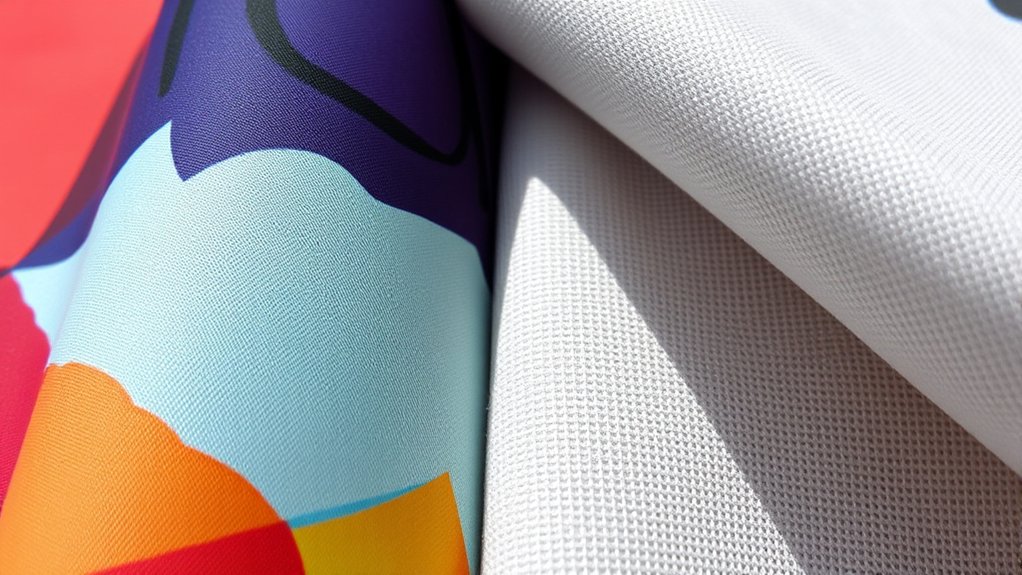

DTF transfers vs screen prints feel comparison reveals distinct differences in texture and flexibility.
You’ll notice DTF transfers feel smooth and thin, almost like a second skin, while screen prints have a thicker, raised texture you can really feel.
DTF prints are softer and more flexible, bending with fabric without cracking, unlike the occasionally stiff screen prints.
Fabric type also plays a role—DTF adapts well to blends, screen prints to cotton.
If you want to understand how these differences affect comfort and durability, keep exploring to find the best fit for your needs.
Key Takeaways
- DTF transfers have a smooth, thin layer with a soft, second-skin feel, while screen prints create a thicker, raised texture on garments.
- Screen prints feel stiffer and heavier, potentially reducing fabric breathability, whereas DTF transfers maintain softness and flexibility.
- DTF prints adapt well to fabric stretch without cracking, unlike thicker screen prints which may become brittle over time.
- On cotton, screen prints bond smoothly with good breathability, but DTF transfers may feel slightly thicker due to adhesive layers.
- DTF is ideal for complex, multi-colored designs with quick production, while screen printing suits simple, durable prints needing heavier texture.
What Do DTF Transfers and Screen Printing Feel Like?
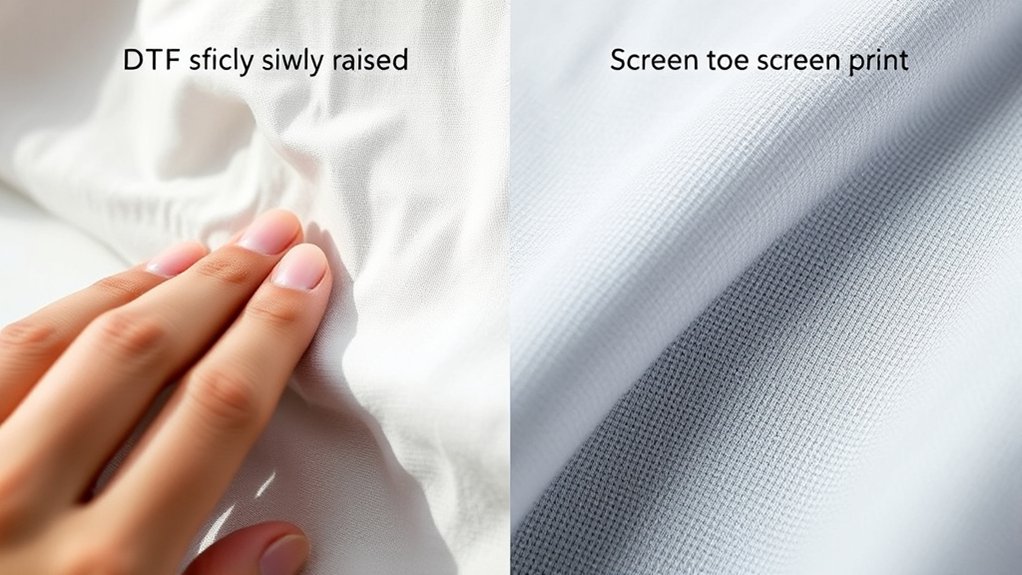
When you touch a DTF transfer, you’ll notice a smooth, thin layer that sits lightly on the fabric, almost like a second skin. The print feel is soft yet slightly plasticky, offering minimal resistance when you run your fingers across it.
This thin coating integrates well without adding bulk, making the texture subtle but distinct. In contrast, screen printing often creates a thicker, more tactile surface with raised ink that you can feel clearly.
The texture comparison highlights DTF’s sleek finish versus screen printing’s robust, embossed sensation. Both methods provide durable prints, but DTF transfers excel in delivering a gentle touch, while screen printing emphasizes a more pronounced, textured feel, influencing how your garments look and wear over time.
How Do Screen Printing and DTF Transfer Textures Compare?
Comparing the textures of screen printing and DTF transfers reveals distinct tactile and visual differences that affect both comfort and appearance. Screen printing produces a slightly raised, textured surface due to ink layering, creating a noticeable feel variation when you run your fingers over it.
This texture often results in a matte finish with subtle ridges depending on ink thickness and mesh count. On the other hand, DTF transfers offer a smoother, more uniform texture with a thin adhesive layer that bonds closely to the fabric.
The feel comparison highlights that DTF transfers tend to sit flatter and less textured than screen prints. Understanding these texture variations helps you choose the right method based on the desired tactile experience and visual effect for your garment.
Which Printing Method Produces Softer Prints?
How does the softness of prints impact your comfort and garment feel? Print softness directly affects how natural and breathable your clothing feels against your skin.
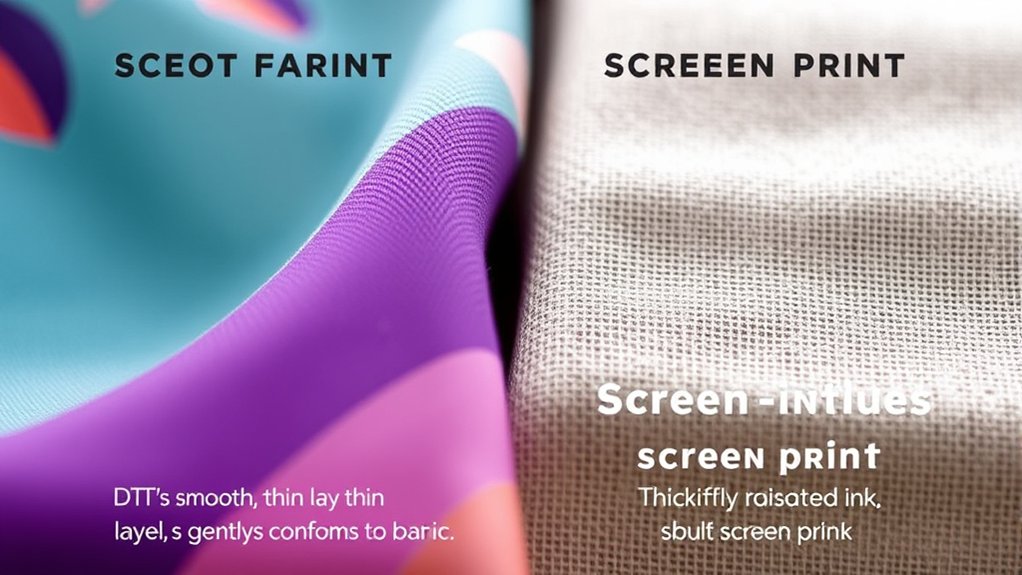
DTF transfers typically deliver softer prints because the ink layer is thinner and more flexible, closely integrating with fabric fibers. This minimizes any raised texture differences, giving you a smooth, almost seamless feel.
On the other hand, screen prints often produce a thicker ink deposit, creating noticeable texture differences that can feel stiffer or heavier, especially with multiple layers.
If you prioritize a soft, lightweight print that moves with your garment, DTF transfers are usually the better choice. But if you want a bolder look and don’t mind a firmer texture, screen printing remains a solid option.
How Durable and Flexible Are DTF and Screen Prints?
Anyone choosing between DTF transfers and screen prints needs to contemplate durability and flexibility, as these qualities determine how well the design holds up over time and movement. In this durability comparison, DTF transfers resist cracking and fading better due to their ink bonding, while screen prints excel in abrasion resistance.
The flexibility analysis shows DTF’s thin ink layer adapts well to fabric stretch, whereas screen prints, thicker and stiffer, may crack under repeated bending.
| Feature | DTF Transfers |
|---|---|
| Durability | High resistance to cracking |
| Abrasion | Moderate |
| Flexibility | Excellent, adapts to stretch |
| Longevity | Fades slowly over time |
Screen prints offer a durable, yet less flexible alternative.
How Does Fabric Type Affect Print Feel for DTF and Screen Printing?
Though fabric type might seem like a minor detail, it greatly influences the feel of both DTF transfers and screen prints. When you work with cotton, its natural softness allows screen prints to bond smoothly, resulting in a breathable, lightweight feel.
DTF transfers on cotton can feel slightly thicker due to the adhesive layer but remain flexible. Fabric blends, like cotton-polyester mixes, change this dynamic: the synthetic fibers reduce ink absorption for screen prints, sometimes causing a stiffer texture.
DTF transfers adapt better here, as the print application sits atop the fabric, maintaining consistent feel across blends. Ultimately, your choice of fabric impacts how the print layers interact, affecting softness, flexibility, and overall comfort. Understanding this helps you select the best method for your project’s fabric type.
How Does Print Thickness Impact Comfort?
When you feel a print, its thickness directly affects comfort by adding weight and stiffness to the fabric. Thicker layers can block airflow, reducing breathability and making the garment feel hotter.
You want flexible prints that move with your body, so thinner, more pliable layers usually offer better comfort.
Print Thickness and Feel
Since print thickness directly affects how a garment feels against your skin, understanding this aspect is essential. Thicker prints, like those from some screen printing methods, create a noticeable raised texture that can feel stiff or heavy, potentially reducing comfort during extended wear.
Conversely, DTF transfers often produce thinner prints that lie flatter, enhancing softness without sacrificing durability. This thinner layer maintains excellent print longevity, resisting cracks and fading even after multiple washes.
Additionally, both methods can achieve vibrant color vibrancy, but thicker screen prints may appear more saturated due to layered ink deposits. When you choose a print, consider how its thickness will impact your tactile experience. Thinner prints generally offer a smoother feel, while thicker ones might add weight and texture that stand out against your skin.
Breathability and Comfort Levels
Because print thickness directly influences how air flows through fabric, it plays an essential role in breathability and overall comfort. Thicker screen prints create a denser barrier, reducing breathability factors by limiting airflow and trapping heat against your skin.
On the other hand, thinner DTF transfers often allow air to pass more freely, enhancing comfort levels during extended wear or physical activity. Your comfort preferences should guide your choice: if you prioritize a lightweight, breathable feel, DTF transfers typically outperform heavy screen prints.
However, if durability outweighs breathability in your use case, thicker prints might still be acceptable. Understanding how print thickness impacts moisture wicking and ventilation helps you select the best printing method to match your comfort needs without sacrificing style.
Flexibility of Printed Areas
Although thicker screen prints provide durability, they often reduce the flexibility of the printed area, making the fabric feel stiff and less responsive to your movements. DTF transfers, with their thinner layers, offer greater design versatility and better conform to fabric contours, enhancing comfort.
Print thickness directly affects how much the fabric can stretch and breathe under the design’s area coverage. When considering comfort and wearability, keep these points in mind:
- Thicker prints limit fabric stretch, causing stiffness
- Thinner DTF layers maintain fabric softness and flexibility
- Larger area coverage with thick prints feels heavier on skin
- Fine details are easier with flexible, thin prints
- Design versatility increases with thinner, pliable print layers
Choosing the right method depends on balancing durability with how flexible and comfortable you want the garment to feel.
Which Printing Method Should You Choose Based on Feel and Use?
Choosing between DTF transfers and screen prints often comes down to how you want the final product to feel and perform. If you prioritize a soft, flexible feel, screen printing excels with its ink bonding directly to fabric, offering excellent print longevity and durability through washing.
On the other hand, DTF transfers provide vibrant colors and detailed designs with versatile application methods, including heat presses, making them ideal for complex or multi-colored prints. However, DTF prints may feel slightly thicker on the garment’s surface.
For heavy-duty wear or garments exposed to frequent washing, screen prints generally last longer, maintaining both texture and design integrity. If you want quick production with intricate details and a smooth finish, DTF is your go-to.
Your choice depends on balancing tactile preference, durability, and production needs.
Frequently Asked Questions
Are DTF Transfers More Cost-Effective Than Screen Printing?
You’ll find DTF transfers more cost-effective in small runs due to lower setup costs, but screen printing wins in production efficiency for large batches. A thorough cost analysis helps determine which suits your volume best.
Can DTF Transfers Be Applied to Non-Cotton Fabrics?
Sure, you can slap DTF transfers on polyester, nylon, or even silk without a meltdown. Their application methods boast fabric compatibility that laughs at cotton exclusivity, making your wardrobe a versatile canvas for vibrant, durable prints.
How Eco-Friendly Are DTF Transfers Compared to Screen Printing?
You’ll find DTF transfers use more sustainable materials and produce less waste, reducing environmental impact.
Screen printing often consumes more water and chemicals, making DTF a greener choice for eco-conscious production.
What Is the Typical Production Time for DTF Versus Screen Prints?
You’ll find DTF offers superior production efficiency with a turnaround time of hours. Screen prints take longer, often days, due to setup and drying. This difference greatly impacts your order fulfillment speed.
Can DTF Transfers Be Layered With Other Printing Techniques?
You can layer DTF transfers with other printing techniques, enhancing design complexity. About 70% of designers appreciate its printing compatibility, enabling diverse layering techniques without compromising durability or color vibrancy.
This makes your prints truly stand out.
Conclusion
Choosing between DTF transfers and screen prints is like picking between silk and canvas—each offers a distinct touch that shapes your experience. DTF’s smooth, flexible finish feels like a second skin, while screen printing’s textured layers provide bold, lasting impressions.
Your fabric and comfort needs are the loom; the printing method is the thread. Weigh durability, softness, and usage to weave the perfect print that fits your style seamlessly. In the end, understanding the DTF transfers vs screen prints feel comparison will guide you to the best choice for your project.