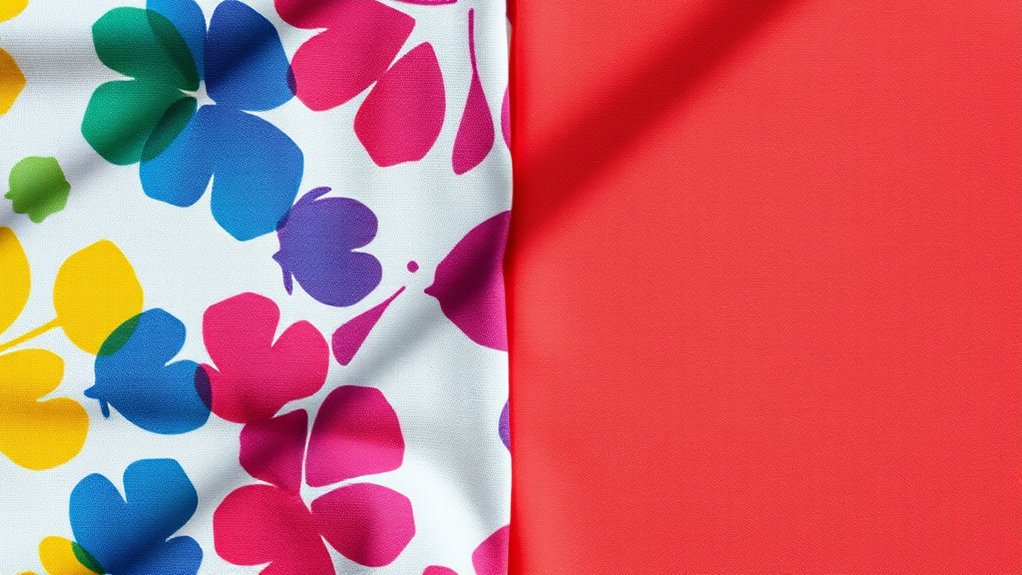

Discharge printing vs screen printing presents two distinct techniques for fabric decoration, each with unique advantages.
You’ll want discharge printing for soft, breathable 100% cotton fabrics, as it removes dye to create vintage, smooth designs with muted tones and excellent colorfastness. This method is ideal when a soft hand feel is desired without the heaviness of ink.
Screen printing suits various fabrics, including synthetics, and delivers bold, vibrant colors with sharp details through thick ink layers, enhancing durability. It is versatile and widely used for its vivid results and long-lasting prints.
Each method demands precise control of ink and pressure, with cost and fabric type influencing your choice.
Exploring these differences reveals which technique best fits your project’s needs.
Key Takeaways
- Discharge printing removes fabric dye to create soft, breathable designs, ideal for 100% cotton materials.
- Screen printing pushes ink through a mesh, producing bold, opaque colors suitable for various fabric types, including synthetics.
- Discharge printing yields softer textures with muted tones, while screen printing results in heavier, vibrant prints with sharp details.
- Screen printing offers greater durability and crispness on dark fabrics, whereas discharge printing maintains color vibrancy with less fading.
- Discharge printing has higher material and curing costs but can be cost-effective for large cotton orders; screen printing is generally cheaper and faster.
How Discharge and Screen Printing Work
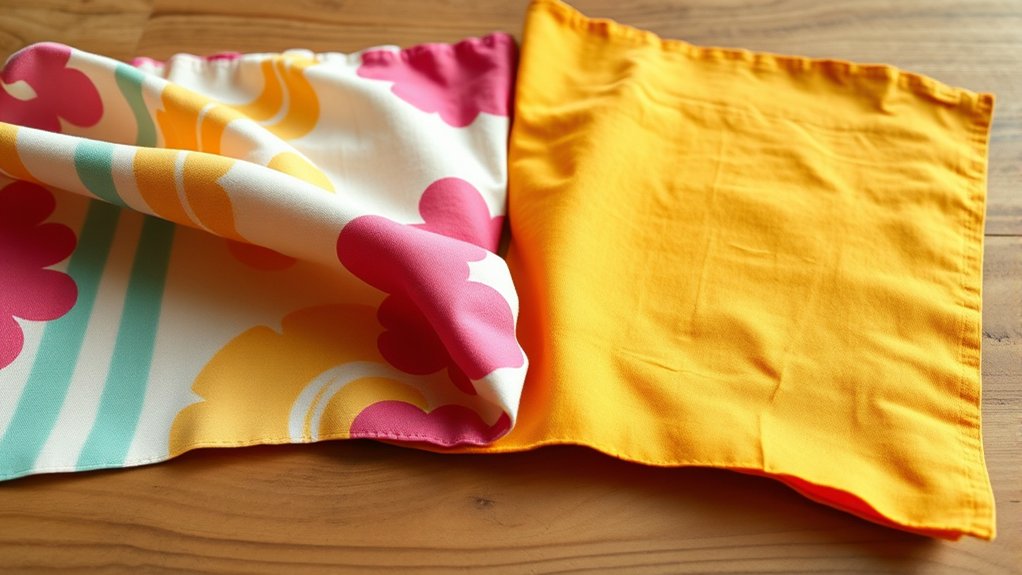
Both discharge and screen printing rely on distinct chemical and mechanical processes to apply designs onto fabric. In discharge printing, you start with a dyed fabric and use a discharge agent to remove color in specific areas, creating a bleached design.
This technique depends on the chemical reaction between the discharge ink and the fabric dye, ensuring selective removal without damaging fibers. Ink absorption is minimal since the ink acts as a bleaching agent rather than a pigment deposit.
Screen printing, on the other hand, involves pushing ink through a stencil-covered mesh screen onto the fabric surface. Here, ink absorption plays a vital role as the ink penetrates the fibers, forming vivid, durable designs.
Both printing techniques require precise control over ink viscosity and application pressure to achieve sharp, consistent results.
How Fabric Type Affects Printing Results
Understanding how fabric type influences printing outcomes helps optimize both discharge and screen printing processes. The fabric composition impact is critical; natural fibers like cotton respond well to discharge printing because the bleach-based ink removes dye effectively, resulting in vivid prints.
Conversely, synthetic fibers, such as polyester, resist discharge chemicals, reducing technique suitability. Screen printing, which deposits ink atop the fabric, suits a broader range of materials, including blends and synthetics, due to its reliance on ink adhesion rather than chemical reaction.
When selecting your printing method, consider the fabric’s fiber content, weight, and dye type, as these factors dictate ink absorption and colorfastness. Evaluating fabric composition impact guarantees you choose the printing technique suitability that maximizes durability, vibrancy, and overall quality.
Look and Feel: Discharge vs Screen Printing
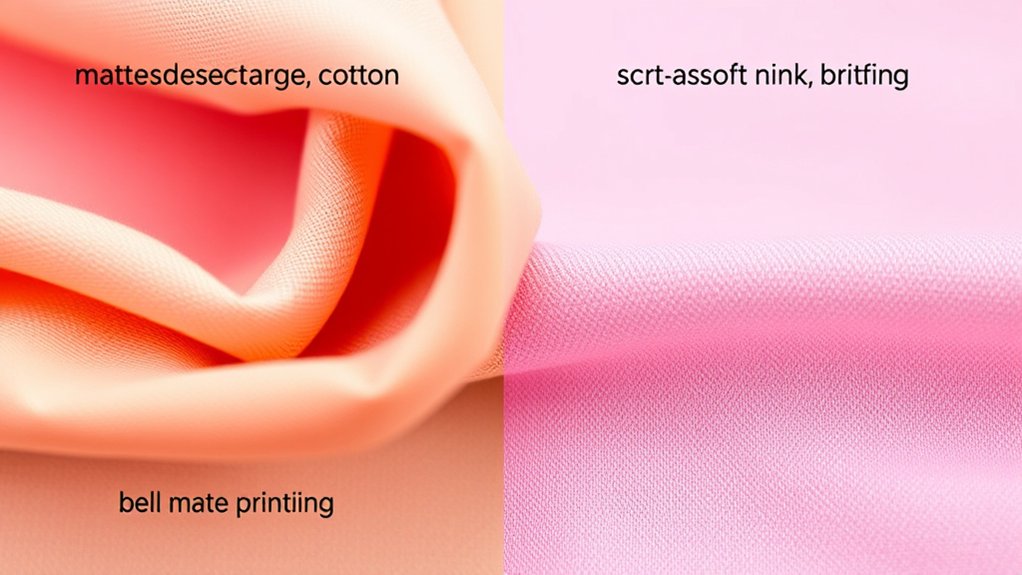
You’ll notice discharge printing creates a softer texture by removing dye rather than adding ink, resulting in a smooth, breathable finish. Screen printing applies thick layers of ink, which can feel heavier and more textured on fabric.
When it comes to color vibrancy, screen printing generally offers bolder, more opaque colors, while discharge printing yields a more muted, vintage look.
Texture Differences
Although discharge and screen printing both apply designs to fabric, they create distinctly different textures that affect the garment’s look and feel. With discharge printing, you remove dye from the fabric, resulting in a soft, smooth texture that integrates seamlessly with the material. This method maintains the fabric’s original hand, enhancing texture perception by avoiding any raised or stiff areas.
Conversely, screen printing deposits layers of ink on the fabric’s surface, producing a tactile, slightly raised texture. These texture applications add dimension but can alter the fabric’s flexibility and feel. When selecting between the two, consider the desired texture perception: discharge printing suits designs requiring a natural fabric feel, while screen printing is ideal when you want a more pronounced texture that stands out visually and tactilely.
Color Vibrancy Comparison
The texture differences between discharge and screen printing also influence how colors appear on fabric. When you evaluate color vibrancy, discharge printing offers lower ink opacity, allowing fabric dye to show through. This results in softer, muted tones with reduced color saturation.
Screen printing, conversely, uses thicker ink layers that provide higher opacity and intense color saturation, making designs pop vividly.
| Aspect | Discharge Printing | Screen Printing |
|---|---|---|
| Ink Opacity | Low (dye replacement) | High (ink overlay) |
| Color Saturation | Moderate to low | High |
| Texture Impact | Smooth, fabric-integrated | Raised, ink-heavy |
You should choose based on whether you want subtle, natural hues or bright, bold colors.
Color Vibrancy and Detail Comparison
You’ll notice discharge printing offers a softer color palette with subtle brightness, while screen printing delivers a wider hue range and more vibrant saturation.
When it comes to fine detail, screen printing typically reproduces sharper lines and intricate designs more accurately. Also, screen printing maintains color consistency better over time, whereas discharge printing may fade faster under repeated washes.
Brightness and Hue Range
When comparing discharge printing and screen printing, you’ll notice significant differences in brightness and hue range. Discharge printing excels in producing vivid brightness by removing the garment’s dye and replacing it with new pigment, resulting in enhanced color saturation and natural fabric feel.
This process achieves a wider hue depth, allowing subtle color gradients and softer highlights. Conversely, screen printing applies layers of ink on the fabric surface, which can limit brightness due to ink opacity and thickness.
While screen printing offers strong opacity and vibrant colors on light garments, it often sacrifices hue depth and subtlety on darker fabrics. Understanding these distinctions helps you select the ideal printing method based on desired brightness, color saturation, and hue complexity for your design.
Fine Detail Reproduction
Although both discharge and screen printing offer distinct advantages, your choice greatly impacts fine detail reproduction and color vibrancy. Discharge printing excels in fine detail techniques by chemically removing dye, allowing you to achieve intricate designs with soft, smooth finishes. However, it can sometimes lose crispness in extremely detailed areas due to ink diffusion.
Screen printing, on the other hand, uses stencils and layered inks that maintain sharp edges, making it ideal when precise line work and intricate designs are your priority. Screen printing also delivers more vibrant colors, especially on dark fabrics, because the inks sit atop the material rather than altering the base dye.
When balancing fine detail and color pop, consider whether your design demands the soft, natural look of discharge or the bold precision of screen printing.
Color Consistency Over Time
Since maintaining color vibrancy and detail over time is essential for lasting quality, you need to understand how discharge and screen printing perform under repeated wear and washing. Discharge printing chemically removes the garment’s dye and replaces it with ink, resulting in superior ink stability and reduced color fading.
This method preserves fine details and vibrant colors longer, even after multiple wash cycles. Conversely, screen printing applies a layer of ink atop the fabric, which can degrade and crack over time, accelerating color fading and reducing detail sharpness. However, high-quality inks and curing processes can improve screen print durability.
Ultimately, if you prioritize long-term color consistency and minimal fading, discharge printing offers enhanced ink stability, making it preferable for garments requiring sustained vibrancy and detailed reproduction.
Durability: Discharge vs Screen Printing
Because durability directly affects the longevity of printed designs, you need to understand the differences between discharge printing and screen printing. Durability factors for discharge printing include fabric compatibility and chemical interaction, which create a soft, embedded print resistant to cracking and fading.
However, its longevity depends on the fabric’s reaction to the discharge agent and may vary with repeated washes. Screen printing applies ink layers on fabric, providing a thicker, more robust print surface. This method typically offers superior abrasion resistance but can crack or peel over time, especially with heavy use.
In a longevity comparison, discharge printing excels in maintaining fabric softness and color integrity, while screen printing tends to outperform in mechanical durability. Your choice should consider these durability factors based on intended use and fabric type.
Cost Differences Between Discharge and Screen Printing
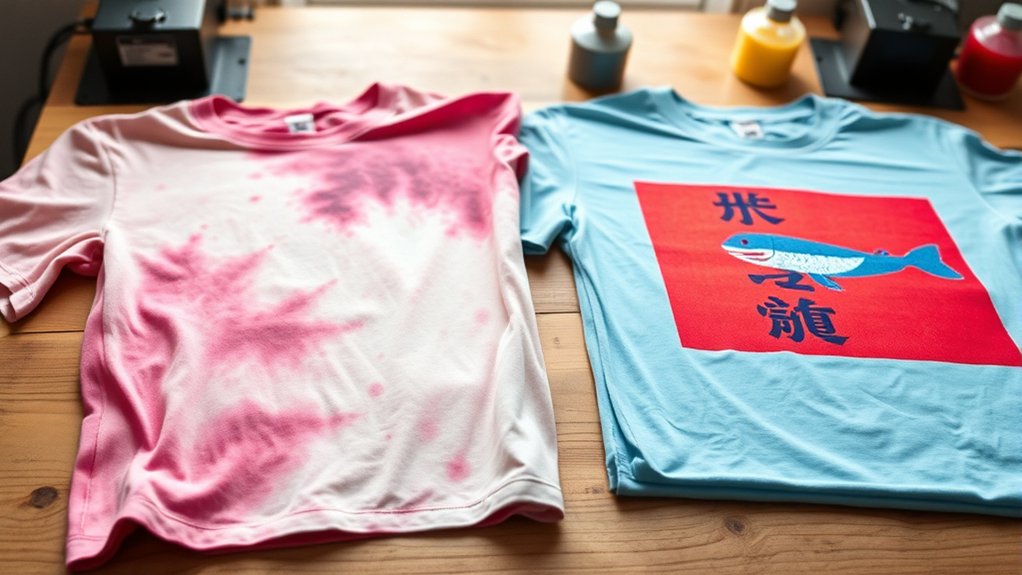
Understanding the cost differences between discharge and screen printing is essential when planning your production budget. Discharge printing generally incurs higher production costs due to the specialized chemicals required to bleach and replace fabric dye.
These material expenses elevate initial outlays, especially for small runs. In contrast, screen printing uses more common inks and simpler processes, resulting in lower material expenses and reduced setup costs.
However, discharge printing can be more cost-effective for large orders on 100% cotton garments because it eliminates multiple ink layers. You should also factor in the cost of labor and curing times; discharge printing often requires longer drying periods, adding to overall production costs.
Evaluating these variables helps you choose the method that aligns with your budget constraints and volume needs.
When to Choose Discharge vs Screen Printing
Choosing between discharge and screen printing depends largely on your project’s fabric type, design complexity, and desired finish. If you’re working with 100% cotton and want a soft, breathable result that integrates the design into the fabric, discharge applications are ideal.
They excel at producing vibrant, vintage-style prints with subtle color blending and minimal texture. On the other hand, if your design demands sharp details, vibrant colors on various fabric types, or you need durability with minimal setup time, screen printing advantages will serve you better.
Screen printing handles complex multicolor designs and synthetic fabrics efficiently, offering versatility and cost-effectiveness for large runs. Ultimately, choosing depends on balancing fabric compatibility, design needs, and finish preferences to optimize print quality and production efficiency.
Frequently Asked Questions
Can Discharge Printing Be Used on Synthetic Fabrics?
You can’t effectively use discharge printing on synthetic fabrics due to discharge limitations; it primarily works with natural fibers. Synthetic compatibility is limited because discharge agents can’t remove dye from synthetic fibers as they do with cotton.
What Environmental Impacts Do Both Printing Methods Have?
You’ll find both methods impact the environment differently; discharge printing uses chemicals requiring careful waste management, while screen printing consumes more water.
Adopting sustainability practices in both reduces harmful runoff and material waste effectively.
How Long Does the Setup Process Take for Each Printing Type?
You might expect setup duration to be similar, but discharge printing’s setup is quicker due to fewer screens, boosting process efficiency.
Screen printing takes longer, as each color requires separate screen preparation, extending setup time considerably.
Are There Any Health Risks Associated With Discharge Printing Chemicals?
Yes, discharge chemicals can pose health concerns if inhaled or contacted directly. You should use proper ventilation, gloves, and masks to minimize exposure and prevent respiratory or skin irritation when handling these chemicals during printing processes.
Can Discharge Printing Be Combined With Other Printing Techniques?
Of course, you wouldn’t want to combine discharge printing with other methods except when hybrid printing techniques enhance your designs.
Leveraging discharge printing advantages alongside screen or digital printing offers superior color vibrancy and intricate detailing, optimizing your textile production.
Conclusion
Choosing between discharge and screen printing is like picking the right tool for a precise job. Discharge printing excels on darker, 100% cotton fabrics, offering a soft, breathable finish with vibrant, durable colors.
Screen printing, meanwhile, handles a broader range of materials and delivers bold, detailed designs with reliable longevity. Understanding your fabric and design needs guarantees you select the method that balances cost, feel, and vibrancy for ideal results every time.
In conclusion, knowing when to use discharge printing vs screen printing ensures you achieve the best outcome for your project’s specific requirements.