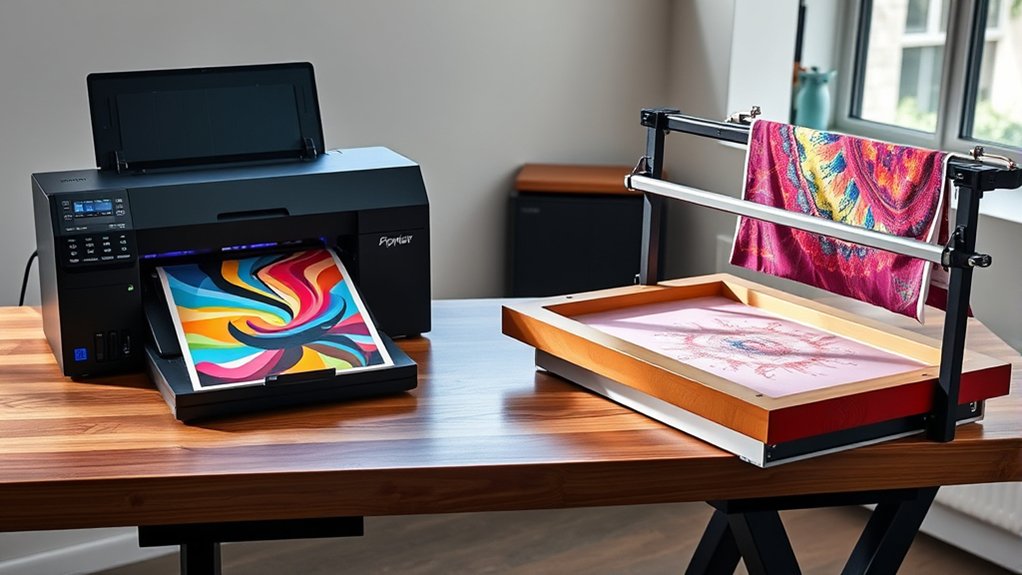

Digital printing vs screen printing cost is a key consideration when choosing the best method for your project.
You’ll save on small runs with digital printing’s low setup costs and immediate output, handling complex designs and color gradients without extra fees.
But for large orders, screen printing becomes more cost-effective as setup costs spread out, dropping your per-item price drastically, especially with limited color designs on cotton or blends.
Materials and color choices also influence expenses.
If you want to master when each method works best and cut costs smartly, keep exploring these factors.
Understanding these details ensures you get the best value for your printing needs.
Key Takeaways
- Digital printing has lower initial setup costs, making it cost-effective for small orders and detailed designs.
- Screen printing has higher setup expenses but becomes cheaper per item with large-volume orders.
- Complex, multi-color designs increase screen printing setup time and costs, while digital printing handles them without extra setup.
- Material type affects ink costs: polyester needs special inks for digital printing, raising expenses compared to cotton.
- Simplifying designs and consolidating orders reduce costs across both methods by minimizing setup and ink usage.
How Order Size Impacts Digital Vs Screen Printing Costs
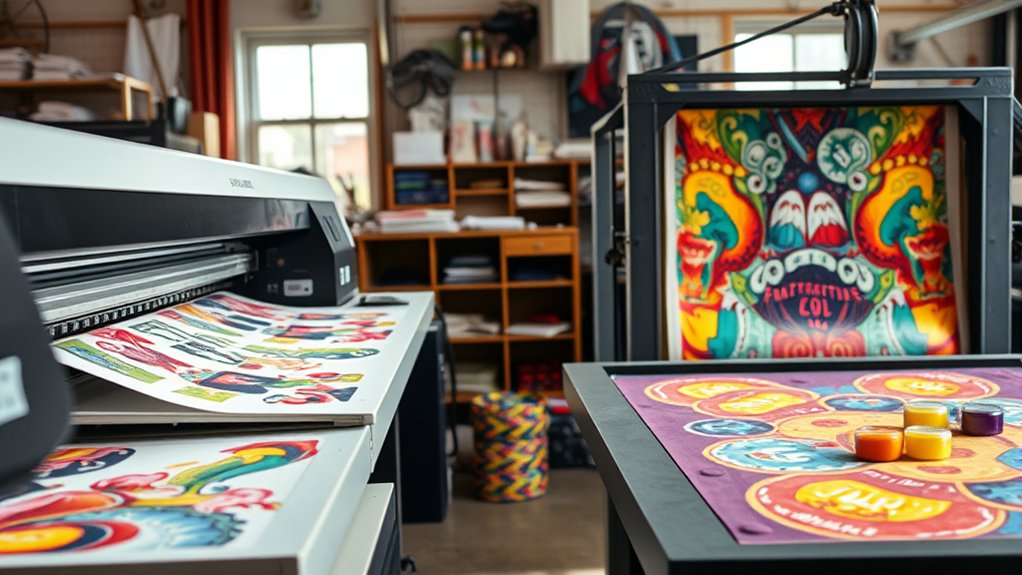
When you place a small order, digital printing often costs less because it requires minimal setup and allows for quick adjustments. This method prints directly from your digital file, eliminating the need for creating screens, which reduces initial costs.
However, as your order size increases, screen printing becomes more cost-effective due to bulk discounts and the amortization of setup expenses over larger quantities. Screen printing’s order scalability shines when producing hundreds or thousands of units, driving down the cost per item considerably.
Digital printing, while flexible, sees less dramatic price reductions with volume increases. Understanding this dynamic helps you choose the right printing method based on your quantity needs, ensuring you optimize cost efficiency without sacrificing quality or turnaround time.
How Design Complexity Affects Your Printing Costs
Order size isn’t the only factor shaping your printing costs; the complexity of your design also plays a significant role. When your artwork features design simplicity, such as minimal colors and clean lines, it reduces production time and materials, keeping costs lower.
On the other hand, intricate patterns demand more precision and multiple layers, especially in screen printing, increasing labor and setup expenses. Digital printing handles complexity better, as it can reproduce detailed images without additional setup, but extremely detailed designs may still slow down the printing process, raising costs.
You’ll want to balance your creative vision with cost efficiency by evaluating how detailed your design is. Simplifying elements where possible can help control expenses without sacrificing impact.
Setup Vs Production Costs: Digital Vs Screen Printing
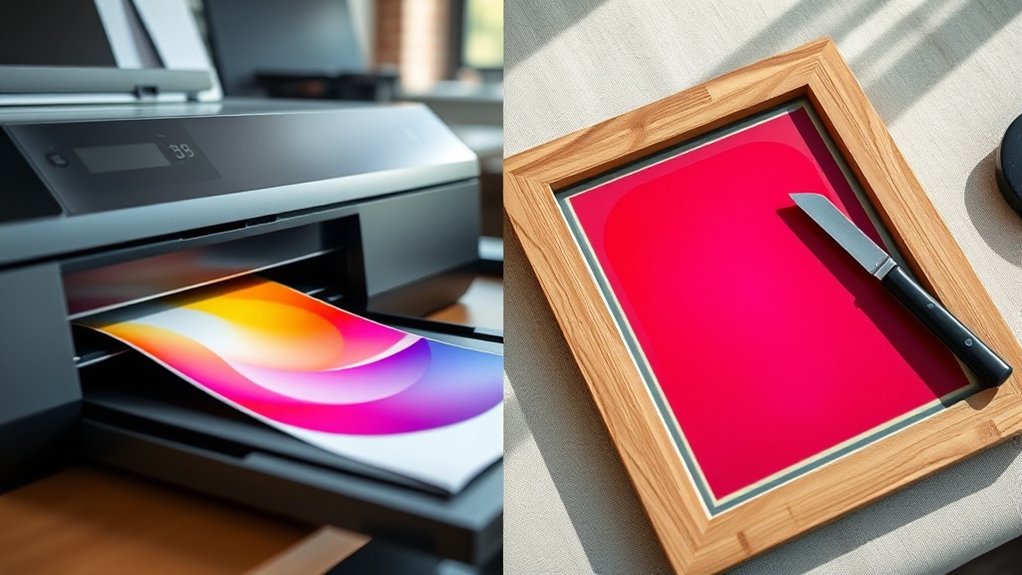
You’ll notice digital printing requires minimal initial setup, keeping upfront expenses low, while screen printing demands considerable setup with stencil preparation.
As you increase quantity, digital’s per-unit cost remains steady, but screen printing’s drops significantly, making it more cost-effective at higher volumes.
Understanding how setup costs balance against production efficiency will help you choose the right method for your project.
Initial Setup Expenses
Although both digital and screen printing require upfront investments, their initial setup expenses differ markedly in scope and impact. In a setup comparison, screen printing demands higher initial investments due to creating physical screens for each color in your design.
This process involves precise film separations, exposure units, and costly mesh screens, making the setup labor-intensive and time-consuming. Conversely, digital printing’s initial setup revolves around acquiring a high-quality digital printer and software, which, while costly, eliminates the need for physical screens.
This means you can start printing immediately after design preparation without extensive manual setup. Understanding these differences helps you gauge which method aligns better with your production scale and budget constraints, emphasizing how initial investments shape your costs before any items roll off the press.
Per-Unit Production Cost
While initial setup costs set the stage, the true impact on your budget emerges in the per-unit production cost. In a per-unit analysis, digital printing generally maintains a consistent cost regardless of quantity, as it bypasses screens and plates. Each item is printed directly, which means the cost per piece stays steady but slightly higher due to ink and maintenance expenses.
Conversely, screen printing’s per-unit cost drops considerably after the setup phase, as bulk ink usage and faster print speeds reduce expenses. Your cost comparison reveals digital printing excels in small runs with intricate designs, while screen printing becomes more economical as volume increases.
Understanding these production cost dynamics helps you choose the best method for your project’s scale and complexity.
Cost Efficiency Over Volume
Cost efficiency shifts considerably as print volume changes, demanding a clear comparison between setup and production costs for digital and screen printing. Your cost analysis must weigh volume considerations: digital printing has minimal setup fees, making it ideal for small runs.
Screen printing, however, incurs high setup costs due to stencil creation but offers lower per-unit prices as volume increases.
| Volume Range | Digital Setup Cost | Digital Production Cost | Screen Setup Cost | Screen Production Cost |
|---|---|---|---|---|
| 1-50 units | Low | Moderate | High | Low |
| 51-200 units | Low | Lower | High | Lower |
| 201-500 units | Low | Lowest | High | Lowest |
| 501+ units | Low | Lowest | High | Lowest |
Choose digital for short runs; screen printing excels in high-volume efficiency.
How Material Types Affect Digital And Screen Printing Costs
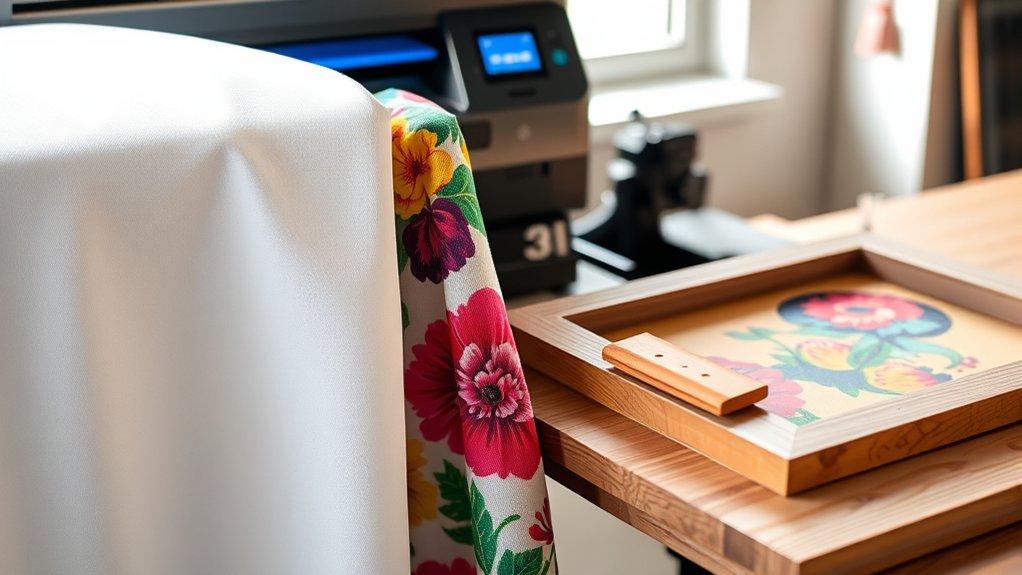
Because different materials absorb ink and paint differently, the type of fabric or substrate you choose directly influences both digital and screen printing expenses. You’ll notice that material durability and print texture play key roles in determining cost and quality. Here’s how:
- Cotton: Absorbs ink well, offering vibrant colors and a soft print texture. It’s cost-effective but may wear faster with intense washes.
- Polyester: Requires special inks for digital printing, increasing expenses. Its smooth surface produces sharp prints but may lack print durability.
- Blends and synthetics: Often need pre-treatment, raising costs. They balance material durability with varied print textures, affecting both methods differently.
Choosing the right material guarantees you optimize printing costs without compromising on longevity or visual impact.
How Color Choices Influence Printing Prices
Your color choices directly affect printing costs, as complex palettes require more ink layers and precise calibration. Different inks, such as specialty or metallic, add expenses that vary between digital and screen processes.
Plus, the number of prints influences how these color factors scale in price.
Color Complexity Impact
When you choose more colors for your design, the printing price often rises due to increased complexity. Each additional color requires precise color matching to guarantee consistency across prints, which demands extra setup and calibration.
Color gradients further complicate the process, especially in screen printing, where smooth shifts need multiple screens or halftone techniques.
Consider these aspects:
- Number of colors: More ink layers mean higher costs and longer prep times.
- Color gradients: Smooth blends require detailed screen halftones or advanced digital printing methods, impacting price.
- Color matching precision: Achieving exact hues demands tests and adjustments, increasing labor and material use.
Understanding how these factors affect your design helps you balance visual appeal with budget constraints effectively.
Ink Type Variations
Color choices don’t just affect the number of layers or gradients; they also determine the type of ink required, which can greatly influence printing costs. For digital printing, you often rely on water-based or pigment inks, which offer quicker ink drying times but vary in ink durability.
Screen printing, on the other hand, uses plastisol or solvent-based inks, known for superior ink durability but requiring longer curing times. When you select vibrant or specialty colors like metallics or fluorescents, expect pricier inks that demand precise application and extended drying or curing periods.
These specialized inks increase material costs and production time, directly impacting your budget. Understanding the balance between ink type, drying speed, and durability helps you optimize both quality and cost in your printing project.
Print Quantity Effects
Multiple factors in print quantity directly affect how much you’ll pay, especially as color choices come into play. When you increase the number of prints, the cost per unit typically drops due to bulk discounts, but the complexity of colors can offset those savings.
Here’s how color impacts your pricing:
- Single-color prints require fewer screens or less ink layering, maintaining lower costs even at smaller quantities.
- Multi-color or full-color prints demand more setup time and ink usage, increasing the initial cost but benefiting more from bulk discounts as quantity rises.
- Custom or gradient colors may limit order flexibility, as precise color matching needs consistent runs, often pushing you toward larger minimum orders.
Understanding these dynamics helps you balance quantity, color complexity, and budget efficiently.
When Digital Printing Is More Cost-Effective
Although screen printing excels with large batches, digital printing becomes more cost-effective for small runs or highly detailed designs. When you order limited quantities, digital printing’s setup costs remain minimal since it doesn’t require screens or plates.
The advanced printing technology directly transfers intricate artwork onto fabric, preserving sharp lines and color gradients without additional expense. Unlike screen printing, which leverages bulk discounts to reduce per-unit cost, digital printing maintains consistent pricing regardless of volume.
This makes it ideal if you need custom, vibrant prints with complex details or multiple colors in smaller batches. You’ll save money by avoiding costly screen preparation and by benefiting from digital precision, which minimizes material waste and shortens turnaround times. For precision and flexibility in low-quantity orders, digital printing clearly outperforms.
When Screen Printing Costs Less Than Digital
When you order large quantities, screen printing often costs less than digital printing due to its efficient use of bulk processes and reusable screens. You’ll find it particularly cost-effective with bulk orders where the setup cost spreads over many units.
Here’s why screen printing saves you money when design simplicity aligns with your needs:
- Reusable Screens: Once your screen is created for a simple design, you can print thousands of items without extra setup costs.
- Faster Production: Bulk orders flow through the press quickly, reducing labor time per piece.
- Economies of Scale: The more units you print, the lower your cost per item becomes, especially with limited color designs.
7 Tips To Cut Digital And Screen Printing Costs Without Sacrificing Quality
To lower your printing expenses while maintaining sharp, vibrant results, focus on optimizing your design and production choices. Simplify complex designs by reducing color layers, which cuts both ink usage and setup time in screen printing.
For digital printing, use vector graphics to guarantee crisp edges, preventing costly reprints. When sourcing materials, compare suppliers to find high-quality yet affordable fabrics and inks.
Don’t hesitate to negotiate prices, especially when ordering in bulk. Many vendors offer discounts that greatly reduce your per-unit cost. Also, consolidate orders to minimize setup fees and shipping costs.
Frequently Asked Questions
Which Printing Method Is More Environmentally Friendly?
You’ll find digital printing more eco friendly because it uses less water and energy, reducing waste. Its precise ink application supports better waste management.
Screen printing often produces excess ink and chemical runoff, harming the environment more.
How Do Drying Times Compare Between Digital and Screen Printing?
Back in the age of steam engines, you’d appreciate that digital printing offers faster drying speed, thanks to an instant curing process. Screen printing requires longer curing, often needing heat or air drying for ideal durability.
Can Digital Printing Handle Metallic or Specialty Inks?
You can use metallic inks with digital printing, but options are limited compared to screen printing. Specialty inks like glitter or puff require specific printers or additives, so be sure your equipment supports these before starting your project.
What Are the Typical Turnaround Times for Each Printing Method?
You’ll notice turnaround efficiency shines with digital printing; it’s faster and ideal for quick jobs. Screen printing’s production speed slows due to setup, but it excels with large runs. Both deliver quality, and timing depends on your project scale.
Are There Limitations on Fabric Types for Digital Versus Screen Printing?
You’ll find digital printing offers greater fabric compatibility, handling synthetics and blends smoothly, while screen printing demands more care, favoring natural fibers.
Digital’s printing versatility suits diverse materials; screen printing excels on cotton-rich fabrics.
Conclusion
Whether you choose digital or screen printing, understanding how order size, design complexity, and color choices impact costs helps you make smarter decisions. You’ll balance setup with production expenses, weigh material types, and pinpoint when each method saves you money.
By applying smart strategies, you’ll cut costs without sacrificing quality, streamline your process without losing detail, and maximize your budget without compromising your vision. Your printing project deserves nothing less.
When comparing digital printing vs screen printing cost, knowing these factors ensures you select the most cost-effective method for your needs.