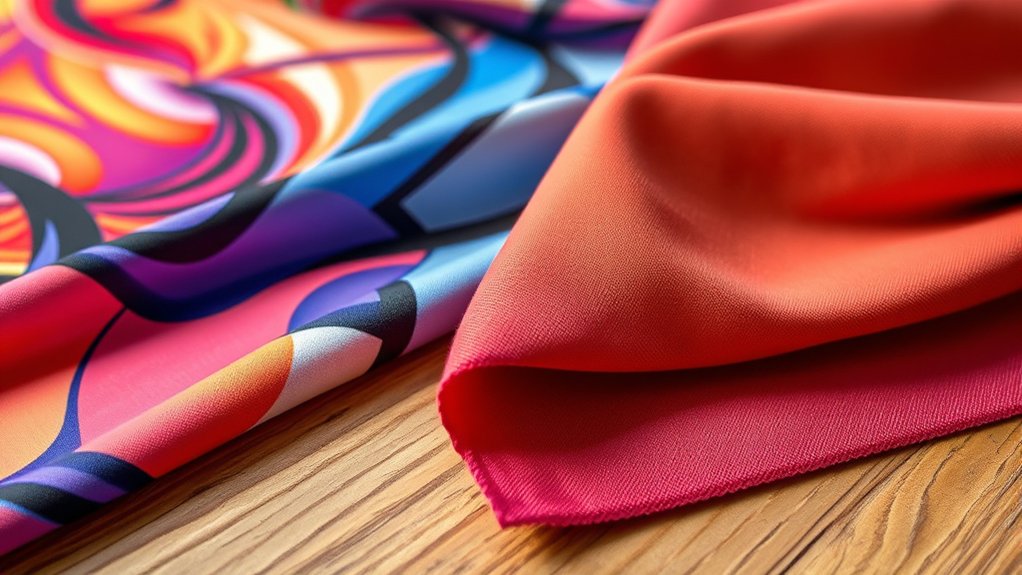

When choosing between digital printing on fabric and screen printing, it’s important to understand their distinct advantages.
Digital printing excels at capturing intricate details and subtle color gradients with a soft finish, making it ideal for small to medium runs and complex designs.
Screen printing, on the other hand, offers vibrant, opaque colors with superior durability, especially suited for large batches. However, it can struggle with fine details and a wide variety of colors.
The type of fabric also affects the results, with cotton being the best option for both methods.
Comparing costs, durability, and design complexity will help guide your choice—explore further to determine which method suits your project best.
Key Takeaways
- Digital printing offers superior detail precision and color gradients, ideal for intricate, multi-colored fabric designs.
- Screen printing produces vibrant, opaque colors with excellent consistency, best suited for large runs with fewer colors.
- Digital printing has lower setup costs and is cost-effective for small batches, while screen printing benefits from economies of scale in bulk orders.
- Cotton fabrics perform well with both methods, but synthetic and silk fabrics require special considerations for optimal print quality.
- Choose digital printing for quick turnaround and complex designs; select screen printing for large-scale projects with simpler color schemes.
Digital Printing vs Screen Printing: How They Work on Fabric
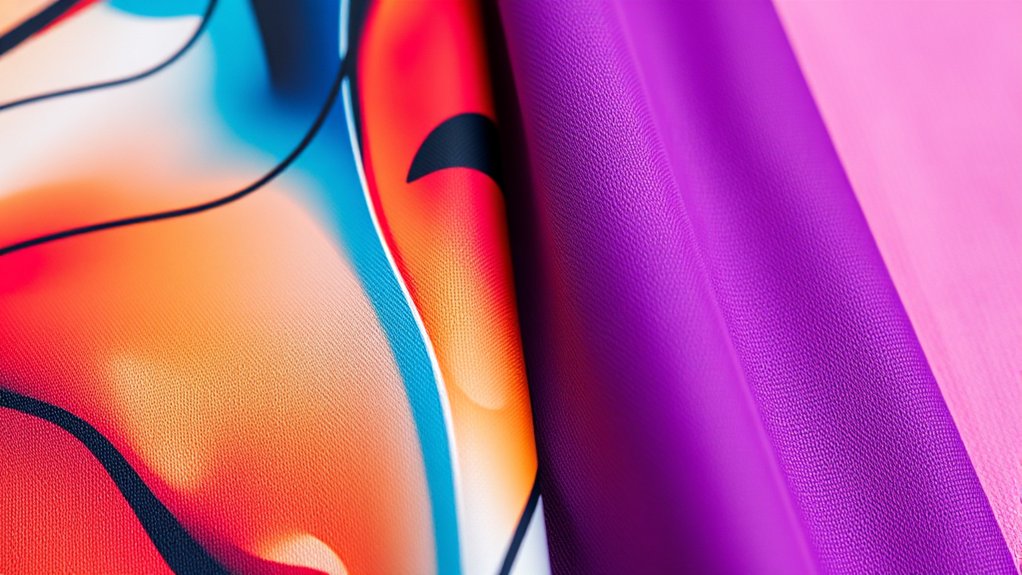
Although both digital printing and screen printing apply designs to fabric, they operate through distinct mechanisms that affect the final outcome. Digital printing techniques use inkjet technology to spray tiny droplets of ink directly onto the fabric. This process allows for precise, high-resolution images without the need for screens or stencils.
The inks penetrate the fibers, creating a soft feel. In contrast, screen printing processes involve pushing ink through a mesh stencil onto the fabric. Each color requires a separate screen, making it more labor-intensive and suited for bulk runs.
This method deposits thicker layers of ink, resulting in a more textured surface. Understanding these differences helps you choose the right method based on fabric type, design complexity, and production scale.
Color Quality and Detail: Which Method Delivers More?
You’ll notice that digital printing offers a broader color gamut and finer detail precision, ideal for complex designs. Screen printing, however, delivers unmatched color vibrancy and consistency across large runs due to its ink saturation.
Understanding these differences helps you choose the best method for your fabric printing needs.
Color Vibrancy Comparison
How do digital printing and screen printing differ in delivering color vibrancy and detail on fabric? Digital printing uses advanced inkjet technology to apply inks directly onto fabric, resulting in high color saturation with smooth gradients and subtle tonal shifts. The print texture is minimal, preserving fabric softness.
In contrast, screen printing deposits thicker layers of ink through stencils, producing vivid, opaque colors with exceptional brightness and durability. The tactile print texture is more pronounced due to ink layering.
While digital printing excels in reproducing complex images with nuanced color changes, screen printing offers superior saturation in solid colors and sharper contrast. Your choice depends on whether you prioritize the smoothness and subtlety of color (digital) or the intensity and tactile presence of color (screen printing).
Detail Precision Levels
A key factor in choosing between digital and screen printing lies in the level of detail each method can achieve. Digital printing excels at reproducing fine detail and intricate designs due to its inkjet technology, which sprays microscopic droplets of ink directly onto fabric. This allows you to capture gradients, subtle shading, and complex patterns with superior resolution.
Screen printing, however, relies on stencils and mesh screens, which can limit the precision of small, detailed elements. While screen printing produces bold, vibrant colors, it struggles with ultra-fine detail and intricate line work. If your project demands high-definition imagery and delicate design elements, digital printing will deliver greater accuracy and fidelity. Conversely, screen printing is better suited for simpler designs with fewer fine details.
Consistency Across Prints
Although both digital and screen printing can produce high-quality results, their consistency across multiple prints varies considerably. With digital printing, you benefit from precise color consistency because the process uses automated inkjet technology, ensuring each print replicates the original design accurately without manual intervention.
This results in uniform print quality, ideal for short runs or designs requiring detailed gradients. Conversely, screen printing relies on physical stencils and manual ink application, which can introduce slight variations in color saturation and detail across prints.
While screen printing excels in durability and vibrancy, maintaining exact color consistency demands meticulous setup and frequent adjustments, especially in large runs. Therefore, if you prioritize consistent print quality and exact color replication across multiple prints, digital printing typically delivers more reliable results.
Durability and Longevity: Comparing Print Lasting Power
When evaluating print longevity, you’ll find that screen printing generally outperforms digital printing in durability due to its thicker ink layers and superior adhesion to fabric fibers. Screen printing’s print technology deposits pigments directly into fabric after specialized fabric treatment, enhancing resistance to wear.
Digital printing uses thinner ink layers, making it more susceptible to fading and cracking over time.
Consider these factors impacting durability and longevity:
- Ink penetration depth achieved by print technology
- Type and quality of fabric treatment pre-printing
- Resistance to repeated washing and UV exposure
- Flexibility and elasticity of the printed design relative to fabric movement
Cost Differences Between Digital and Screen Printing
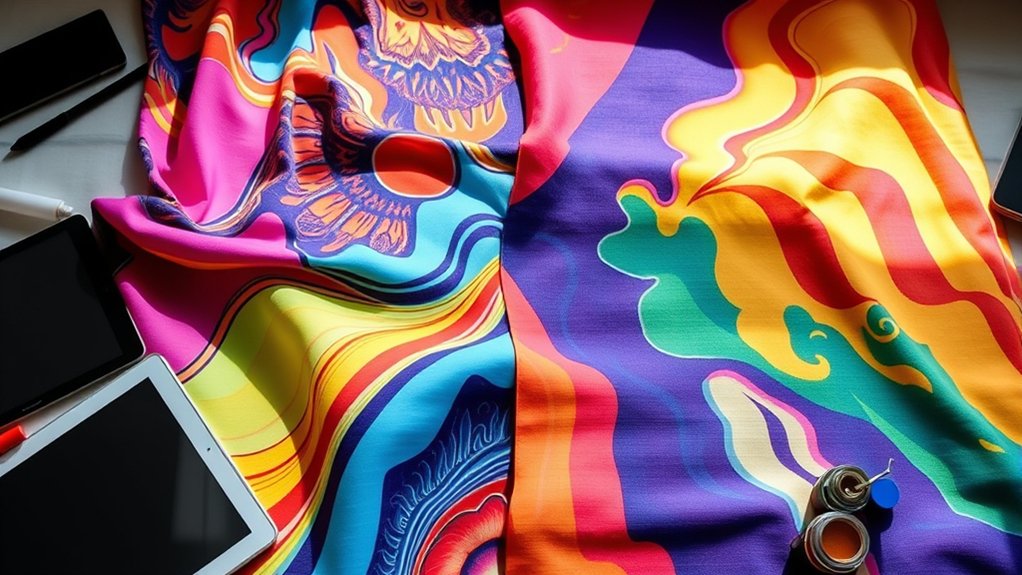
You’ll notice that digital printing requires minimal initial setup expenses compared to screen printing’s costly stencil preparation.
When considering cost per unit, digital printing is more economical for small batches, while screen printing offers significant savings on bulk orders. Understanding these financial nuances helps you choose the most cost-effective method for your project scale.
Initial Setup Expenses
Because digital printing requires minimal setup compared to screen printing, you’ll find the initial expenses markedly lower. Your initial investment focuses primarily on the digital printer and software, avoiding the extensive physical preparations screen printing demands.
Screen printing’s setup requirements include creating multiple screens, each representing a color layer, which considerably increases upfront costs.
Consider these setup factors:
- Digital printing needs only the printer, ink, and design file.
- Screen printing requires screen creation, emulsion coating, and drying time.
- Multiple screens amplify complexity and cost in screen printing.
- Digital printing setup is faster, reducing labor expenses.
Cost Per Unit
While digital printing cuts down initial setup costs greatly, the cost per unit paints a more complex picture. Digital printing maintains relatively stable costs regardless of volume, as it doesn’t require screen creation or extensive manual labor.
However, screen printing benefits considerably from economies of scale: as you increase order size, the fixed setup costs spread out, reducing the per-unit price markedly. Production efficiency in screen printing ramps up with larger runs, making it cost-effective for high volumes.
Conversely, for small to medium quantities, digital printing often offers a lower cost per unit despite slightly higher ink expenses, due to minimal labor and setup. Understanding these cost dynamics helps you select the best printing method based on your production scale and budget constraints.
Bulk Order Savings
As order volumes increase, the cost advantages between digital printing and screen printing become more pronounced, greatly impacting your overall savings. Screen printing benefits greatly from bulk order discounts due to its setup-intensive process, allowing you to leverage volume pricing effectively. Conversely, digital printing’s cost per unit remains relatively stable regardless of quantity, limiting bulk savings.
Consider these factors when evaluating bulk order savings:
- Screen printing setup costs are amortized across higher quantities, reducing unit costs.
- Digital printing requires minimal setup, so bulk order discounts are less common.
- Volume pricing in screen printing can lower costs by up to 50% for large runs.
- Digital printing offers flexibility but at a steadier price point, suitable for smaller batches.
Understanding these distinctions helps you optimize cost efficiency for your project scale.
Best Fabrics for Digital Printing and Screen Printing
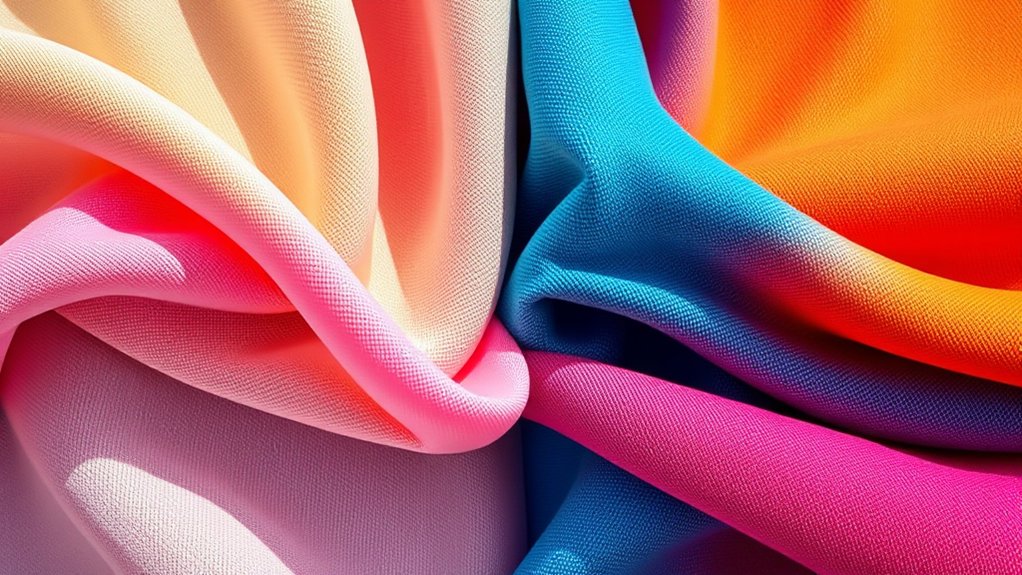
Fabric composition and texture play essential roles in determining the effectiveness of digital and screen printing techniques. You’ll find that natural fibers like cotton absorb ink better, making them ideal for both methods.
Synthetic fabrics, however, often require specialized inks or pretreatments, especially for digital printing. Below is a concise comparison of fabric types matched to printing techniques:
| Fabric Type | Best for Digital Printing | Best for Screen Printing |
|---|---|---|
| Cotton | Excellent ink absorption | Superior color vibrancy |
| Polyester | Requires sublimation inks | Durable prints, less vibrant |
| Silk | High detail, delicate | Limited due to texture |
Choose your fabric type carefully to optimize print quality and longevity based on your chosen printing technique.
Choosing Between Digital and Screen Printing for Your Project
How do you determine which printing method suits your project best? Start by evaluating your specific needs around design flexibility and project scale. Digital printing excels with intricate, multi-colored designs and small to medium runs, offering rapid turnaround without setup costs.
Screen printing, however, thrives on large-scale projects with limited colors, ensuring durability and cost efficiency over high volumes.
Consider these factors:
- Complexity of your design and color gradients
- Quantity of items to be printed
- Fabric type compatibility
- Budget constraints and production speed
Summary: Which Fabric Printing Method Is Right for You?
When deciding which printing method suits your project, consider the balance between design complexity, production volume, and material compatibility. Digital printing excels with intricate designs and smaller project scale, supporting a variety of fabric types like cotton and polyester. Screen printing thrives on large volumes, offering durability but limited color changes and fabric flexibility.
| Factor | Digital Printing | Screen Printing |
|---|---|---|
| Project Scale | Ideal for small to medium runs | Best for large-scale production |
| Fabric Types | Compatible with diverse textiles | Works well on natural fabrics |
| Design Complexity | Handles detailed, multi-color designs | Suited for simpler, bold patterns |
Choose based on your fabric types and project scale to optimize cost-efficiency and print quality.
Frequently Asked Questions
Can Digital Printing Be Used for Small Batch Orders?
Yes, you can use digital printing for small orders because it offers superior cost efficiency by eliminating setup costs and allowing precise color matching.
This makes it ideal for detailed, variable designs without the high expenses of traditional methods.
Are There Environmental Benefits to Digital Printing?
Yes, you’ll benefit from digital printing’s eco friendly practices, as it uses less water and energy, reduces chemical waste, and minimizes fabric waste through precise ink application. This greatly enhances waste reduction compared to traditional methods.
How Long Does the Screen Printing Setup Take?
Setting up screen printing is like assembling a complex puzzle, often taking 30 minutes to a few hours. Your setup time directly impacts production efficiency, requiring precision to guarantee consistent, high-quality prints throughout the run.
Can Digital Printing Handle Metallic or Specialty Inks?
You can use specialty inks like metallic inks in digital printing, but options are limited compared to screen printing. Digital methods require specific printers and inks formulated to guarantee proper adhesion and color vibrancy on fabric.
Is Post-Printing Fabric Care Different for Each Method?
Yes, fabric maintenance differs; digital prints need gentler washing to preserve print longevity, while screen-printed fabrics tolerate harsher care. You should always follow specific recommendations to avoid degrading the print and guarantee durability over time.
Conclusion
While you might worry digital printing can’t match screen printing’s durability, modern advancements have greatly closed that gap, especially on synthetic and cotton blends. Digital printing offers superior detail and color gradients without setup delays or minimum orders, making it ideal for intricate, small-batch projects.
By understanding fabric compatibility and project goals, you can confidently choose the method that optimizes quality, cost, and longevity. This ensures your design performs exactly as you intend.
Ultimately, when deciding between digital printing on fabric vs screen printing, consider the specific needs of your project to achieve the best results.