
When choosing between digital print vs screen print, consider your design’s complexity and order size.
Digital printing excels at detailed, multi-colored designs and small runs with fast turnaround, offering smooth gradients and soft finishes.
Screen printing delivers bold, vibrant colors and better durability on larger orders but requires setup time.
Fabric type also matters—digital suits polyester and delicate fabrics, while screen printing thrives on cotton.
Understanding these differences helps you pick the best print for your project’s needs and quality expectations.
Key Takeaways
- Digital printing suits complex, multi-color designs with quick turnaround and no setup costs, ideal for small runs or one-offs.
- Screen printing excels in bold, vibrant colors and durability, becoming cost-effective for large volume orders despite higher initial setup.
- Digital prints offer softer finishes and smooth gradients, while screen prints provide a tactile texture with punchy color saturation.
- Screen printing generally delivers longer-lasting prints with better fade resistance, especially on cotton fabrics, compared to digital printing.
- Fabric type influences printing choice: digital printing works well on polyester and delicate materials, while screen printing is best for cotton.
How Do Digital and Screen Printing Work?
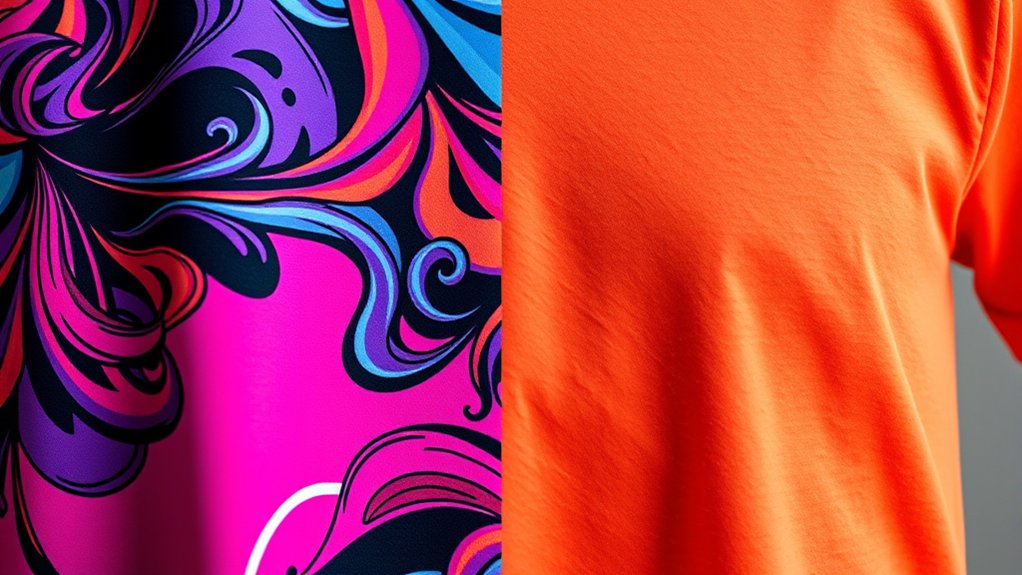
Although both digital and screen printing put your designs onto fabric, they do so in distinctly different ways. Digital printing applies ink directly onto the fabric using precise nozzles, delivering high print resolution with smooth gradients and intricate details. This ink application is controlled by digital files, allowing for rapid changes and multiple colors without additional setup.
In contrast, screen printing pushes ink through a mesh stencil onto the fabric. Each color requires a separate screen, making ink application more layered and tactile. Screen printing excels with bold, vibrant colors but offers lower print resolution compared to digital. You get sharper images with digital, while screen printing creates durable, textured prints.
Understanding these technical differences helps you visualize how each method applies your design to fabric.
Which Printing Method Works Best for Your Design?
You’ll want to match your design’s complexity with the right printing method. Digital handles detailed images smoothly, while screen printing excels in bold, simple shapes.
Consider how vibrant you need your colors; screen printing often delivers richer hues, but digital offers a broader palette. Also, weigh the cost efficiency based on your order size and design intricacy to choose the best fit.
Design Complexity Considerations
When your design involves intricate details, gradients, or multiple colors, digital printing shines by capturing complexity with sharp precision and smooth color shifts. You’ll want to contemplate design intricacy factors carefully: fine lines, subtle textures, and complex patterns require high artwork resolution impacts to maintain clarity.
Digital print processes directly translate pixel-perfect images onto your substrate, preserving every detail without layering limitations. Conversely, screen printing struggles with ultra-fine elements due to stencil constraints and ink bleed risks, often simplifying complex artwork.
If your design demands crisp edges and subtle gradients, digital print is the better choice. However, simpler, bold designs with fewer colors might favor screen printing’s durability. Ultimately, understanding your design’s intricacy and artwork resolution needs guides you to the method that best preserves your visual intent.
Color Vibrancy Comparison
How does color vibrancy differ between digital and screen printing? When you want sharp color saturation and intense print brightness, screen printing excels, especially on darker fabrics.
Digital printing, however, offers smoother gradients but may lack the punch in saturation.
| Feature | Digital Print | Screen Print |
|---|---|---|
| Color Saturation | Moderate to High | Very High |
| Print Brightness | Good on light fabrics | Excellent on all fabrics |
| Color Range | Wide gamut | Limited by ink types |
| Texture & Finish | Smooth, less textured | Rich, tactile texture |
Choose screen printing for bold, vibrant colors. Opt for digital if subtlety and detailed shading matter most.
Cost Efficiency Analysis
Color vibrancy plays a big role in your printing choice, but cost efficiency often determines which method fits your project budget. When deciding between digital and screen printing, keep these factors in mind:
- Setup Costs: Screen printing requires higher initial setup for screens, making it pricier for small runs. Digital printing offers minimal setup, ideal for single items or limited quantities.
- Bulk Orders: Screen printing becomes more cost-effective as volume increases due to lower per-unit rates, favored in bulk orders.
- Pricing Trends: Digital printing prices remain steady regardless of quantity, while screen printing costs drop considerably with larger runs.
- Design Complexity: Digital printing handles intricate designs without extra cost, whereas screen printing complexity can raise costs.
Choose based on your order size and design to maximize cost efficiency.
How Order Size Affects Your Printing Choice
Choosing between digital and screen printing often hinges on your order size. If your order quantity is small, digital printing offers quick turnaround and sharp detail without setup delays. It prints directly onto the material, making it ideal for limited runs or designs with multiple colors.
Conversely, screen printing becomes more efficient as your order quantity grows. Once the screens are set, the printing method churns out consistent, vibrant prints rapidly, reducing per-unit time and effort. However, the initial setup is time-consuming and costly, so it only pays off with larger batches.
Understanding how your order quantity impacts the efficiency and suitability of each printing method helps you pick the one that balances quality and production demands effectively.
Comparing Costs: Digital Print vs Screen Print
As your order size grows, the cost dynamics between digital and screen printing shift noticeably. Understanding the cost breakdown helps you choose smartly. Digital print’s pricing factors include setup-free runs and variable color costs, making it ideal for small batches.
As orders increase, digital stays steady while screen printing becomes more cost-effective for larger runs.
Screen printing, however, incurs upfront stencil and setup fees but lowers per-unit cost as quantity rises. Here’s a quick comparison:
- Setup Costs: Digital minimal; screen significant upfront.
- Per-Unit Cost: Digital steady; screen decreases with volume.
- Color Complexity: Digital handles unlimited colors without extra charge; screen charges per color.
- Turnaround Time: Digital faster due to no setup; screen slower initially.
What to Expect: Durability and Quality Differences
You’ll notice screen prints usually last longer, with inks bonding deeply into the fabric for durable wear. Digital prints shine in color vibrancy, delivering sharp, detailed images with smooth gradients.
Keep in mind, the type of fabric you choose can affect how each method performs and holds up over time.
Print Longevity Comparison
Though both digital and screen printing deliver vibrant designs, their longevity varies considerably based on factors like ink type, fabric, and usage. When comparing print lifespan and fade resistance, here’s what you should consider:
- Ink Penetration: Screen printing uses thicker ink layers that bond deeply with fabric, enhancing durability.
- Fade Resistance: Screen prints generally resist fading better under repeated washing and sunlight exposure.
- Print Lifespan: Digital prints, often thinner and surface-level, may degrade faster, especially on coarse fabrics.
- Fabric Compatibility: Smooth, synthetic fabrics boost digital print longevity, while natural fibers complement screen print durability.
Understanding these distinctions helps you choose the right method for your needs, ensuring your design stays sharp and lasts longer with the intended use and care.
Color Vibrancy Differences
Understanding how print longevity differs between digital and screen methods naturally leads to examining color vibrancy, another key factor in your design’s overall impact. Screen printing typically offers higher color saturation, delivering bold, vivid hues that pop on fabric.
This method lays down thicker ink layers, enhancing print clarity and creating a tactile, durable finish. In contrast, digital printing uses inkjet technology, producing finer details with excellent print clarity but often with slightly muted color saturation.
The colors may appear softer and less intense, especially on darker fabrics. While digital prints excel in intricate designs, they can lack the punchy vibrancy that screen prints maintain over time. By knowing these differences, you can choose the method that best preserves your design’s visual strength and quality throughout its lifespan.
Fabric Compatibility Effects
When selecting between digital and screen printing, fabric compatibility plays a crucial role in determining both durability and print quality. Different fabric types react uniquely to each printing method, impacting the final result’s longevity and sharpness. Here’s what you need to reflect on for material suitability:
- Cotton: Screen printing excels, providing vibrant, durable prints; digital printing may fade faster.
- Polyester: Digital printing offers superior adhesion and color accuracy; screen printing can struggle.
- Blends: Both methods work, but fabric composition affects ink absorption and durability.
- Delicate fabrics: Digital printing is gentler, reducing damage risk; screen printing’s heavy inks might harm fibers.
Understanding these nuances helps you choose the right process, ensuring your design stays crisp and lasts as long as you need.
Deciding Between Digital and Screen Printing for Your Project
How do you choose between digital and screen printing for your project? Start by evaluating your design preferences. Digital printing excels with complex, multi-colored images and gradients, delivering sharp, vibrant results.
Screen printing shines with bold, solid colors and simple designs, offering durability and punch. Your project timelines also matter: digital printing is faster for small batches, allowing quick turnaround without setup delays.
Screen printing demands more prep time but becomes cost-effective and efficient with larger runs. Consider fabric compatibility and final use too. Screen printing often feels thicker and more robust, while digital printing offers a softer finish.
Frequently Asked Questions
Can Digital or Screen Printing Be Used on Non-Fabric Materials?
Yes, you can use digital printing materials and screen printing substrates on non-fabric items. Digital printing works well on plastics and metals, while screen printing excels on wood, glass, and ceramics, offering versatile customization options.
How Environmentally Friendly Are Digital and Screen Printing Processes?
You’ll find digital printing more eco-friendly, thanks to precise ink use and sustainability practices that cut waste.
Screen printing often generates more waste and uses harsher chemicals, so it’s less efficient for waste reduction.
Which Printing Method Is Better for Multi-Color Gradients?
You’ll love digital printing for multi-color gradients. Its gradient quality shines with color vibrancy, reproducing smooth changes flawlessly. Unlike screen printing, which struggles with over 12 colors, digital handles infinite hues crisply and efficiently.
How Long Does Each Printing Method Take From Start to Finish?
You’ll find digital printing offers faster printing speed, completing projects within hours, while screen printing requires longer production timelines due to setup and drying. Often taking days, plan accordingly based on your urgent or bulk needs.
Are There Limitations on Fabric Types for Digital or Screen Printing?
You’ll find fabric compatibility varies: digital printing excels on cotton blends, while screen printing handles diverse fabrics, including synthetics. Each printing technique demands specific fabric types to guarantee vibrant, durable results. Choose wisely for your project’s success.
Conclusion
Now that you’ve weighed design complexity, order size, costs, and durability, the choice isn’t as clear-cut as it seems. Digital printing offers vibrant detail and quick turnaround, while screen printing shines in volume and longevity.
But here’s the twist: your project’s success hinges on which trade-off you’re willing to make. Ready to decide?
The perfect print method for your needs is just one smart choice away—so choose wisely and watch your vision come to life with digital print vs screen print.