
Digital garment printing vs screen printing offers distinct advantages depending on your project needs.
You’ll find digital garment printing ideal for intricate, multicolor designs with smooth gradients, thanks to its inkjet technology and unlimited color options.
Screen printing, on the other hand, excels in producing vibrant, durable prints for bold, solid-color artwork using thick ink layers and mesh stencils.
While digital suits small runs and detailed art, screen printing offers better longevity and cost-efficiency for large orders.
Understanding these differences helps you select the best method for your specific needs and project scope.
Key Takeaways
- Digital garment printing excels at detailed, multicolor, and gradient designs without extra setup costs, unlike screen printing which requires separate screens per color.
- Screen printing delivers more vibrant colors and thicker ink layers, resulting in superior durability and washability compared to digital printing.
- Digital printing is cost-effective for small to medium runs due to minimal setup, while screen printing is more economical for large volume orders.
- Screen printing is ideal for bold, solid-color designs, whereas digital printing is better suited for intricate, photographic, or gradient artwork.
- Project requirements like durability, design complexity, order size, and fabric compatibility should guide the choice between digital and screen printing.
How Digital Garment Printing Works
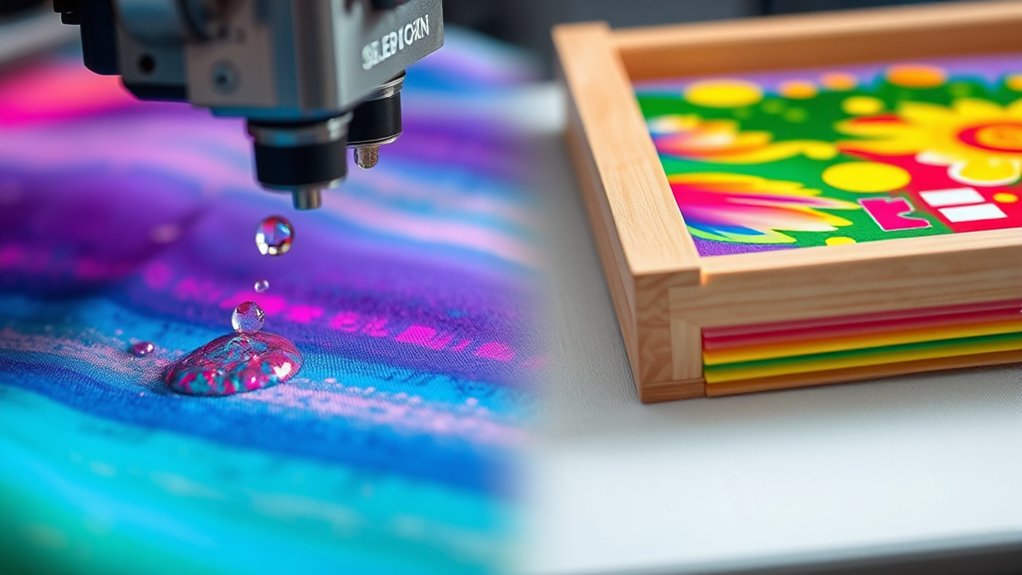
Digital garment printing works by directly applying ink onto fabric using specialized inkjet technology. You’ll load a digital design into the printer’s software, where precise color management guarantees accurate reproduction on fabric.
The inkjet heads spray microscopic droplets of ink exactly where needed, enabling detailed, high-resolution prints without screens or stencils. This process supports complex gradients and multiple colors seamlessly.
Inkjet heads precisely deposit tiny ink droplets, creating detailed, high-resolution prints with smooth gradients and vibrant colors.
The inks used are typically water-based or pigment inks, chosen for their ability to bond with fibers and maintain vibrancy after washing. You control the print parameters digitally, optimizing ink saturation and color profiles for different fabric types.
This direct-to-garment method reduces setup time, allows for rapid design changes, and produces consistent, vivid results with minimal waste.
How Screen Printing Works
While it requires more setup than direct printing methods, screen printing uses a stencil-based process to transfer ink onto fabric through a mesh screen. You start by creating a screen coated with a light-sensitive emulsion; exposing it to UV light hardens the emulsion except where the design blocks the light.
You then wash out the unexposed emulsion, leaving a stencil. During printing, you place the screen over the fabric and use a squeegee to push ink through the open areas of the mesh.
Different screen printing techniques adjust mesh tension and squeegee angle to control ink deposition precisely. You can choose from various ink types: plastisol for opacity and durability, water-based for softness, or discharge inks for color removal, each affecting the final texture and appearance.
Comparing Print Quality and Design Options
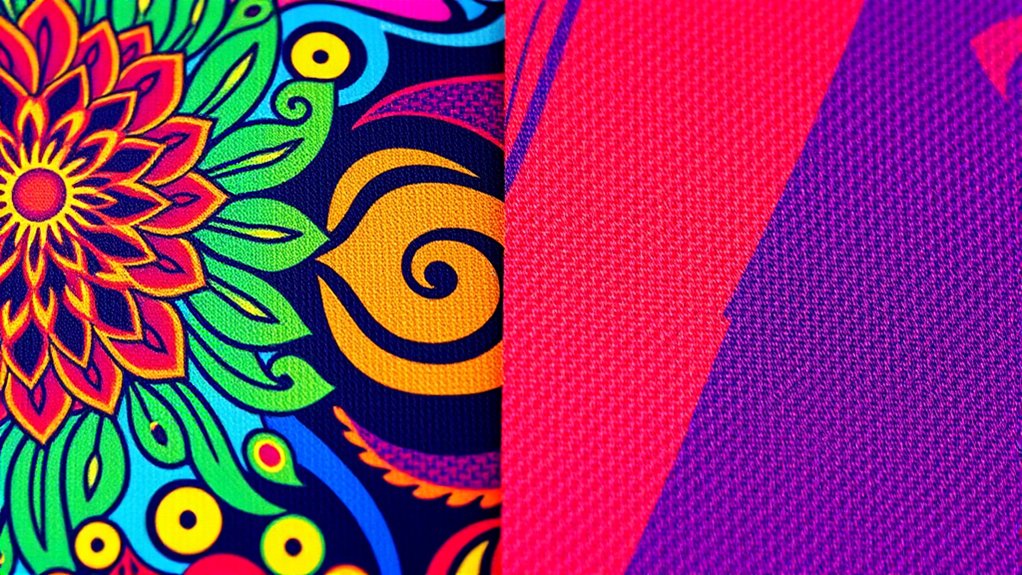
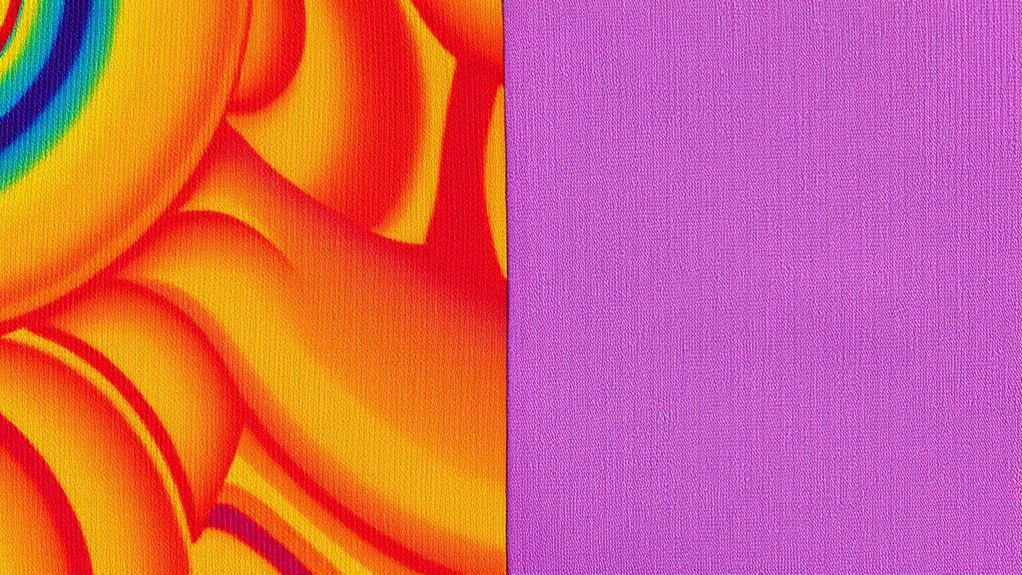
Understanding the mechanics behind screen printing sets the stage for evaluating how it compares to digital garment printing regarding print quality and design versatility. Screen printing excels in delivering intense color vibrancy due to the thick layers of ink applied, which is ideal for bold, solid designs.
However, it struggles with extreme design complexity, especially gradients or intricate details, since each color requires a separate screen. Digital garment printing, on the other hand, directly prints ink onto fabric, enabling you to reproduce highly complex designs with smooth gradients and subtle color variations.
While digital printing might yield slightly less saturated colors compared to screen printing, it offers unmatched flexibility, accommodating unlimited color palettes without additional setup costs. Your choice depends on whether you prioritize vibrant, simple designs or detailed, multicolor artwork.
Durability and Washability: Digital vs. Screen Printing
You’ll notice that print longevity varies markedly between digital and screen printing methods due to differences in ink adhesion and curing processes. Understanding how each technique resists washing cycles is essential, as repeated laundering can degrade print clarity and vibrancy.
Additionally, you should consider how these printing methods affect fabric integrity, since some inks and techniques can weaken fibers over time.
Print Longevity Comparison
Because the longevity of printed garments directly affects their value and user satisfaction, evaluating durability and washability is essential when comparing digital and screen printing. You’ll find that screen printing generally offers a longer print lifespan due to its thicker ink layers, which adhere more robustly to fabric fibers.
This results in enhanced resistance to color fading over time. Conversely, digital printing applies thinner ink layers, making it more susceptible to gradual color degradation, especially under frequent use. However, advancements in digital inks and pre-treatment processes have improved print longevity substantially.
When choosing between the two, consider how the intended garment use and washing frequency impact color retention and durability. Ultimately, screen printing tends to maintain vibrancy longer, but digital printing’s evolving technology narrows this gap.
Resistance To Washing
While both digital and screen printing methods aim to produce durable prints, their resistance to washing varies greatly due to differences in ink application and fabric bonding. Screen printing deposits thick layers of plastisol or discharge inks on the fabric surface, creating robust adhesion that enhances washing durability and maintains color retention over multiple wash cycles.
In contrast, digital printing uses specialized pigment or dye inks directly absorbed into the fibers, which can be more susceptible to fading unless treated with proper heat fixation and protective coatings. You’ll find that screen printing generally offers superior washing durability, especially on darker fabrics, because the ink layer resists abrasion and chemical breakdown better.
However, advances in digital ink technology and post-treatment processes have narrowed this gap, improving color retention and wash resistance considerably in recent years.
Fabric Integrity Impact
Although both digital and screen printing techniques aim to preserve fabric integrity, their impact on durability and washability differs considerably due to the methods of ink application and fabric interaction. Digital printing deposits fine ink droplets directly onto fibers, minimizing stress on fabric strength but sometimes resulting in faster color fading. Screen printing applies thicker ink layers, which can enhance durability but may slightly stiffen the fabric.
| Aspect | Digital Printing |
|---|---|
| Fabric Strength | Maintains original fabric flexibility |
| Durability | Moderate; prone to gradual color fading |
| Washability | Requires delicate washing conditions |
| Aspect | Screen Printing |
| Fabric Strength | Slightly reduced due to thicker ink |
| Durability | High; resists wear and color fading |
| Washability | More robust; withstands frequent washing |
Cost-Effectiveness by Order Size
When evaluating cost-effectiveness by order size, you’ll find that digital garment printing excels in small to medium runs due to its minimal setup requirements and ability to produce intricate designs without additional costs. This method eliminates the need for screens or plates, making small batches economically viable and flexible for customization.
In contrast, screen printing requires considerable upfront investment in screens and setup, which becomes cost-effective only when producing large bulk orders. The fixed costs in screen printing dilute over high volumes, reducing the per-unit price considerably.
However, for small batches, these setup costs make screen printing less efficient and more expensive per garment. As a result, when your project involves limited quantities or frequent design changes, digital printing offers a more cost-effective and agile solution compared to traditional screen printing.
How to Choose the Right Printing Method for Your Project
Deciding on the right printing method for your project requires examining factors such as order volume, design complexity, fabric type, and budget constraints. Start by evaluating your project scope: large orders with simple, repetitive designs typically favor screen printing for cost efficiency and durability.
For intricate, multicolor designs or small runs, digital garment printing offers superior detail and faster turnaround. Consider your design preferences. Screen printing excels in vibrant, opaque colors on various fabrics, while digital printing handles gradients and photographic images better.
Fabric type also matters; some materials absorb ink differently, affecting print quality. Finally, balance your budget against these factors. By carefully reviewing these technical criteria, you can select a printing method that best meets your project’s functional and aesthetic requirements without unnecessary expense.
Frequently Asked Questions
Which Method Is More Environmentally Friendly?
You’ll find digital garment printing more environmentally friendly since it uses sustainable practices and eco friendly inks. It reduces water waste and minimizes energy consumption, making it a precise, technical choice for eco-conscious production.
Can Both Printing Methods Be Used on All Fabric Types?
Only about 60% of fabrics show ideal fabric compatibility with both methods. You’ll find digital printing excels on polyester due to superior ink absorption, while screen printing suits cotton’s texture, ensuring precise, durable prints on specific fabric types.
How Long Does Each Printing Process Take?
You’ll find digital printing offers faster printing speed, completing designs in minutes, ideal for short runs.
Screen printing takes longer due to setup, extending the production timeline, but suits large volumes with consistent quality.
Are There Any Health Risks Associated With the Inks Used?
Oh, you’ll love this. Some inks boast ink toxicity, yet strict safety standards keep risks minimal.
Still, you should handle both digital and screen printing inks with care to avoid exposure to hazardous chemicals or allergic reactions.
Can Digital and Screen Printing Be Combined on One Garment?
Yes, you can combine mixed techniques on one garment. Hybrid printing leverages digital’s detail and screen printing’s vibrancy, allowing precise layering while optimizing durability, color density, and cost-effectiveness in your customized apparel production process.
Conclusion
When deciding between digital garment printing and screen printing, remember: each method speaks its own language of precision and durability. Digital printing offers intricate detail and rapid turnaround, while screen printing excels in vibrant, long-lasting colors for larger runs.
You’re not just choosing a technique—you’re selecting the perfect tool for your project’s unique demands.
So, weigh your priorities carefully; the right choice of digital garment printing vs screen printing will make your design truly come alive.