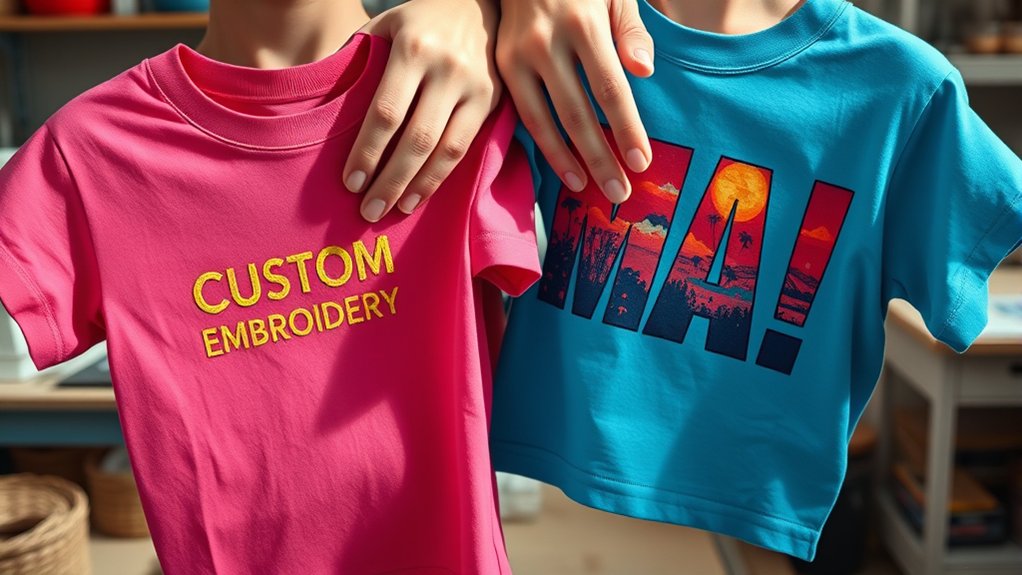

Custom apparel printing and screen printing each have their unique advantages depending on your project needs.
If you want vibrant, detailed designs fast and in smaller batches, custom apparel printing is your best bet—it works great on cotton blends and handles complex colors smoothly.
But if durability and bold, lasting colors matter more, especially for larger orders with simpler designs, screen printing shines with its thick, vivid inks.
Each method suits different needs, so understanding their strengths and costs can help you pick the right fit for your personalized clothing project.
Key Takeaways
- Custom apparel printing suits intricate, multi-color designs with quick turnaround and lower startup costs for small batches.
- Screen printing delivers more durable, vibrant prints ideal for bulk orders and simple designs due to layered ink application.
- Custom apparel offers richer color saturation and smooth gradients, while screen printing may struggle with subtle color transitions.
- Screen printing becomes cost-effective at higher volumes, despite longer setup times, whereas custom apparel saves upfront costs on limited runs.
- Fabric type impacts print quality; custom apparel adapts better to cotton blends, while screen printing excels in longevity on durable fabrics.
How Custom Apparel Printing Works
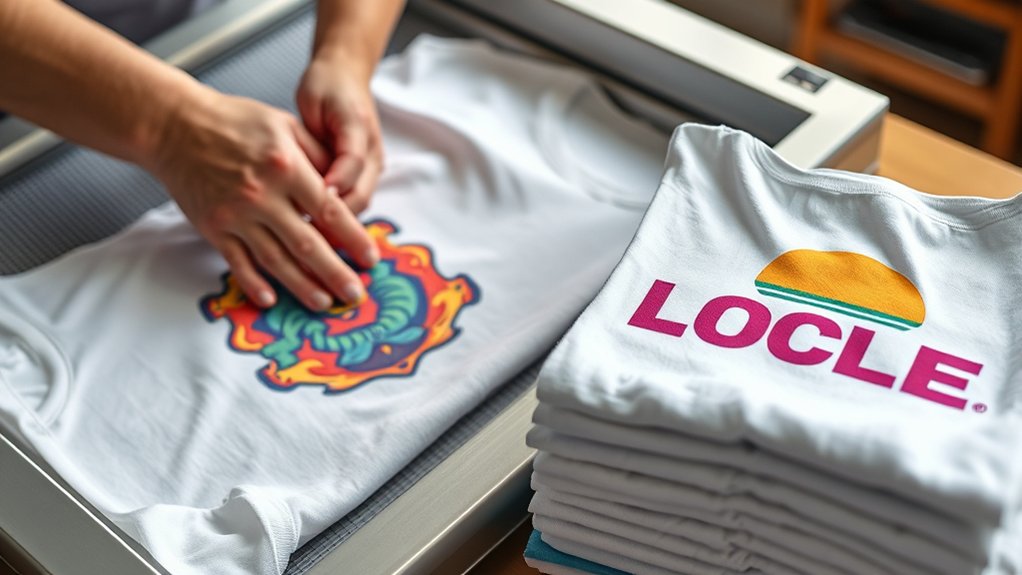
Understanding how custom apparel printing works can help you choose the best method for your needs. Custom apparel printing primarily uses digital printing technology, which allows you to print detailed designs directly onto fabrics.
This method is perfect if you want vibrant colors and intricate patterns without the setup costs of traditional methods. Fabric selection plays a significant role here; you’ll get the best results on cotton or cotton blends because digital inks adhere well and retain softness.
If you choose synthetic fabrics, colors might not be as vivid or durable. Digital printing also lets you produce small batches quickly, ideal for personalized items or limited runs.
How Screen Printing Works and Why It’s Durable
While custom apparel printing offers flexibility, screen printing excels in durability and vibrancy. Its strength lies in proven screen printing techniques that embed ink directly into fabric fibers.
Here’s why it stands out:
- Layered Ink Application: Screen printing pushes thick layers of specialized ink types through a mesh stencil, creating a bold, vivid design that lasts.
- Durable Ink Types: Plastisol and water-based inks resist fading and cracking, even after multiple washes, ensuring your design stays sharp.
- Fabric Integration: The ink bonds with the fabric rather than just sitting on top, enhancing longevity and maintaining color intensity over time.
Comparing Costs of Custom Apparel and Screen Printing
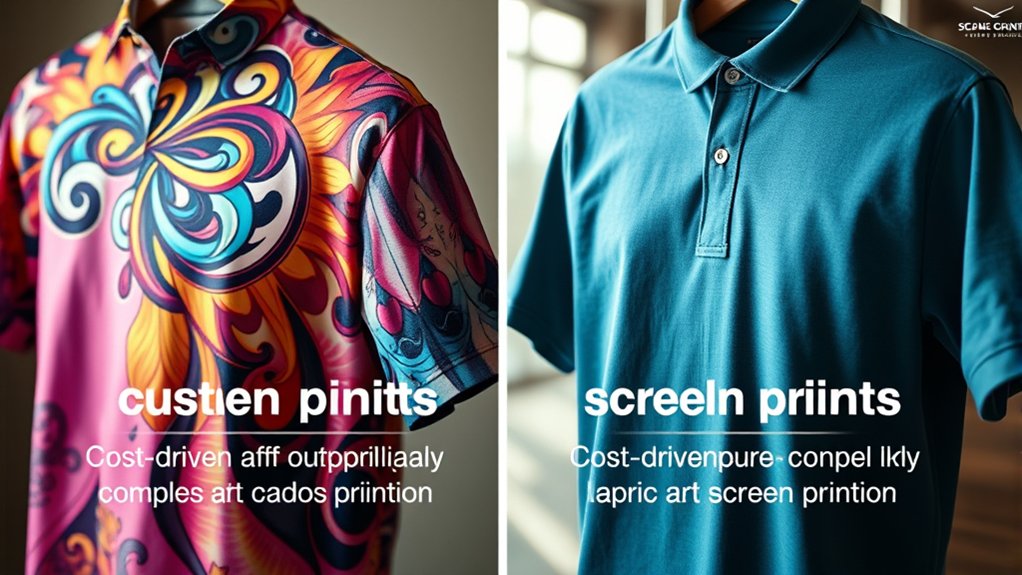
When weighing custom apparel against screen printing, you need to take into account both your upfront costs and how expenses add up over time. Custom apparel may have a higher initial price, but screen printing often becomes more cost-effective with larger orders.
Understanding this balance helps you choose the best option for your budget and goals.
Initial Investment Comparison
Investing in custom apparel or screen printing requires you to weigh upfront costs carefully. Understanding the initial investment factors helps you make a smart choice for your budget and goals. Here’s how startup costs compare:
- Custom Apparel: Lower startup costs since you mainly pay for pre-made garments and digital printing setup, making it ideal for small batches.
- Screen Printing: Higher initial investment due to purchasing screens, inks, and specialized equipment, plus setup time for each design.
- Scalability Impact: Custom apparel’s low entry cost suits limited runs, while screen printing demands more capital but lowers per-unit cost as volume grows.
Long-Term Cost Efficiency
Understanding the initial costs sets the stage, but long-term cost efficiency determines which method truly benefits your business. When you weigh custom apparel against screen printing, consider how each impacts your budget over time.
Custom apparel often involves higher upfront costs but offers long term savings through durability and versatile design changes without retooling. Screen printing might seem cheaper initially, yet recurring setup fees and limited color options can inflate expenses as orders grow or designs evolve.
Comparing Print Quality Between Custom Apparel and Screen Printing
You want your design to pop with vibrant colors and sharp details that last. Comparing custom apparel and screen printing means looking closely at how each method handles color vibrancy, durability, and fine detail.
Understanding these differences helps you choose the best option for quality that stands the test of time.
Color Vibrancy Differences
Color vibrancy plays an essential role in making your custom apparel stand out. When comparing custom apparel and screen printing, understanding how color saturation and design complexity affect vibrancy is vital. Here’s what you should consider:
- Color Saturation: Custom apparel printing often delivers richer, more consistent saturation, ideal for vivid designs. Screen printing can achieve strong saturation but may struggle with subtle gradients.
- Design Complexity: Custom apparel excels at handling intricate, multi-color designs with smooth changes. Screen printing can become less vibrant as design complexity increases due to layering limitations.
- Fabric Influence: The type of fabric impacts how colors appear; custom apparel printing adapts better to various materials, maintaining brightness.
Choosing the right method based on these factors guarantees your apparel’s colors truly pop and reflect your vision.
Durability And Detail
Although both custom apparel and screen printing offer impressive visuals, their durability and detail can vary significantly. When you focus on fabric quality, custom apparel often uses higher-grade materials that enhance comfort and print adherence. This means your design stays vibrant longer, resisting fading and cracking better than typical screen printing.
Screen printing, however, excels in sharp detail for bold, simple designs and is highly durable for bulk orders, ensuring strong print longevity under frequent washes. But if your design demands intricate details or gradients, custom apparel’s digital techniques provide superior precision without compromising fabric feel.
Ultimately, your choice should consider how long you want the print to last and the level of detail your design requires, balancing fabric quality and print longevity to meet your specific needs.
Choosing Between Custom Apparel and Screen Printing Based on Design and Order Size
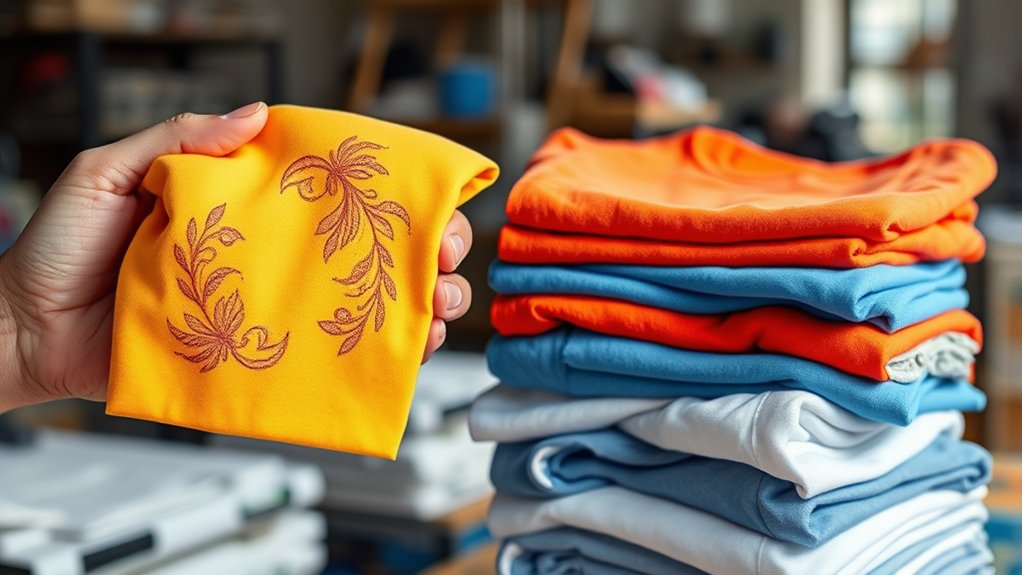
When deciding whether to choose custom apparel or screen printing, the complexity of your design and the size of your order play essential roles. You need to take into account:
- Design Flexibility: Custom apparel offers greater design flexibility, perfect for intricate, multi-color graphics. Screen printing suits simpler, bold designs.
- Order Volume: Screen printing becomes cost-effective with larger orders due to setup costs. For small batches, custom apparel minimizes waste and upfront fees.
- Turnaround Time: Custom apparel often delivers faster for small runs, while screen printing excels with bulk orders despite longer setup.
Picking the Best Method for Your Personalized Clothing Project
Understanding your design needs and order size sets the stage for choosing the right printing method. If you have intricate design preferences with many colors or gradients, custom apparel options like direct-to-garment printing can capture details better than traditional screen printing.
For large orders with simple designs, screen printing offers cost efficiency and durability. Consider your project timelines carefully. Screen printing typically requires longer setup but faster bulk production, while custom apparel methods often handle small batches quickly.
Frequently Asked Questions
Can Custom Apparel Printing Be Eco-Friendly?
Yes, you can make custom apparel printing eco-friendly by choosing sustainable materials and using eco friendly inks. This approach reduces environmental impact while maintaining high-quality, stylish designs that align with your green values and business goals.
How Long Does Each Printing Method Take to Complete?
Swift, seamless screen printing speeds up your production efficiency, finishing in hours. Custom apparel, carefully crafted, takes longer, days instead of hours. Both printing timelines suit different needs; choose what aligns with your schedule and strategy.
Are There Limitations on Fabric Types for Screen Printing?
Yes, screen printing has fabric compatibility limits; it works best on cotton and polyester blends. Different printing techniques handle fabrics uniquely, so choose wisely to guarantee vibrant, durable designs on your preferred materials.
Can Both Methods Print on Non-Clothing Items?
You know what they say, “Variety is the spice of life.” Both methods excel in non-clothing applications, giving you extensive customization options to creatively brand items beyond apparel.
This boosts your reach and impact strategically.
Do Either Method Allow for Easy Reordering of the Same Design?
You’ll find reorder simplicity with both methods, but screen printing guarantees better design consistency for repeat orders. It’s strategic if you want uniformity across batches, making your reorders smooth and your branding flawless every time.
Conclusion
Choosing between custom apparel and screen printing is like picking the perfect brush for your masterpiece. If you want vibrant durability and cost-efficiency for large orders, screen printing’s your go-to.
For intricate designs or smaller runs, custom apparel printing shines with its detailed finesse. By understanding your project’s size and style, you’ll craft personalized clothing that truly speaks your vision.
In the end, knowing the strengths of both custom apparel and screen printing will help you create designs that are not just seen, but remembered.