
When choosing between CMYK and spot color screen printing, consider your design’s complexity and color needs.
CMYK blends cyan, magenta, yellow, and black inks dynamically, ideal for full-color images and photos.
Spot color uses pre-mixed inks, delivering exact, consistent hues—perfect for logos and branded colors.
Spot color boosts vibrancy but can raise costs and slow production.
CMYK cuts expenses with faster workflows.
Explore their strengths and trade-offs to select the right printing method for your project’s goals.
Key Takeaways
- CMYK blends cyan, magenta, yellow, and black inks dynamically for full-color images, while spot color uses pre-mixed solid inks for precise hues.
- Spot color printing ensures exact color matching and higher vibrancy, ideal for logos and brand colors, unlike CMYK’s halftone blending.
- CMYK is cost-effective and efficient for complex, multi-colored designs needing broad color ranges.
- Spot color printing requires separate screens and setups per color, increasing production time and setup costs.
- Choosing between CMYK and spot color depends on design complexity, color accuracy needs, budget, and turnaround time.
How CMYK and Spot Color Screen Printing Work
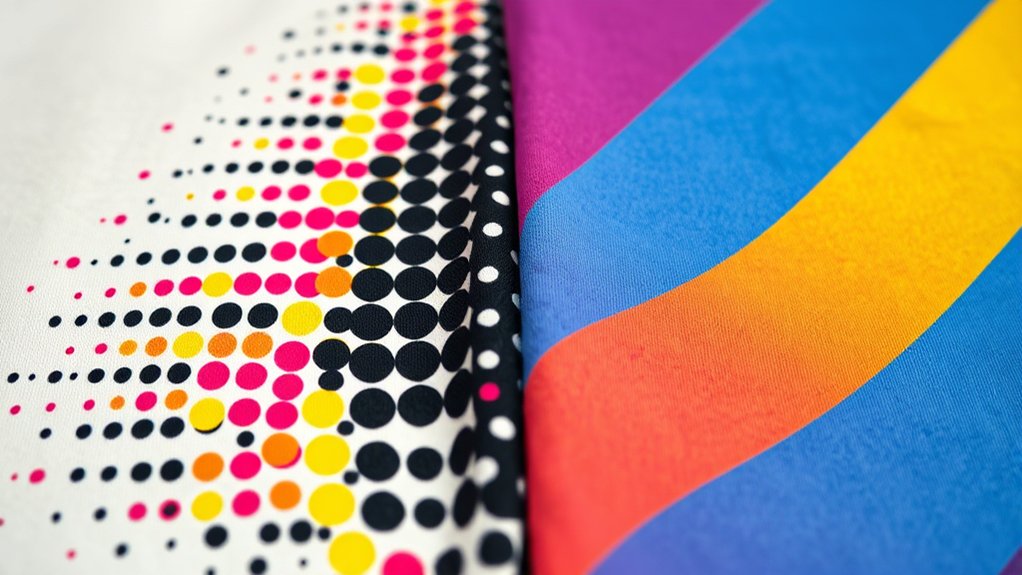
Although both CMYK and spot color screen printing create vibrant images, they operate through fundamentally different processes that affect your color accuracy and production efficiency. CMYK relies on a subtractive color mixing method, layering cyan, magenta, yellow, and black inks in precise dot patterns to produce a full spectrum. This printing technique blends colors dynamically during the process, ideal for complex, photo-realistic images.
Conversely, spot color screen printing uses pre-mixed, solid inks applied individually through separate screens for each color. This method guarantees exact color replication without relying on layering or blending, giving you unmatched color consistency and vibrancy for logos or limited palettes. Understanding these distinct printing techniques helps you leverage their strengths effectively in your projects.
When to Choose CMYK vs. Spot Color Screen Printing
When deciding between CMYK and spot color screen printing, consider the complexity and color requirements of your design, as well as your budget and production timeline. If your project scope involves intricate images or photographs requiring a broad color selection, CMYK is your go-to method, efficiently blending cyan, magenta, yellow, and black to reproduce detailed visuals.
Conversely, if your design demands precise, consistent hues like corporate logos or limited color palettes, spot color printing guarantees exact color matching and sharpness. Budget constraints also influence your choice; spot color printing typically reduces costs with fewer inks, while CMYK may increase expenses due to layering.
Evaluate your project scope carefully to select the method that aligns with your color needs and production efficiency.
Benefits of CMYK and Spot Color Printing Methods
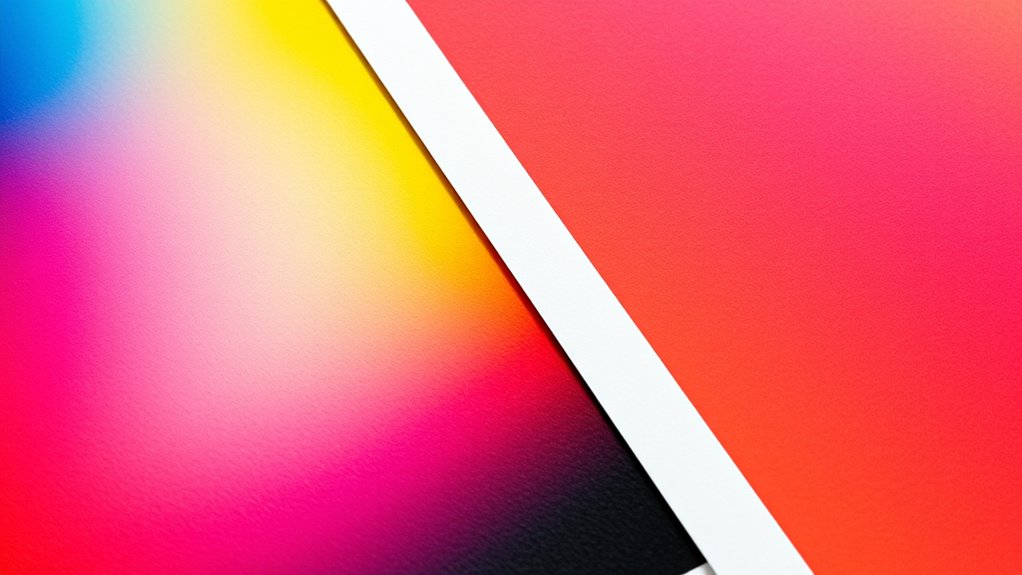
Since you need vibrant, detailed images or exact color matching for your project, understanding the benefits of CMYK and spot color printing methods will help you optimize both quality and cost. CMYK excels in printing scalability and delivers full-color complexity, while spot colors guarantee unmatched color consistency and precision for brand-specific hues.
| Feature | CMYK Printing | Spot Color Printing |
|---|---|---|
| Color Consistency | Moderate; varies by process | High; exact color matching |
| Printing Scalability | Excellent; suits large runs | Limited; ideal for small runs |
| Application | Complex images, gradients | Specific logos, brand colors |
Comparing Color Accuracy, Vibrancy, and Cost
Even if both CMYK and spot color printing serve distinct purposes, your choice will greatly impact color accuracy, vibrancy, and overall cost. Spot color printing delivers superior ink consistency since it uses premixed inks, ensuring your hues remain true to your design with minimal deviation in color perception. This precision makes it ideal when brand colors must be exact.
CMYK, on the other hand, builds colors through halftone dots, which can slightly alter perception due to overlapping inks, occasionally dulling vibrancy. However, CMYK excels in producing full-color images affordably, especially for complex designs. While spot color printing can be pricier because of specialized inks and setup, it pays off in color fidelity. So, you must balance your need for precise, vibrant colors against budget constraints when selecting between these methods.
Production Time Differences Between CMYK and Spot Color
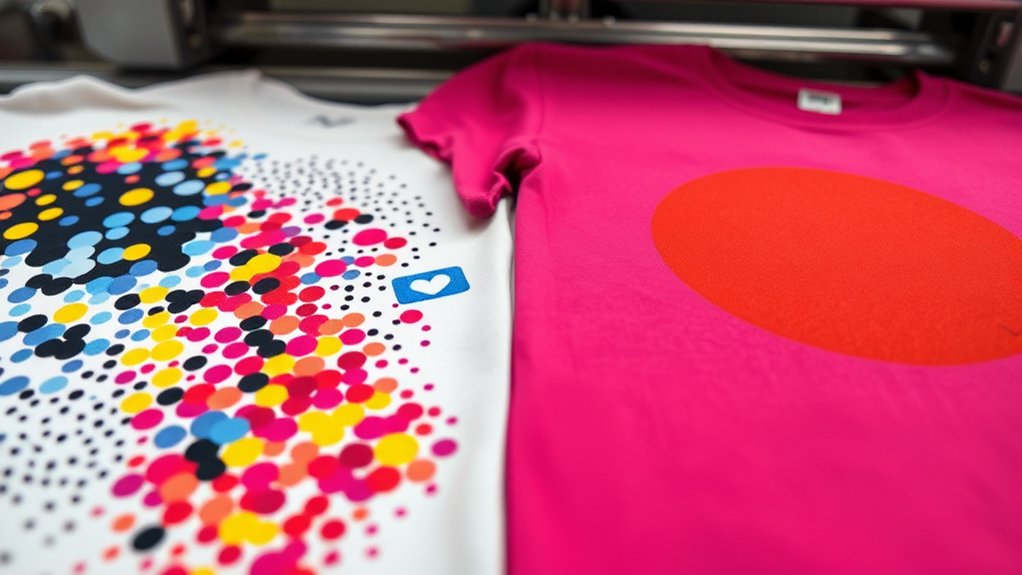
Although spot color printing requires additional setup for each ink, it often results in longer production times compared to CMYK processes. You’ll notice that the production speed varies mainly due to the complexity of ink changes and screen preparation.
CMYK leverages a streamlined workflow efficiency by layering four colors in a single pass, reducing downtime.
Consider these factors impacting production time:
- Multiple spot color screens require separate drying and alignment steps.
- Ink changes for spot colors interrupt continuous printing flow.
- CMYK uses preset halftones, speeding up color blending and registration.
- Spot colors demand precise manual adjustments, extending setup duration.
Understanding these differences helps you optimize your print jobs for timely delivery and consistent quality.
Frequently Asked Questions
Can CMYK and Spot Colors Be Combined in One Print Job?
Yes, you can combine CMYK and spot colors in one print job, enhancing color mixing precision and improving print quality. This hybrid approach lets you achieve vibrant, consistent hues that CMYK alone might struggle to replicate accurately.
How Does Fabric Type Affect CMYK and Spot Color Printing Results?
You’ll notice fabric texture influences ink absorption, affecting color vibrancy. Smoother fabrics enhance CMYK detail, while textured ones boost spot color’s boldness.
Choosing the right fabric guarantees your print pops exactly as intended.
Are There Environmental Impacts Unique to CMYK or Spot Color Inks?
You’ll find that spot color inks often contain heavier pigments, affecting ink composition and disposal, while CMYK inks use more blended chemicals. Both must meet strict environmental regulations, but their unique formulations impact waste management differently.
What Are Common Maintenance Issues for Screens in Each Method?
You’ll love scrubbing screens endlessly. Spot color demands relentless screen cleaning to dodge clogging, while CMYK’s complexity tests your patience keeping ink consistency perfect. Both require ninja-level upkeep to avoid printing disasters.
Can Spot Color Printing Reproduce Metallic or Neon Shades?
You can achieve metallic reproduction and neon shades with spot color printing by using specialized inks designed for these effects. This method guarantees precise color matching and vibrant, eye-catching results beyond standard CMYK capabilities.
Conclusion
When deciding between CMYK and spot color screen printing, ask yourself: do you need vibrant precision or cost-effective versatility? CMYK offers rich gradients and photo-quality prints with quicker setups, while spot colors deliver unmatched color accuracy and consistency, especially for brand-specific hues.
Understanding these differences helps you choose the right method for your project’s needs, balancing quality, budget, and production time. So, which printing technique will bring your design to life perfectly?
Choosing between CMYK and spot color screen printing is key to achieving the best results for your design.