
Block printing ink vs screen printing ink is a key consideration for artists and printers aiming for specific effects and material compatibility.
You’d use block printing ink for thick, highly pigmented prints on porous surfaces like fabric and paper, benefiting from its slow drying and durability.
Screen printing ink, however, is liquid and designed for fine mesh stencils on various materials.
It offers sharper, vivid colors and faster drying through heat curing.
Each ink suits different substrates and workflows, impacting adhesion, detail, and cleanup methods.
Explore how these factors influence your printing choices to optimize your project outcome.
Key Takeaways
- Block printing ink is thick and highly pigmented, ideal for relief printing on porous surfaces like fabric and paper.
- Screen printing ink is liquid, designed for fine mesh stencils, and works well on both porous and non-porous surfaces like plastics and metals.
- Block printing ink dries slowly by air, allowing adjustment time, while screen printing ink often requires heat curing for faster drying.
- Screen printing inks offer sharper, more vivid colors, whereas block printing inks prioritize durability and thickness over color vibrancy.
- Cleanup differs: block printing ink needs gentle washing of blocks, while screen printing ink requires solvent-based cleaning of mesh screens.
What Is Block Printing Ink?
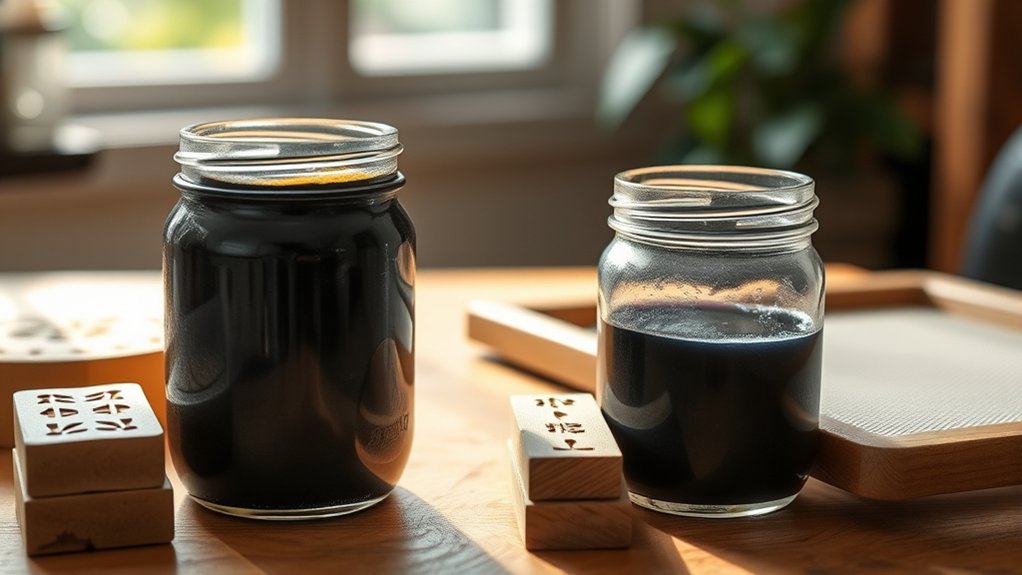
Block printing ink is a thick, highly pigmented medium designed specifically for relief printing techniques. When you use block printing techniques, this ink’s formulation guarantees it adheres evenly to the raised surfaces of your carved block.
Its viscosity is vital; too thin, and it’ll bleed into recessed areas, spoiling the print. The ink formulation typically includes a high concentration of pigment suspended in a binder that maintains consistency while allowing for smooth transfer under pressure.
The ink’s viscosity ensures vibrant prints by preventing bleeding and promoting smooth transfer under pressure.
You’ll notice that this ink dries relatively slowly, giving you time to make adjustments during printing. Unlike other inks, block printing ink resists smudging once dry, preserving fine details.
Understanding this ink’s properties helps you achieve sharp, vibrant prints with precision and control.
What Is Screen Printing Ink?
Screen printing ink is a specially formulated liquid designed to pass through a fine mesh stencil and adhere to various surfaces with precision. You’ll find different ink formulations tailored to screen printing techniques, optimizing viscosity, opacity, and drying time. These inks must balance flow and adhesion for clean, sharp prints on textiles, plastics, or paper.
| Ink Type | Surface Compatibility | Drying Method | Key Characteristics |
|---|---|---|---|
| Plastisol | Fabric | Heat cure | Opaque, flexible, durable |
| Water-based | Fabric, Paper | Air dry or heat | Soft feel, eco-friendly |
| UV-curable | Plastics, Glass | UV light cure | Fast curing, high gloss |
| Solvent-based | Glass, Metal | Air dry | Strong adhesion, weather-resistant |
Choosing the right ink formulation is essential to match your specific screen printing techniques and substrate.
How Do Block and Screen Printing Inks Compare in Durability and Color?
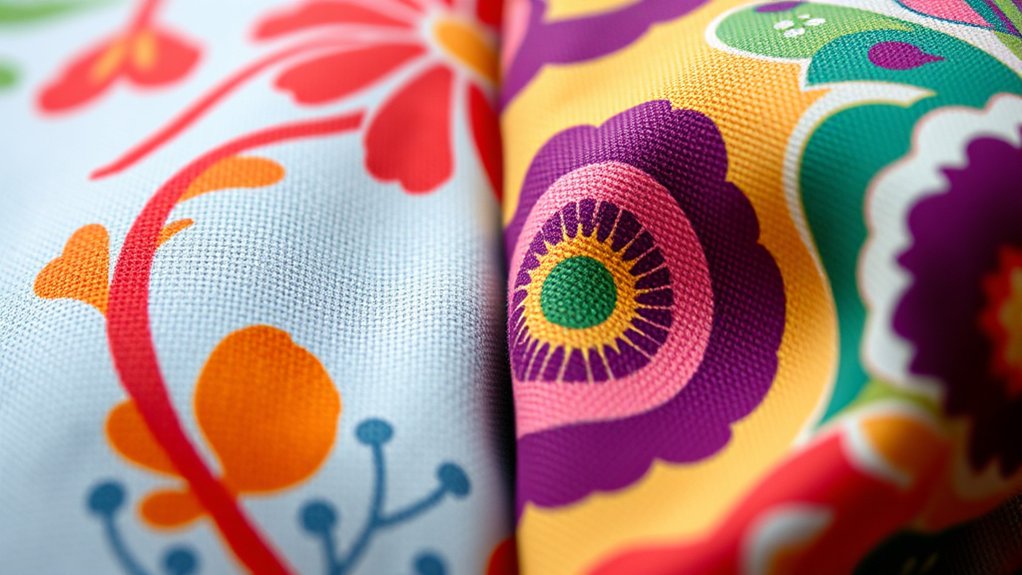
Although both printing methods rely on specialized inks, their durability and color performance vary considerably due to differences in application and formulation. With block printing ink, you’ll notice robust ink longevity because it’s typically thicker and more pigment-dense, allowing it to withstand repeated handling and washing.
However, its color vibrancy can be slightly muted compared to screen printing inks, which are formulated for sharper, more vivid hues. Screen printing inks penetrate fabrics more effectively, enhancing color saturation and brightness, but this can sometimes reduce overall durability if applied too thinly.
You’ll want to balance ink thickness and curing time in screen printing to maximize both color vibrancy and ink longevity. Ultimately, block printing ink favors durability, while screen printing ink excels in delivering vivid, long-lasting color.
Which Ink Works Best on Different Materials?
You’ll find that block printing ink performs best on porous materials like fabric and paper, while screen printing ink suits smoother surfaces such as plastics and metals.
Consider each ink’s durability factors, including adhesion and resistance to wear, when selecting the right match for your material. Understanding these compatibility details guarantees ideal print quality and longevity.
Material Compatibility Comparison
When choosing between block printing ink and screen printing ink, understanding their compatibility with various materials is essential. Block printing ink offers excellent ink adhesion on porous substrates like cotton, linen, and light wood, making it ideal for natural fibers and textured surfaces.
However, its performance on synthetic fabrics or slick surfaces is limited due to lower substrate compatibility. In contrast, screen printing ink exhibits superior substrate compatibility across a broader range of materials, including polyester, nylon, and coated papers.
Its formulation allows for enhanced bonding and consistent coverage on both porous and non-porous surfaces. To maximize print quality, you should match the ink type to the substrate’s properties: block printing ink for natural, absorbent materials, and screen printing ink for synthetic or smooth substrates that require robust adhesion and uniform coverage.
Ink Durability Factors
Since ink durability directly impacts the longevity and appearance of your prints, selecting the right ink for your material is essential. Block printing inks typically offer strong ink adhesion on natural fibers like cotton and linen, ensuring prints resist cracking and fading.
Screen printing inks, especially plastisol variants, excel on synthetic fabrics and mixed blends due to superior adhesion and flexibility. Environmental factors such as exposure to sunlight, moisture, and washing frequency further influence ink performance.
You’ll find that water-based inks used in both methods are more susceptible to degradation under harsh conditions but provide softer prints. Ultimately, evaluating your substrate’s composition and expected environmental exposure guides your ink choice. Block printing inks favor natural textiles, while screen printing inks adapt better across diverse materials and variable conditions, optimizing durability and print clarity.
How Drying Time and Cleanup Affect Your Printing Results
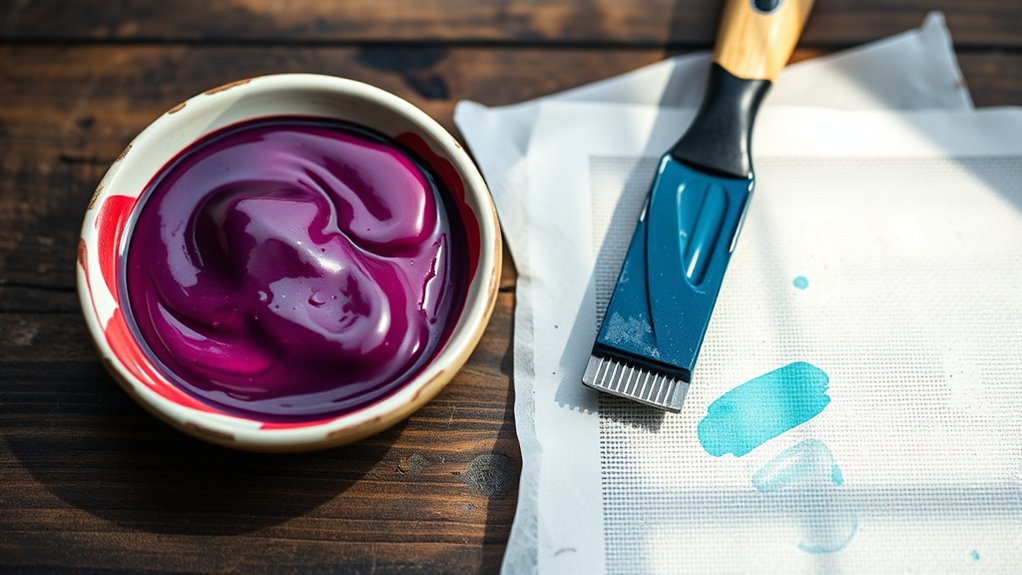
Although drying time varies between block printing ink and screen printing ink, it directly impacts your workflow and final output quality. You must select proper drying techniques to prevent smudging and guarantee crisp details.
Block printing ink generally dries slower, requiring air drying, while screen printing ink often uses heat curing for faster results. Cleanup methods also differ: block printing ink needs gentle washing to protect carved blocks, whereas screen printing ink demands solvent-based cleaners for mesh screens. Both affect your efficiency and print longevity.
| Aspect | Block Printing Ink | Screen Printing Ink |
|---|---|---|
| Drying Time | Slow, air drying | Fast, heat curing |
| Cleanup Methods | Gentle washing | Solvent-based cleaning |
| Workflow Impact | Longer wait times | Faster turnaround |
| Print Quality | Rich texture | Sharp, vibrant prints |
How to Choose the Right Ink for Your Project
Because each printing method demands specific ink properties, choosing the right ink directly influences your project’s durability, appearance, and workflow efficiency. Start by evaluating your project requirements: substrate type, desired finish, and exposure conditions.
Block printing ink typically offers thick viscosity and opaque coverage, ideal for textured or absorbent surfaces. Screen printing ink, conversely, suits smooth, flat substrates, with formulations varying from plastisol to water-based inks, each affecting flexibility and washability.
Match ink types to your design complexity and production scale. Block inks excel in small runs with tactile effects, while screen inks support high-volume, detailed prints. Also, consider drying time and cleanup compatibility with your equipment.
Frequently Asked Questions
Can Block Printing Ink Be Used for Screen Printing?
You can’t effectively use block printing ink for screen printing methods because block printing ink is thicker and less fluid, which clogs screens. Screen printing requires thinner, more fluid ink for precise, consistent transfers.
Are There Eco-Friendly Options for Both Block and Screen Printing Inks?
You’ll find eco friendly alternatives for both block and screen printing inks, made from sustainable materials like soy, water-based pigments, and natural resins. These options reduce toxins and environmental impact without compromising print quality.
How Do Storage Conditions Affect the Longevity of These Inks?
You store ink in a cool, dry place, you extend ink shelf life; you expose it to heat and humidity, temperature effects degrade pigments and binders, causing clumping, separation, and reduced print quality over time.
Can These Inks Be Mixed to Create Custom Colors?
You can’t mix these inks directly due to differing bases and viscosities. Instead, use mixing techniques separately and apply color theory to blend final colors during printing, ensuring ideal adhesion and consistent results.
What Safety Precautions Are Needed When Handling These Inks?
Prioritize proper protection: wear safety gear like gloves, goggles, and aprons during ink handling. Guarantee excellent ventilation, avoid skin contact, and clean spills swiftly to prevent hazards.
Store inks securely, following manufacturer guidelines meticulously.
Conclusion
Choosing between block printing ink and screen printing ink is like selecting the right tool to paint your vision. Each ink carries its own strength—block printing ink offers rich texture and depth, while screen printing ink delivers sharp precision and durability.
Consider your material and desired finish carefully, as your choice will be the foundation of your artwork’s longevity and vibrancy. Let your project’s needs guide you to the perfect ink, ensuring your design stands the test of time.
In the end, understanding the unique qualities of block printing ink vs screen printing ink will help you make the best decision for your creative work.