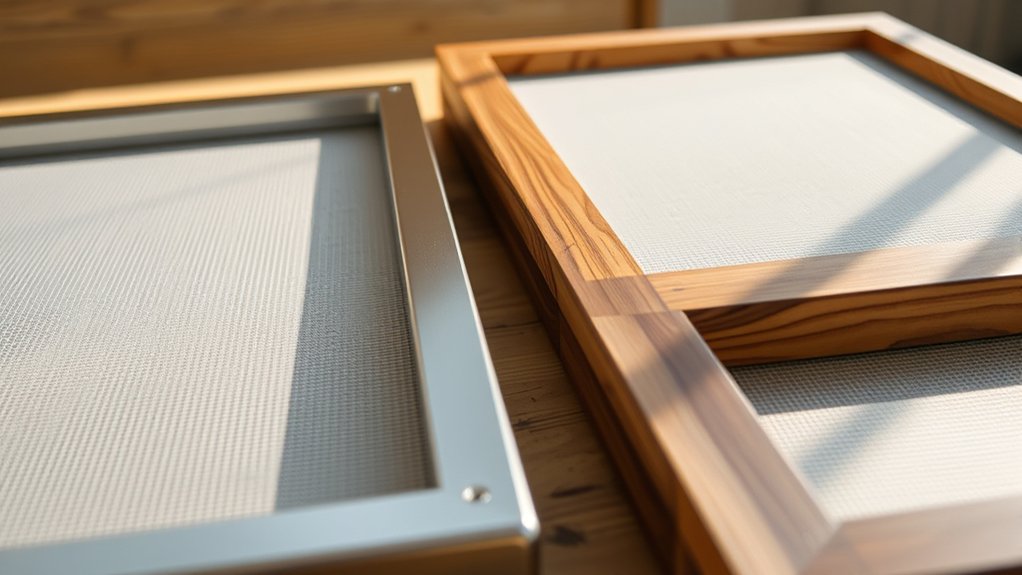

When choosing between aluminum vs wood screen printing frames, aluminum offers superior durability and stable mesh tension. This results in consistent, high-quality prints with less warping or moisture damage.
Wood frames are lighter and cheaper upfront, but they require more maintenance. They can lose tension over time, which affects print precision.
Your decision hinges on balancing long-term reliability against initial cost and aesthetics.
Keep exploring to uncover how these factors impact your print results and workspace setup.
Key Takeaways
- Aluminum frames offer superior durability and maintain consistent mesh tension better than wood, enhancing print quality and longevity.
- Wood frames are more affordable upfront and customizable but require regular maintenance to prevent warping and moisture damage.
- Aluminum frames resist environmental factors like humidity, ensuring stable print tension and reducing frame replacement frequency.
- Wood frames absorb vibrations differently and may cause tension inconsistencies, impacting print consistency over multiple runs.
- Choosing between aluminum and wood depends on balancing budget, desired frame lifespan, print quality, and aesthetic preferences.
Key Factors to Consider When Choosing a Screen Printing Frame
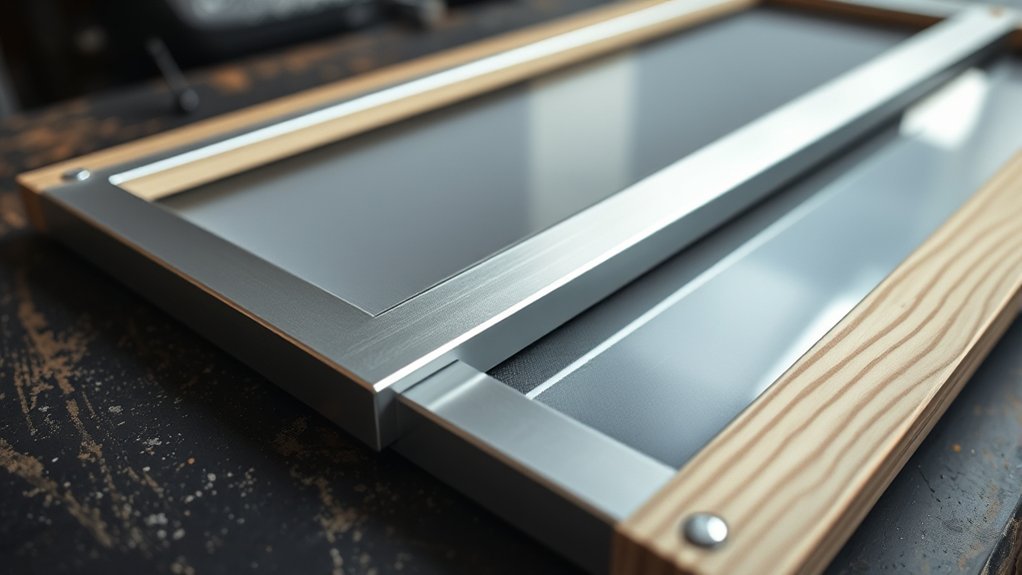
When selecting a screen printing frame, you’ll need to evaluate factors such as material durability, tension maintenance, and cost efficiency to secure peak print quality and workflow reliability. Frame tension plays a critical role; consistent, high tension ensures the mesh remains taut, reducing distortion during printing and enhancing print consistency across runs.
You’ll want a frame that maintains tension over time without frequent re-tensioning, which can disrupt production flow. Consider the frame’s resistance to environmental factors that can degrade tension, like humidity or temperature changes.
Additionally, assess the frame’s weight and rigidity, as these affect handling and stability during printing. Balancing these technical criteria helps you choose a frame that supports precise, repeatable prints, minimizes downtime, and aligns with your budget constraints.
Pros and Cons of Aluminum Screen Printing Frames
Although aluminum frames often cost more upfront, they provide superior durability and tension stability compared to wood alternatives. You’ll benefit from aluminum longevity, as these frames resist warping, moisture damage, and environmental degradation, maintaining consistent mesh tension over extended use.
This stability enhances print accuracy and reduces the need for frequent re-tensioning. However, aluminum frames can be heavier and less forgiving under impact compared to wood, which offers greater flexibility. You might find aluminum less adaptable to minor adjustments or repairs since its rigid structure resists bending.
Additionally, the initial investment is higher, which may affect your budgeting if you’re starting out. Still, if you prioritize precision and long-term performance, aluminum frames are a technically sound choice for professional screen printing.
Pros and Cons of Wood Screen Printing Frames
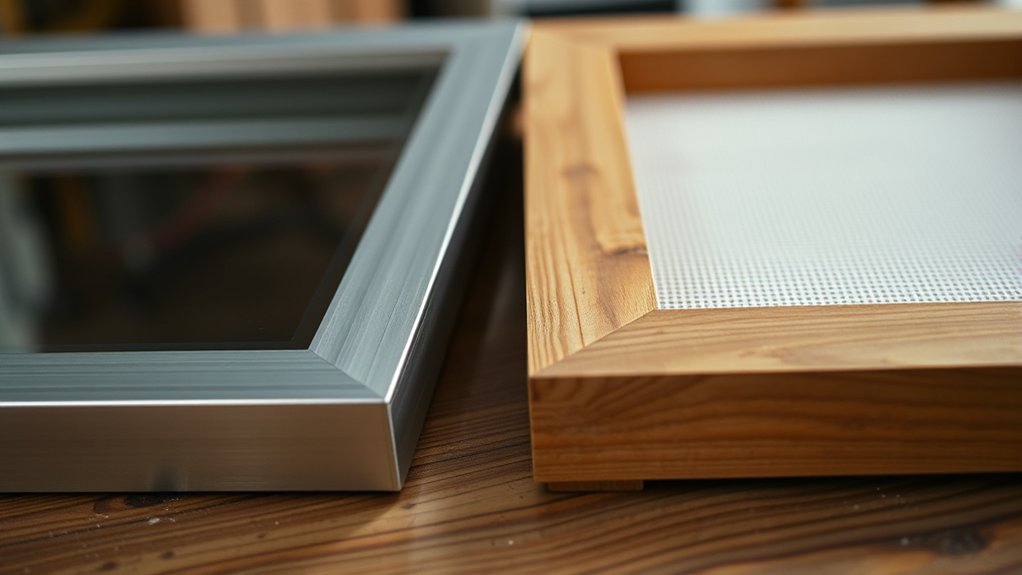
While wood screen printing frames may not match aluminum in durability, they offer distinct advantages that suit certain printing needs and budgets. You’ll find wood frame versatility beneficial, as wooden frames can be custom-sized and adjusted more easily than aluminum, accommodating diverse project requirements.
However, wood frame maintenance demands careful attention; you must protect the frame from moisture and warping by regularly sealing and storing it in controlled environments. Wood frames also absorb vibrations differently, which can affect handling during printing.
On the downside, wood frames tend to be heavier and less dimensionally stable over time compared to aluminum, potentially impacting long-term consistency. If you prioritize cost-effectiveness and adaptability and are prepared for routine maintenance, wood frames can serve you well in many screen printing applications.
How Frame Material Impacts Print Quality and Durability
Choosing between wood and aluminum frames doesn’t just affect handling and maintenance; it directly influences print quality and the frame’s lifespan. Wood frames tend to absorb moisture, causing fluctuations in print tension that can lead to inconsistent prints and reduced frame stability.
This instability affects mesh tautness, compromising detail precision in your designs. Conversely, aluminum frames maintain consistent print tension due to their rigidity and resistance to environmental changes. Their enhanced frame stability guarantees uniform mesh tension throughout the printing process, resulting in sharper, more reliable prints.
Additionally, aluminum’s durability prolongs frame life, reducing the frequency of replacements. When you prioritize print quality and durability, aluminum frames offer superior performance by maintaining ideal print tension and structural integrity under varied conditions.
Which Screen Printing Frame Fits Your Budget and Style Best?
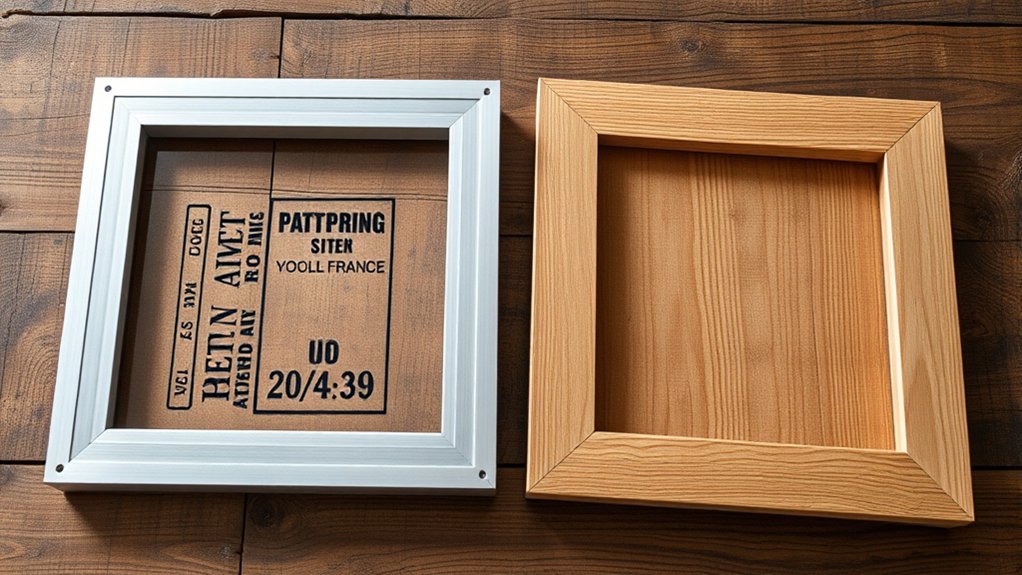
How do your budget constraints and aesthetic preferences influence the choice between aluminum and wood screen printing frames? When evaluating budget considerations, aluminum frames typically demand a higher initial investment but offer long-term savings due to durability and low maintenance.
Wood frames, conversely, provide a cost-effective upfront option yet may incur replacement or repair costs over time. Regarding frame aesthetics, wood frames present a classic, natural look that suits traditional or artisanal studios, while aluminum frames deliver a sleek, modern appearance ideal for contemporary environments.
You should also weigh the balance between upfront cost and longevity alongside the visual impact the frame will have in your workspace. Ultimately, selecting a frame aligns your financial plan with the desired professional image you want to project.
Frequently Asked Questions
Can Aluminum and Wood Frames Be Recycled or Repurposed?
You can recycle aluminum frames through standard recycling processes, recovering metal efficiently. Wood frames suit repurposing options like crafting or composting, though recycling is less common. Both materials offer sustainable end-of-life strategies.
How Do Temperature Changes Affect Aluminum and Wood Frames?
You’ll notice temperature fluctuations impact wood frames more, causing warping and reduced material durability.
Aluminum frames handle changes better, expanding slightly but maintaining shape, so they offer more consistent performance under varying thermal conditions.
Are There Eco-Friendly Alternatives to Aluminum and Wood Frames?
You can choose eco-friendly alternatives like bamboo frames, which offer durability and sustainability, or recycled plastics, providing resistance to moisture and chemicals while reducing environmental impact through material reuse and lower energy consumption during production.
What Maintenance Is Required for Aluminum vs. Wood Frames?
Like tending a classic car, aluminum frames demand low maintenance frequency due to superior frame durability, needing just occasional cleaning.
Wood frames, however, require frequent inspections and sealing to prevent warping and guarantee long-term performance.
Do Aluminum or Wood Frames Have Different Impacts on Screen Tension?
You’ll find aluminum frames offer superior tension stability due to frame durability, maintaining consistent tension longer. Wood frames may lose tension faster as they’re prone to warping, affecting overall print quality and requiring frequent retensioning.
Conclusion
When choosing between aluminum and wood screen printing frames, you’ll want to weigh durability, print precision, and budget carefully. Aluminum offers consistent tension and longevity, while wood provides affordability and ease of customization.
Don’t put all your eggs in one basket; consider your specific printing needs and environment to make the best choice.
Ultimately, selecting the right frame material guarantees peak print quality and efficiency for your screen printing projects. Choosing between aluminum vs wood screen printing frames is key to achieving the best results.